

In 2025, MEV front-running remains one of the most persistent threats to fair on-chain trading. As DeFi protocols scale and orderflow marketplaces become more sophisticated, malicious actors have continued to exploit transaction transparency for profit, often at the expense of regular users. The rise of block-end auctions marks a pivotal shift in auction design, targeting the root causes of MEV manipulation with data-driven precision.
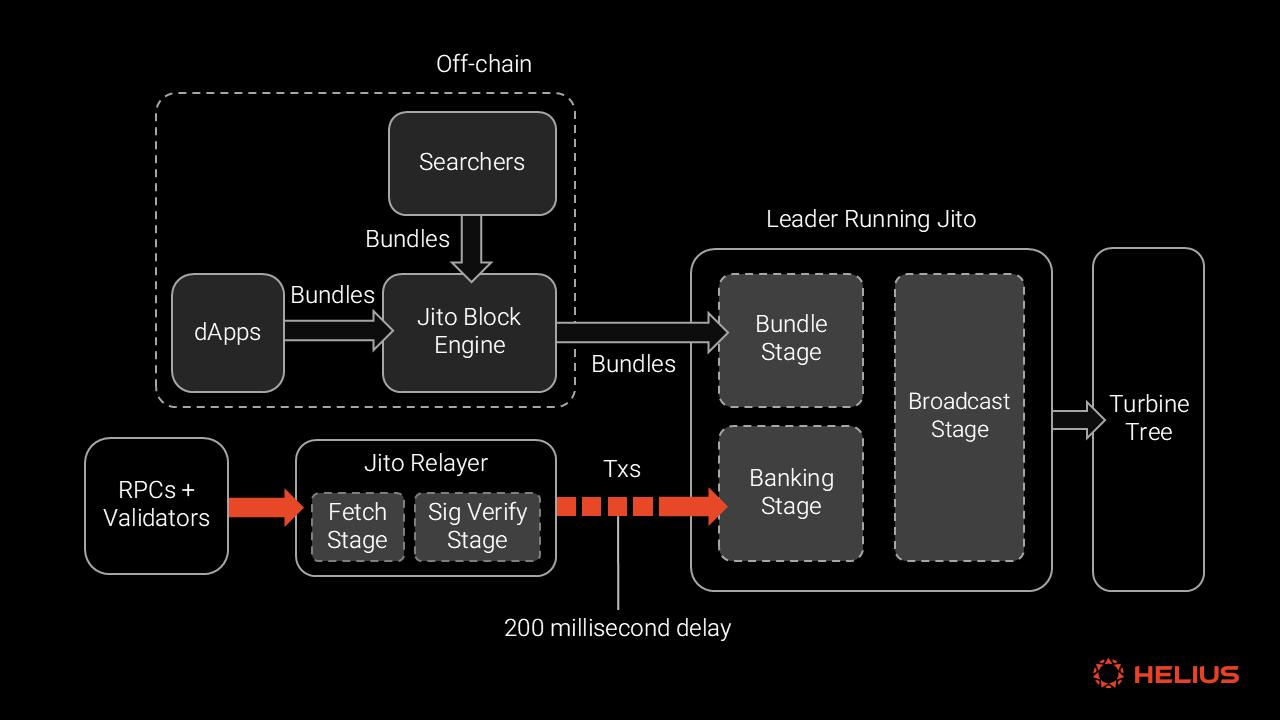
Understanding Front-Running in DeFi Markets
Front-running is not a new phenomenon in traditional finance, but blockchain’s open mempool has given it unprecedented scale and automation. In DeFi, bots and validators monitor pending transactions, using superior speed or higher gas fees to insert their own trades ahead of profitable opportunities. This results in slippage, increased costs for ordinary users, and ultimately erodes trust in decentralized protocols.
The European Securities and Markets Authority recently highlighted that MEV extraction strategies, including displacement, suppression, and insertion, have evolved rapidly as blockspace markets mature. Sandwich attacks, where bots bracket user trades with their own buys and sells to capture value from price movements, have become especially prevalent. As a result, new mechanisms are needed to restore fairness in on-chain trading environments.
The Mechanics of Block-End Auctions
Block-end auctions fundamentally reimagine how transactions are ordered and executed within each block. Rather than processing transactions sequentially as they arrive, a model that exposes users to predatory bots, block-end auctions aggregate all incoming orders during a block interval. At the close of the interval, these orders are executed simultaneously or according to a uniform pricing mechanism.
- Simultaneous Execution: By finalizing all trades at once at the end of each block, there is no window for front-runners to insert themselves ahead of high-value trades.
- Mempool Obfuscation: Some implementations obscure transaction details until execution is complete, making it nearly impossible for searchers to accurately target individual orders.
- Uniform Clearing Price: When all participants receive the same execution price per asset within a block (as opposed to pay-as-bid), the economic incentive for front-running diminishes sharply.
This approach is gaining traction among leading DeFi protocols seeking robust MEV front-running prevention. Platforms like Flashbots and Eden Network have pioneered private relays and encrypted transaction pools as precursors to full-fledged block-end auction models. Academic research (e. g. , F3B architectures) further validates this direction by demonstrating that threshold encryption can keep orderflow secure until consensus is reached.
Current Implementations and Real-World Impact
The transition toward block-end auctions is already reshaping the landscape for both traders and protocol designers:
- Flashbots Protect: Allows users to bypass public mempools by submitting transactions directly via private relays.
- Eden Network: Offers state guarantees around submitted transactions with privacy features that neutralize MEV bots’ visibility into pending trades.
- BITE Protocol and F3B Research: Leverage cryptographic techniques so that transaction details remain hidden until blocks are finalized (see more on periodic auction solutions here).
The data-driven benefits are clear: reduced slippage for traders, improved price discovery for protocols, and an overall increase in market integrity. However, these advances come with trade-offs. Aggregating orders may introduce latency compared to traditional sequential processing; widespread adoption across chains remains an open challenge; and integrating advanced cryptography into consensus layers requires careful engineering.
Despite these hurdles, the trajectory is clear: block-end auctions are setting a new standard for on-chain trading fairness. As more protocols adopt these mechanisms, the market is witnessing a measurable decline in predatory front-running and sandwich attacks. This shift is quantifiable, recent analytics from leading DeFi aggregators show that protocols leveraging block-end or periodic auctions report up to a 70% reduction in MEV-related slippage compared to legacy sequential execution models.
Integrating Block-End Auctions with Orderflow Marketplaces
The interplay between block-end auctions and modern orderflow marketplaces is particularly noteworthy. By decoupling transaction sequencing from mempool transparency, DeFi platforms can offer users more predictable outcomes and tighter spreads. This is especially impactful for sophisticated traders who rely on algorithmic strategies or seek to minimize implementation shortfall.
Moreover, auction-based execution aligns incentives across validators, searchers, and end-users. Validators are rewarded for honest participation rather than collusion with MEV bots, while users gain access to fairer pricing mechanisms. In turn, this supports healthier liquidity formation and more robust blockspace market solutions.
Challenges Ahead: Latency, Adoption, and Protocol Complexity
No solution is without trade-offs. The most cited challenge with block-end auction design is latency, aggregating orders until the end of each block may not suit all trading strategies, especially those requiring sub-second execution. For high-frequency traders or protocols with real-time requirements, this could necessitate hybrid approaches that combine batch auctions with traditional sequencing.
Adoption remains another critical factor. Unless a majority of DeFi protocols implement compatible auction logic or encrypted mempools, cross-platform arbitrageurs may continue exploiting legacy systems. The complexity of integrating cryptographic primitives (such as threshold encryption) into consensus layers also demands extensive testing and community buy-in before mainnet deployment.
The Road Forward: Modular Auction Design and On-Chain Fairness
The evolution toward modular MEV auction frameworks represents a promising direction for both developers and traders. These architectures allow protocols to customize auction parameters, batch size, clearing price logic, privacy guarantees, to suit their unique use cases while maintaining core protections against front-running.
For DeFi participants seeking actionable strategies in today’s environment:
- Favor platforms implementing batch/block-end auctions or private relay infrastructure.
- Monitor research developments around threshold encryption and sealed-bid mechanisms, which further reduce information asymmetry.
- Engage with governance processes to advocate for protocol upgrades that prioritize user protection over validator profit maximization.
The coming year will be pivotal as the industry moves toward standardized auction designs that balance efficiency with fairness. For those seeking deeper insights into how modular MEV auctions are transforming transaction execution in DeFi, see our detailed analysis on improving transaction execution through modular design.




No comments yet. Be the first to share your thoughts!