
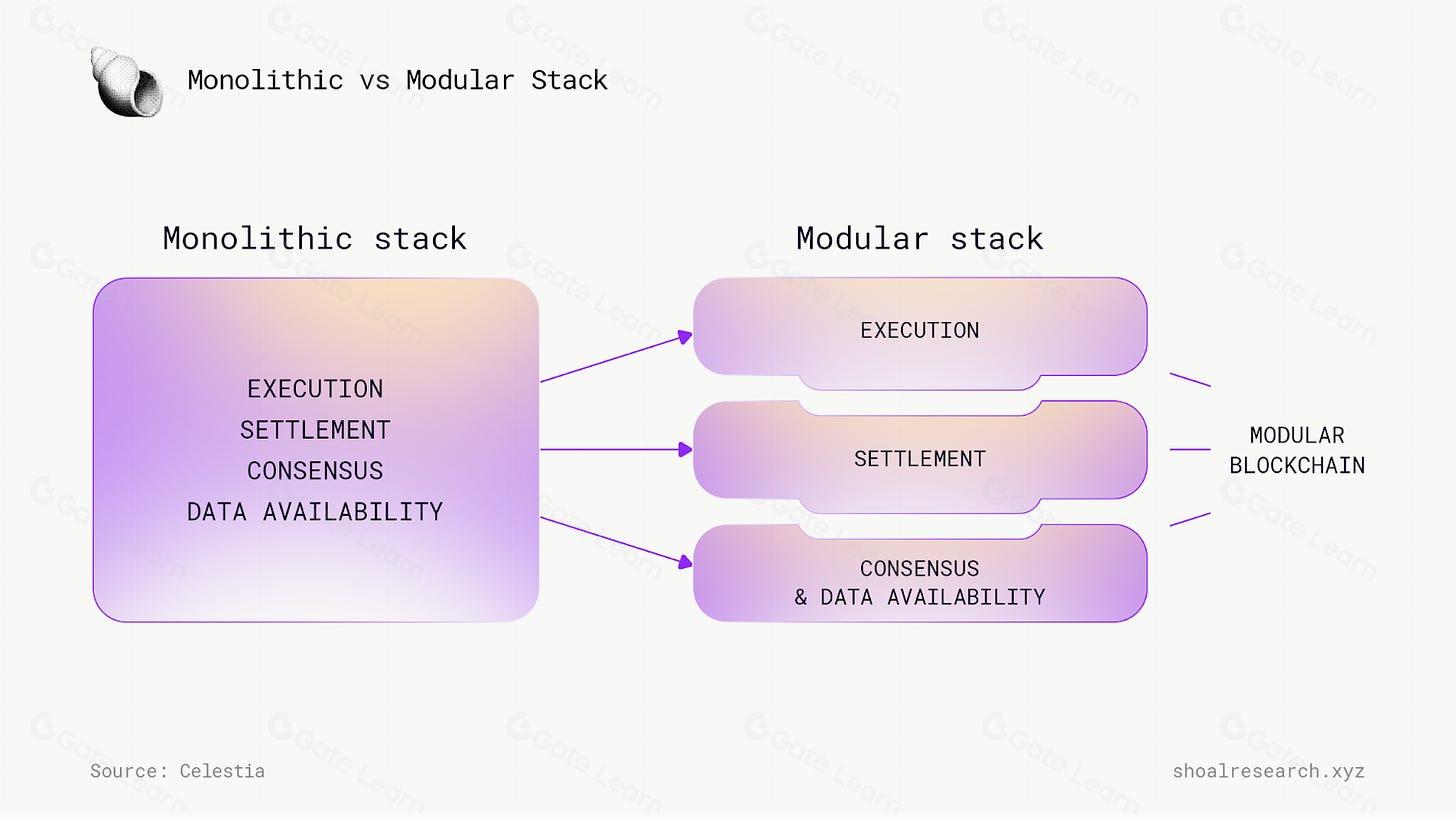
Why modular MEV matters in 2026
The shift from monolithic to modular MEV extraction is no longer theoretical. In 2026, cross-chain arbitrage relies on separating sequencing, execution, and data availability. This modularity allows builders to specialize, reducing latency and increasing the reliability of cross-chain strategies.
Interoperability protocols now serve as the backbone for these strategies. Instead of relying on a single chain’s congested mempool, arbitrageurs can route transactions through shared sequencers and optimized data layers. This separation enables faster block inclusion and more precise execution windows across different networks.
Concrete tools like Celestia’s data availability layer and specialized sequencers have made this possible. These products allow traders to capture value that was previously lost to slippage or network congestion. The modular approach turns cross-chain arbitrage from a high-risk gamble into a structured, repeatable process.
Best cross-chain arbitrage bots
Automated bots have replaced manual trading for most arbitrageurs. Speed and reliability determine profit margins in cross-chain markets. When prices diverge between chains, these bots execute trades before the gap closes.
The best tools connect directly to node providers and maintain liquidity across multiple networks. They handle the complex logic of bridging assets and settling trades in milliseconds. Choosing the right bot depends on your supported chains and technical comfort.
MEV-Boost
MEV-Boost is the standard infrastructure for extracting value from block construction. It connects validators to multiple searchers, allowing bots to bid for block space. This tool is essential for any strategy relying on order flow rather than simple price differences.
Flashbots Protect
Flashbots Protect routes transactions through a private mempool to prevent front-running. It is a critical component for bots that need to execute complex multi-step arbitrage without losing the opportunity to competitors. Most professional stacks include this layer for security.
1inch Fusion
1inch Fusion offers a unique model where professional market makers front the capital. This allows bots to execute large swaps without slippage or the need to hold assets across multiple chains simultaneously. It is particularly effective for high-volume trades where liquidity is the primary constraint.
Hummingbot
Hummingbot is an open-source framework for building custom market-making and arbitrage bots. It supports a wide range of exchanges and chains, allowing developers to tailor strategies to specific inefficiencies. This flexibility makes it a favorite for teams with strong coding resources.
Jupiter Aggregator
Jupiter is the dominant liquidity aggregator on the Solana network. Its smart routing engine finds the best paths for token swaps across multiple DEXs. Bots targeting Solana-based arbitrage often integrate Jupiter’s API to ensure they are getting the best possible execution price.


As an Amazon Associate, we may earn from qualifying purchases.
Decentralized order flow tools
Decentralized order flow (DOF) tools act as the gatekeepers for transaction inclusion in a modular MEV stack. Unlike traditional private RPCs that route traffic through centralized relays, DOF protocols allow builders to purchase block space directly from searchers via auctions or fixed-price slots. This structure reduces reliance on opaque intermediaries and provides explicit privacy guarantees, shielding transaction payloads from public mempool visibility before block construction.
The primary advantage of DOF is the ability to prevent front-running and sandwich attacks. By encrypting transaction data until it is committed to a block, these tools ensure that arbitrageurs and searchers compete on execution quality rather than information asymmetry. Builders benefit from higher, more predictable block values, while traders gain confidence that their orders will be included exactly as submitted.
Selecting the right DOF tool depends on chain support, latency, and the specific privacy model required. Some platforms prioritize speed for high-frequency trading, while others focus on maximum anonymity for large institutional flows. The following comparison evaluates the core features of the leading decentralized order flow solutions available for 2026.
| Tool | Supported Chains | Privacy Model | Latency Profile |
|---|---|---|---|
| Flashbots Protect RPC | Ethereum, L2s | Private mempool relay | Standard |
| BlockEngine (e.g., Jito, BloXroute) | Solana, Ethereum, Arbitrum | Direct builder connection | Ultra-low (sub-second) |
| EigenPhi Order Flow | Multi-chain | Encrypted payload | Low |
| Manifold | Ethereum, Polygon | Private blockspace auction | Standard |
Interoperability Protocol Integrations
Cross-chain arbitrage relies on the speed and reliability of the bridges connecting different blockchains. In a modular MEV stack, interoperability protocols act as the transport layer, moving data and assets between isolated environments. Tools like LayerZero and Wormhole dominate this space by providing the infrastructure needed to execute trades across chains with minimal latency.
LayerZero functions as a messaging protocol rather than a bridge itself. It allows dApps to send arbitrary messages between chains without locking assets in a central contract. This architecture reduces the attack surface and enables faster finality for MEV bots that need to react to price discrepancies in real time. By decoupling the messaging layer from the execution layer, developers can build more flexible arbitrage strategies.
Wormhole takes a different approach by focusing on token bridging and smart contract interoperability. It uses a network of guardians to validate transactions and mint wrapped tokens on destination chains. This model is particularly useful for arbitrageurs who need to move large volumes of assets quickly. The protocol’s widespread adoption across major DeFi platforms means there is often enough liquidity on both sides of a trade to make the arbitrage profitable.
Integrating these protocols into your MEV stack requires careful consideration of gas costs and slippage. You must account for the time it takes for messages to be verified and for assets to become available on the target chain. Tools that offer real-time monitoring of bridge status and gas prices are essential for maintaining a competitive edge in cross-chain arbitrage.
FAQ: Modular MEV 2026 Trends
The modular MEV landscape in 2026 is shifting from monolithic bots to specialized, composable tools. Here are the most common questions about cross-chain arbitrage and tool selection this year.
No comments yet. Be the first to share your thoughts!