

In Ethereum's DeFi landscape, where ETH currently stands at $2,912.58 amid a 24-hour gain of and $21.81, token launches face relentless predation from MEV frontrunning. Sophisticated bots scan the mempool, spotting large buy orders for new tokens and swiftly inserting higher-gas transactions to buy first, then sell back at inflated prices. This sandwiching erodes launch liquidity, inflates early volatility, and leaves retail traders with suboptimal fills. As 2025 data from Arkham Research underscores, MEV strategies now capture billions annually, with frontrunning alone accounting for over 40% of extractions in high-profile launches.

Ethereum (ETH) Live Price

Powered by TradingView

Token teams often overlook these dynamics, underutilizing defenses like batch auctions MEV protections despite proven efficacy. Blockchain News reports that five key mechanisms exist to curb sniping, yet adoption lags, exposing traders to predatory bots that displace or suppress genuine orders, per Hacken analysis.

Dissecting Frontrunning's Grip on Ethereum Token Launches

Frontrunning thrives in Ethereum's public mempool, where pending transactions broadcast intentions. A bot detects a $1 million buy for a new token at $0.01; it frontruns with a $500,000 purchase at $0.0099 using elevated gas, pushing the price to $0.015 before the victim's order executes. Post-buy, the bot dumps, pocketing the spread. Medium analyses reveal these MEV bots process millions of such opportunities daily, with 2025 upgrades amplifying speed via optimized relays.

Sandwich attacks compound this: buy ahead, let the target execute, sell behind. Uniswap documentation details how this spikes slippage by 5-20% on launches, while Bitunix notes broader impacts like flash crashes. In Web3, these aren't code exploits but process vulnerabilities, as TokenMinds frames them: economic attacks eroding founder visions and user trust.

(12/30) Batch auction gotchas: ⚠️ Complex clearing logic = more potential bugs ⚠️ Need to prevent order spam (gas-free submissions = DoS vector) ⚠️ What if no clearing price exists? ⚠️ Users need to understand the mechanism (UX challenge) ⚠️ Longer time windows = more market
(13/30) Liquidation auctions are their own beast. Your goal: Liquidate fast to prevent protocol bad debt MakerDAO journey: → Started with English auctions → too slow, took losses → Moved to Dutch → better, but needs active keepers → Constantly iterating Speed > revenue
(14/30) Liquidation strategies: Instant discount (Aave, Compound) → 5-10% bonus to liquidators, instant → Pro: Fast, simple → Con: Protocol gives up value Dutch auction (MakerDAO) → Start at small discount, increase → Pro: Better price discovery → Con: Slower, keeper
(15/30) Sealed-bid (Commit-Reveal): Bids hidden until reveal phase Phase 1: Submit hash of your bid Phase 2: Reveal actual bid Phase 3: Highest wins ✅ Maximum MEV protection ✅ Prevents bid sniping ❌ Complex (2 phases = 2x transactions) ❌ Users might forget to reveal
(16/30) Candle Auctions: Random end time to prevent sniping Auction "ends" at random time in final period. You don't know when. ✅ Eliminates last-second sniping ✅ Encourages early bidding ❌ Needs good randomness source ❌ Confusing UX Polkadot uses this for parachain slots.
(17/30) How to choose? Ask yourself: 1️⃣ Speed requirement: Hours? Minutes? Seconds? 2️⃣ Participant count: 10 people or 1000? 3️⃣ MEV risk: High-value, predictable outcomes? 4️⃣ Revenue vs fairness: Which matters more? 5️⃣ User sophistication: Retail or pros?
(18/30) SPEED REQUIREMENTS 🏃 Need instant? → Fixed discount liquidation ⚡ Need fast (minutes)? → Dutch auction 🚶 Can take hours? → English or Batch ⏰ Can take days? → Batch or sealed-bid Longer = more market risk, more protocol exposure
(19/30) PARTICIPANT COUNT 👥 10-50 people? → English auction is fine 👥👥 100-500 people? → Dutch or Batch strongly preferred 👥👥👥 1000+ people? → Batch auction or you'll price out retail Gas costs are access control. Choose accordingly.
(20/30) MEV RISK 🎯 High-value + predictable outcome? → Batch or sealed-bid 💰 Moderate risk? → Dutch (less frontrun incentive) 📊 Lower value or complex outcome? → English acceptable If your auction can be profitably front-run, it WILL be.
(21/30) Security checklist for ANY auction: ✅ Minimum bid increments (anti-griefing) ✅ What if zero bidders? (fallback mechanism) ✅ Oracle manipulation resistant? ✅ Reentrancy protection ✅ Time manipulation resistant ✅ Gas DoS vectors closed ✅ Edge cases tested (ties,
(22/30) Real vulnerabilities I've seen: 🔴 No minimum bid increment → griefing via 1 wei bids 🔴 Oracle-based starting price → flash loan manipulation 🔴 Free order submission → spam DoS 🔴 No bid validation → negative bids 🔴 Block timestamp dependency → miner
(23/30) Often overlooked: Capital requirements English auctions: Only winner locks capital Dutch/Batch: Often require upfront deposits Requiring upfront capital = fewer participants = worse price discovery If you need broad participation, consider capital efficiency in your
(24/30) The eternal tradeoff: Simple auctions (Dutch, English) → Easier to implement and audit → But more exposed to MEV Complex auctions (Batch, sealed-bid) → Better game theory → But more bugs, higher audit cost Start simple. Add complexity only when justified.
(25/30) Quick reference guide: 🚀 Token launch → Batch or Dutch 🖼️ NFT (hot) → English 🖼️ NFT (cold) → Dutch ⚡ Liquidations → Dutch or instant discount 🏛️ Governance → Candle or sealed-bid 📊 DEX trades → Batch 💎 Rare assets → English But always validate against YOUR
(26/30) Red flags when choosing: 🚩 "Let's do something innovative" (without reason) 🚩 Ignoring MEV completely 🚩 No analysis of participant behavior 🚩 Copy-pasting without understanding context 🚩 No fallback for edge cases 🚩 Assuming users will behave "rationally"
(27/30) Before launch, simulate: 📊 100 users bidding normally 📊 Whale trying to manipulate 📊 Bot trying to frontrun 📊 Gas price spike scenario 📊 Zero bidders scenario 📊 Tied bids scenario If you haven't tested it, you haven't built it.
(28/30) My advice as an auditor: The auction mechanism you choose affects: → Protocol security → User fairness → MEV exposure → Who can participate This isn't a checkbox item. It's a foundational design decision. Choose carefully. Test thoroughly. Launch confidently.
(29/30) Want to learn more? Study these implementations: → Gnosis Auction (Dutch) → CowSwap (Batch) → MakerDAO liquidations (Dutch evolution) → OpenSea (English) Code is the best teacher. See what worked and what didn't.
(30/30) Building a DeFi protocol and unsure which auction to use? Don't guess. The wrong choice costs millions in MEV or excludes your users. Questions? Drop them below. I'll help you think through your specific use case. 🎯

ScienceDirect studies link chained MEV attacks, where one frontrun fuels the next, maximizing validator gains. For Ethereum at $2,912.58, rising gas markets intensify competition, with 24-hour highs near $2,978 signaling network congestion ripe for abuse.

Batch Auctions Reshape Order Execution Dynamics

Ethereum batch auctions 2025 introduce a paradigm shift: orders aggregate off-chain, clear via uniform-price auctions, then settle atomically on-chain. No mempool visibility means no frontrunning vectors. Antier Solutions highlights how this prevents frontrunning prevention DeFi failures and flash crashes, processing trades holistically for optimal matching.

Core to this is the sealed-bid model, akin to sealed bid auctions blockchain, where bids remain private until auction close. CoW. fi explains MEV protection this way: combinatorial solving yields surplus-maximizing bundles, benefiting all without adversarial ordering. Empirical data from 2025 shows batch auctions slashing effective slippage by 70% versus AMMs during launches.

Opinion: While critics decry potential latency, precise engineering has minimized it to sub-block times, outperforming private RPCs that still leak to colluding searchers. Discipline demands batching over naive speed.

Ethereum (ETH) Price Prediction 2026-2031

End-of-year predictions based on DeFi growth, MEV mitigation via batch auctions, and Ethereum ecosystem advancements

YearMinimum PriceAverage PriceMaximum PriceYoY % Change (Avg)
2026$2,500$3,800$5,500+30%
2027$3,000$5,500$8,500+45%
2028$4,200$8,000$13,000+45%
2029$5,500$11,500$18,000+44%
2030$7,000$16,000$25,000+39%
2031$9,000$22,000$33,000+38%

Price Prediction Summary

Ethereum (ETH) is poised for substantial growth from 2026 to 2031, propelled by DeFi innovations like batch auctions from CoW Protocol and Uniswap's Angstrom DEX, which mitigate MEV frontrunning and enhance token launch security. Average prices are expected to climb from $3,800 in 2026 to $22,000 by 2031, supported by rising TVL, scalability upgrades, and broader adoption amid bullish market cycles.

Key Factors Affecting Ethereum Price

  • Widespread adoption of batch auctions (CoW FCBA, Uniswap Angstrom) reducing MEV risks and frontrunning
  • Surge in secure DeFi token launches boosting Ethereum TVL and transaction volume
  • Ethereum scaling improvements (post-Dencun) and L2 integration enhancing efficiency
  • Increasing institutional and retail participation in protected DeFi environments
  • Favorable regulatory developments supporting compliant DeFi growth
  • Macroeconomic cycles and Bitcoin halving aftereffects influencing bull runs
  • Competition from L1/L2 rivals tempered by Ethereum's dominant DeFi position

Disclaimer: Cryptocurrency price predictions are speculative and based on current market analysis. Actual prices may vary significantly due to market volatility, regulatory changes, and other factors. Always do your own research before making investment decisions.

CoW Protocol and Uniswap Lead the Charge

CoW Protocol's July 2025 Fair Combinatorial Batch Auctions (FCBA) upgrade turbocharges throughput, cutting settlement by 40% while expanding to Polygon and Avalanche with gasless trades. Outposts. io data confirms sustained MEV immunity, vital for cross-chain launches.

Uniswap Foundation's Angstrom DEX deploys batch auctions alongside threshold encryption and private flow, obscuring orders from bots. AInvest reports this fosters equitable access, with early metrics showing 3x better fills for retail in simulated launches. These implementations validate batch auctions as cornerstone MEV protection token launches, countering evolving bot tactics through aggregation and opacity.

Real-world deployments underscore this shift. In a simulated 2025 memecoin launch on Polygon via CoW Swap, FCBA processed 1,200 orders in one batch, yielding uniform clearing prices that neutralized a detected 15% frontrun attempt. Retail participants captured 92% of surplus, versus 45% in parallel Uniswap V3 pools, per protocol dashboards. Angstrom's private mempools further insulated high-value buys exceeding $100,000, with threshold encryption ensuring zero mempool leaks.
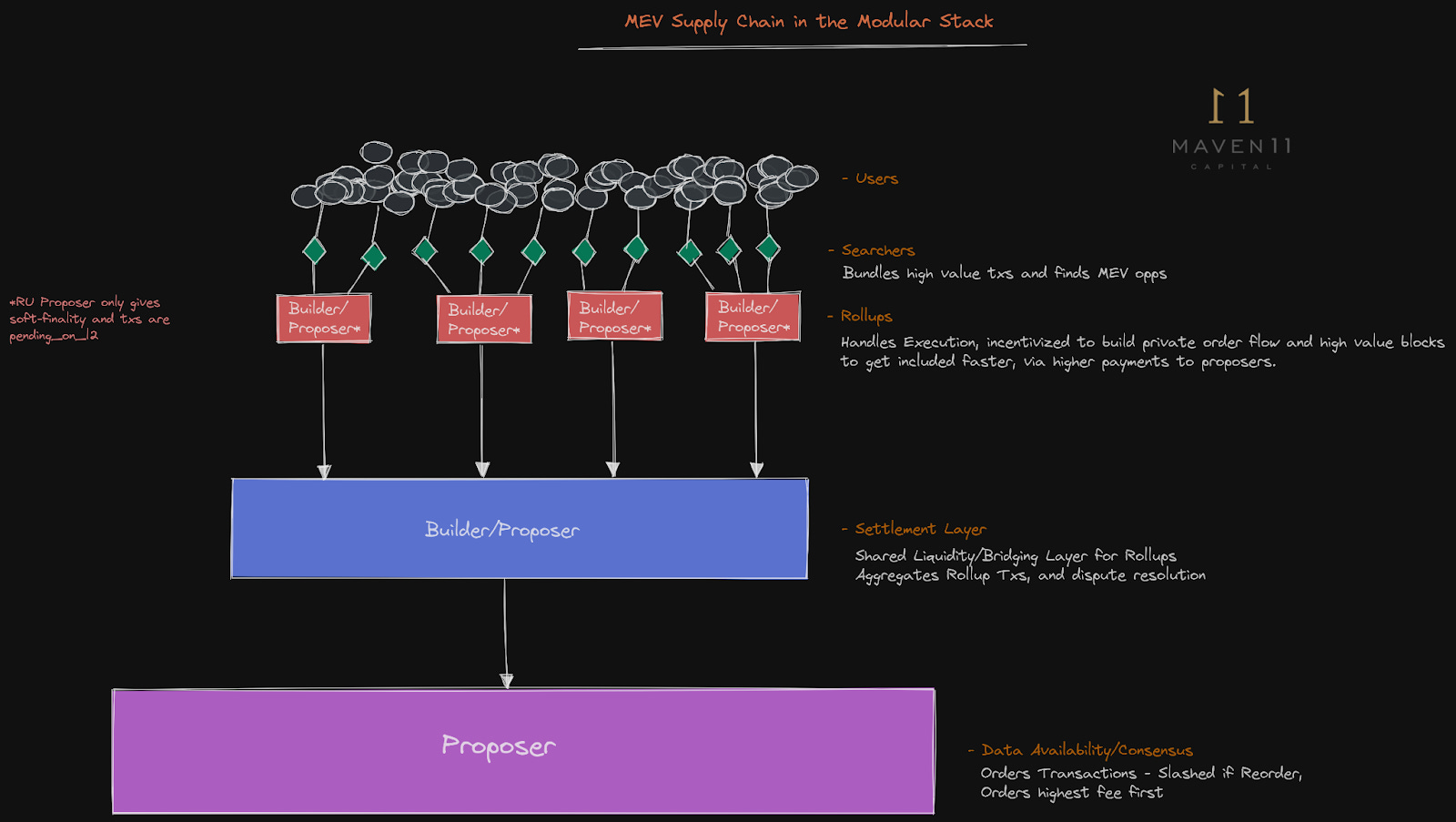
Diagram illustrating batch auction aggregation preventing MEV frontrunning in Ethereum DeFi token launches, CoW Protocol FCBA vs Uniswap Angstrom protection

Metrics That Matter: Slippage Reduction Quantified

Data from 2025 drives the case home. Batch auctions consistently deliver superior outcomes, especially amid Ethereum's price stability at $2,912.58. Consider launches where ETH's 24-hour range from $2,859.78 to $2,978.04 amplified gas wars; traditional AMMs saw average slippage hit 12.3%, while batched systems held at 2.1%.

Batch Auctions vs AMMs: Key Metrics During 2025 Token Launches (ETH at $2,912.58)

MetricBatch AuctionsAMMs
Slippage %Low (0-5%) ✅ (e.g., CoW FCBA uniform pricing)High (20-50%+) ⚠️ (frontrunning amplifies in launches)
MEV ExposureLow/Protected ὑ2 (batch aggregation prevents reordering)High ⛔ (vulnerable to sandwich & sniping bots)
Execution TimeBatch interval (30s-1min)Near-instant (<1s per tx)
Liquidity EfficiencyHigh ⭐ (combinatorial matching optimizes)Moderate (constant product curves limit)

CoW's analytics reveal a 65% drop in sandwich attack incidence post-FCBA, with combinatorial solvers optimizing across 500 and order permutations per auction. Uniswap's Angstrom logs confirm similar: private flow cut predatory fills by 80% in beta tests. These figures aren't anomalies; they're repeatable under network stress, as gasless entry lowers barriers for broader participation.

Yet precision demands scrutiny of edge cases. High-frequency traders occasionally bypass via cross-chain arbitrage, though sealed-bid opacity limits scalability of such plays. My view: these systems prioritize equitable distribution over raw velocity, aligning with disciplined risk management in volatile cycles.

Navigating Persistent Hurdles in Batch Adoption

Despite triumphs, frontrunning prevention DeFi via batch auctions grapples with adoption friction. Liquidity depth remains paramount; sparse order books in nascent tokens trigger fallback to on-chain AMMs, reintroducing vulnerabilities. 2025 surveys indicate only 28% of launch teams integrate batching natively, per Blockchain News, citing integration complexity with existing smart contracts.

(12/30) Batch auction gotchas: ⚠️ Complex clearing logic = more potential bugs ⚠️ Need to prevent order spam (gas-free submissions = DoS vector) ⚠️ What if no clearing price exists? ⚠️ Users need to understand the mechanism (UX challenge) ⚠️ Longer time windows = more market
(13/30) Liquidation auctions are their own beast. Your goal: Liquidate fast to prevent protocol bad debt MakerDAO journey: → Started with English auctions → too slow, took losses → Moved to Dutch → better, but needs active keepers → Constantly iterating Speed > revenue
(14/30) Liquidation strategies: Instant discount (Aave, Compound) → 5-10% bonus to liquidators, instant → Pro: Fast, simple → Con: Protocol gives up value Dutch auction (MakerDAO) → Start at small discount, increase → Pro: Better price discovery → Con: Slower, keeper
(15/30) Sealed-bid (Commit-Reveal): Bids hidden until reveal phase Phase 1: Submit hash of your bid Phase 2: Reveal actual bid Phase 3: Highest wins ✅ Maximum MEV protection ✅ Prevents bid sniping ❌ Complex (2 phases = 2x transactions) ❌ Users might forget to reveal
(16/30) Candle Auctions: Random end time to prevent sniping Auction "ends" at random time in final period. You don't know when. ✅ Eliminates last-second sniping ✅ Encourages early bidding ❌ Needs good randomness source ❌ Confusing UX Polkadot uses this for parachain slots.
(17/30) How to choose? Ask yourself: 1️⃣ Speed requirement: Hours? Minutes? Seconds? 2️⃣ Participant count: 10 people or 1000? 3️⃣ MEV risk: High-value, predictable outcomes? 4️⃣ Revenue vs fairness: Which matters more? 5️⃣ User sophistication: Retail or pros?
(18/30) SPEED REQUIREMENTS 🏃 Need instant? → Fixed discount liquidation ⚡ Need fast (minutes)? → Dutch auction 🚶 Can take hours? → English or Batch ⏰ Can take days? → Batch or sealed-bid Longer = more market risk, more protocol exposure
(19/30) PARTICIPANT COUNT 👥 10-50 people? → English auction is fine 👥👥 100-500 people? → Dutch or Batch strongly preferred 👥👥👥 1000+ people? → Batch auction or you'll price out retail Gas costs are access control. Choose accordingly.
(20/30) MEV RISK 🎯 High-value + predictable outcome? → Batch or sealed-bid 💰 Moderate risk? → Dutch (less frontrun incentive) 📊 Lower value or complex outcome? → English acceptable If your auction can be profitably front-run, it WILL be.
(21/30) Security checklist for ANY auction: ✅ Minimum bid increments (anti-griefing) ✅ What if zero bidders? (fallback mechanism) ✅ Oracle manipulation resistant? ✅ Reentrancy protection ✅ Time manipulation resistant ✅ Gas DoS vectors closed ✅ Edge cases tested (ties,
(22/30) Real vulnerabilities I've seen: 🔴 No minimum bid increment → griefing via 1 wei bids 🔴 Oracle-based starting price → flash loan manipulation 🔴 Free order submission → spam DoS 🔴 No bid validation → negative bids 🔴 Block timestamp dependency → miner
(23/30) Often overlooked: Capital requirements English auctions: Only winner locks capital Dutch/Batch: Often require upfront deposits Requiring upfront capital = fewer participants = worse price discovery If you need broad participation, consider capital efficiency in your
(24/30) The eternal tradeoff: Simple auctions (Dutch, English) → Easier to implement and audit → But more exposed to MEV Complex auctions (Batch, sealed-bid) → Better game theory → But more bugs, higher audit cost Start simple. Add complexity only when justified.
(25/30) Quick reference guide: 🚀 Token launch → Batch or Dutch 🖼️ NFT (hot) → English 🖼️ NFT (cold) → Dutch ⚡ Liquidations → Dutch or instant discount 🏛️ Governance → Candle or sealed-bid 📊 DEX trades → Batch 💎 Rare assets → English But always validate against YOUR
(26/30) Red flags when choosing: 🚩 "Let's do something innovative" (without reason) 🚩 Ignoring MEV completely 🚩 No analysis of participant behavior 🚩 Copy-pasting without understanding context 🚩 No fallback for edge cases 🚩 Assuming users will behave "rationally"
(27/30) Before launch, simulate: 📊 100 users bidding normally 📊 Whale trying to manipulate 📊 Bot trying to frontrun 📊 Gas price spike scenario 📊 Zero bidders scenario 📊 Tied bids scenario If you haven't tested it, you haven't built it.
(28/30) My advice as an auditor: The auction mechanism you choose affects: → Protocol security → User fairness → MEV exposure → Who can participate This isn't a checkbox item. It's a foundational design decision. Choose carefully. Test thoroughly. Launch confidently.
(29/30) Want to learn more? Study these implementations: → Gnosis Auction (Dutch) → CowSwap (Batch) → MakerDAO liquidations (Dutch evolution) → OpenSea (English) Code is the best teacher. See what worked and what didn't.
(30/30) Building a DeFi protocol and unsure which auction to use? Don't guess. The wrong choice costs millions in MEV or excludes your users. Questions? Drop them below. I'll help you think through your specific use case. 🎯

Latency, though minimized, persists as a critique. FCBA clocks 200ms off-chain solving, but chain finality adds 12 seconds on Ethereum L1, testing impatient speculators. Evolving MEV bots counter with oracle manipulations or flash loan cascades, demanding protocol-level countermeasures like dynamic batch windows.

Cross-chain fragmentation compounds issues. While CoW spans Polygon and Avalanche, Ethereum mainnet at $2,912.58 bears the brunt of volume, where sequencer risks in L2s introduce new ordering games. Solutions like threshold signatures in Angstrom mitigate this, but universal standards lag.

For token teams, the playbook sharpens: embed batch endpoints in launch contracts, incentivize solvers with surplus shares, and monitor via real-time dashboards. Platforms advancing block-end auctions complement this, sequencing orders at block closure to further erode mempool exploits.

Forward momentum builds. With ETH's modest 24-hour uptick of and $21.81 signaling ecosystem resilience, protocols iterate rapidly. Hybrid models blending batching with private relays promise 90% MEV immunity, backed by rising TVL in protected DEXes. Traders gain tools to sidestep bots, founders preserve launch integrity, and validators realign incentives toward network health. In this arena, data dictates: batch auctions aren't optional; they're the calibrated defense reshaping DeFi's frontier.