
Defining the modular MEV shift
The concept of Maximal Extractable Value (MEV) has traditionally been bound to the monolithic blockchain model, where consensus, execution, and data availability are bundled into a single chain. In this legacy architecture, the complexity of maintaining a unified state machine creates a bottleneck. Searchers compete for block space not just on execution logic, but on the inherent constraints of a single network's throughput and finality. This monolithic approach treats MEV as a byproduct of congestion, often leading to volatile gas fees and fragmented liquidity.
Modular MEV represents a structural departure from this model. It decouples the execution layer from the consensus and data availability layers. By allowing different specialized networks to handle these distinct functions, the extraction of value becomes a matter of cross-layer coordination rather than intra-chain competition. As noted in Maven11’s research on the subject, the focus shifts to the "matureness of your execution environment" and how transactions on one chain can trigger effects on another, particularly concerning finality actors and cross-domain MEV.
This separation allows for a more granular understanding of value extraction. Instead of a single winner-takes-all auction for block space, modular architectures enable parallel processing of MEV opportunities across different execution environments. The value is no longer just about who can include a transaction fastest in a block, but who can best orchestrate the flow of data and execution across a distributed stack. This shift redefines profitability by reducing the friction of cross-chain interactions and allowing for more sophisticated, intent-based strategies that operate across the modular landscape.
How intents change the extraction game
Traditional MEV extraction relies on a complex, often fragile chain of transactions. Searchers identify opportunities, builders bundle those transactions into blocks, and relays facilitate the handoff. This process is rigid; if any link in the chain fails, the opportunity vanishes or becomes significantly less profitable. Modular MEV shifts this paradigm by decoupling the execution environment from the transaction path. In this new architecture, users do not specify exactly how a trade should happen. Instead, they declare their desired outcome.
This shift from transaction ordering to intent satisfaction allows solvers to compete on efficiency and cost rather than just speed. A solver receives a user’s request—such as "swap 1 ETH for the most USDC possible")—and determines the optimal path to achieve it. This might involve splitting the trade across multiple decentralized exchanges, using liquidity pools on different chains, or leveraging off-chain data. The solver then submits the transaction that best meets the user’s criteria, keeping the difference between the requested outcome and the actual execution as profit. This competition drives down costs for users and increases overall market efficiency.
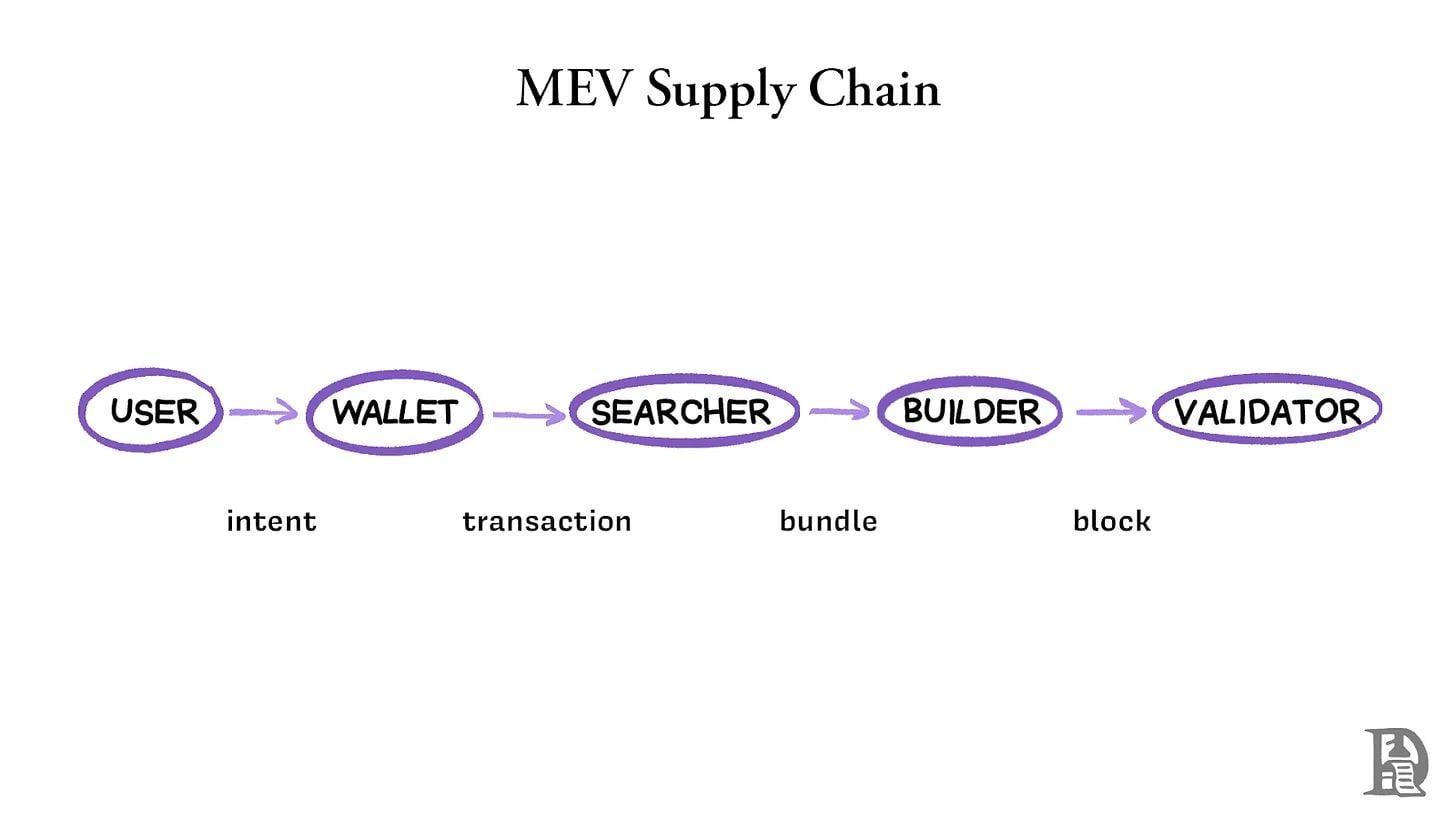
The implications for DeFi profitability are profound. By allowing solvers to find the most efficient paths, modular MEV reduces slippage and improves execution quality for end-users. It also creates a more democratic landscape where smaller solvers can compete with larger players by offering better rates or faster execution. This modularity means that the value extracted from the system is not just captured by a few dominant builders but is shared across a network of specialized actors. As the ecosystem matures, we expect to see more sophisticated intent-based protocols that further refine this process, making DeFi more accessible and efficient for everyone.
"The shift from transaction ordering to intent satisfaction allows solvers to compete on efficiency and cost rather than just speed."
Community discussions highlight the practical benefits of this approach. Users are increasingly aware of the hidden costs of traditional MEV, such as front-running and sandwich attacks. Intent-based solutions offer a way to mitigate these risks by ensuring that the user’s order is executed at the best possible price, regardless of the underlying complexity. This transparency and fairness are key to the long-term adoption of modular MEV architectures. As more projects adopt this model, the entire DeFi ecosystem stands to become more robust and user-centric.
Off-chain actors and sequencers
The modular stack introduces distinct layers of authority that were absent in monolithic chains. In a modular MEV environment, the sequencer no longer holds absolute power over transaction ordering. Instead, decentralized sequencers distribute this responsibility, creating a more complex but potentially fairer landscape for value extraction. This separation allows the data availability layer to remain independent from the execution layer, forcing solvers to compete for order flow rather than relying on a single central point of control.
Off-chain solvers play a critical role in this new architecture. They act as intermediaries, competing to fill intents or bundles submitted by users. Because the execution and consensus layers are decoupled, these solvers must operate with greater transparency. They often submit their proposed orders to a shared mempool or a specific ordering service, where the decentralized sequencer selects the most profitable or efficient arrangement. This competition drives down the cost of MEV for users while ensuring that the underlying block space is utilized efficiently.
The interaction between these actors reshapes profitability. Traditional MEV bots, which relied on front-running within a single chain, now face stiffer competition from specialized solver networks. The modular approach allows for specialized optimization: data layers can focus on throughput, while execution layers can focus on complex order routing. This specialization means that value is extracted not just through speed, but through sophisticated algorithmic matching and risk management performed by off-chain entities.
This shift requires a deeper understanding of how different components interact. The modular MEV landscape is not just about faster transactions; it is about redistributing power among sequencers, solvers, and data layers. As these systems mature, the profit margins for traditional MEV strategies may compress, while opportunities for solver-based value creation expand.
From zero-sum to positive-sum dynamics
The conversation surrounding Maximal Extractable Value has undergone a significant philosophical shift. For years, MEV was viewed through a zero-sum lens, where the profit of a searcher directly corresponded to the loss of a user or the inefficiency of the network. This adversarial framing dominated the early years of the "dark forest," creating an environment where extraction was seen as a necessary evil or a predatory threat.
However, modular MEV architectures are dismantling this binary. By decoupling the extraction process from the execution layer, new models allow for value redistribution rather than pure extraction. Initiatives like the Reflex and Algebra Integral collaboration demonstrate this pivot, introducing MEV protection as a modular plugin. This approach ensures that value is shared with users, transforming MEV from a parasitic drain into a sustainable economic layer.
This transition aligns with the broader discourse highlighted in recent industry events. Discussions at MEV-Week Paris have increasingly focused on moving beyond the zero-sum paradigm, advocating for systems where the benefits of block space auctioning are returned to the protocol and its participants. The goal is no longer just to prevent loss, but to engineer a positive-sum ecosystem where every participant, including the searcher, derives value from the same transaction.
The implications of this shift are profound. It suggests a future where MEV is not something to be feared or minimized, but something to be managed and shared. This requires a rethinking of smart contract design, where protection mechanisms are baked in as standard features rather than afterthoughts. As modular components become more sophisticated, the line between extraction and service will blur, leading to more efficient and equitable DeFi markets.
What this means for DeFi profitability
Modular MEV is shifting the profit model from zero-sum extraction to shared value creation. By separating execution, consensus, and data availability, protocols can capture revenue that was previously lost to centralized relayers or fragmented liquidity pools. This structural change allows DeFi platforms to retain more value while offering users predictable transaction costs.
The user experience improves as a direct result of this modularity. When MEV is handled by specialized, intent-based layers rather than competing mempool bots, front-running and sandwich attacks diminish significantly. Users no longer need to pay exorbitant gas fees to bypass malicious actors, making DeFi interactions smoother and more cost-effective for the average participant.
Long-term sustainability depends on this transition. Legacy architectures often incentivize behaviors that harm the network’s health, such as congestion and price manipulation. Modular designs align incentives better, ensuring that the value extracted from transactions is reinvested into the protocol’s security and development rather than siphoned off by external arbitrageurs.
Common questions about modular MEV
The landscape of extractable value is shifting from simple block-building to complex, intent-driven architectures. Understanding the distinction between traditional extraction and modular approaches is essential for developers and investors navigating this space.
No comments yet. Be the first to share your thoughts!