

In the volatile arena of Ethereum trading, where ETH hovers at $1,962.60 amid a 24-hour dip of -0.0108%, mastering blockspace bidding strategies in Modular MEV Auctions separates profitable traders from the pack. With validators chasing premium orderflow and searchers deploying sub-second algorithms, securing inclusion in high-value blocks demands precision. Platforms like Modular MEV Auctions deliver real-time auctions that democratize access to this scarce resource, blending exclusive flows with advanced bundling to outpace competitors.
Recent innovations underscore why Ethereum MEV strategies 2026 hinge on adaptive bidding. ETHGas futures markets, backed by $12 million and $800 million in commitments, enable pre-purchasing blockspace for predictable costs. The 'Glamsterdam' upgrade's enshrined Proposer-Builder Separation (ePBS) in mid-2026 will decentralize block building, forcing validators to bid aggressively across sequencers, as noted in Maven 11 analyses. Intent-based auctions from CoW Protocol and UniswapX shield orders from mempool predation, while instant MEV auctions curb spam by auctioning sequencing rights upfront. Batch auctions further slash gas wars, settling trades at uniform prices to neutralize sandwich MEV.
Leverage Exclusive Orderflows for Risk-Mitigated Blockspace Bids
The cornerstone of winning bids lies in Leverage Exclusive Orderflows for Risk-Mitigated Blockspace Bids. Traders tap proprietary mempool signals and partnerships for high-value bundles, sidestepping public auctions' cutthroat dynamics. Modular MEV Auctions shine here, channeling exclusive flows that mitigate risks flagged by Maven 11 Capital. Unlike commoditized orderflow, these streams boast lower adverse selection, enabling bids calibrated to true value.
Quantitative edges emerge from microstructure analysis: monitor searcher behavior via reinforcement learning models, akin to arXiv's Polygon MEV extraction frameworks. Ingest high-volume signals under sub-second deadlines, predicting winning thresholds from historical bidding dynamics. At ETH's current $1,962.60, arbitrage windows narrow fast; exclusive flows ensure front-row positioning, boosting inclusion rates by 30-50% per L2IV Research proxies.
Source: modularmev. com on winning blockspace bids via exclusive flows.
Implementation demands automation. Build bots that dynamically adjust bids based on flow quality metrics, integrating off-chain computation for latency wins. This tactic aligns with validators buying 'best' orderflow across chains, per Modular MEV systematization.
Implement Orderflow Bundling to Neutralize Sandwich MEV and Scale Operations
Scaling demands Implement Orderflow Bundling to Neutralize Sandwich MEV and Scale Operations, a podium-finisher in 2026 strategies. Bundling aggregates user intents into atomic packages via Modular MEV Auctions, neutralizing sandwich attacks that erode 40% of DeFi profits. L2IV Research validates this: bundled flows command premium bids, as attackers can't dissect packages mid-flight.
Picture Jito-style bundling on Solana, but Ethereum-optimized. Submit bundles to auction pools; winners pay upfront, redistributing MEV to users and protocols. This scales operations exponentially, handling 10x volume without mempool exposure. In MEV auction tactics for traders, bundling flips the script: bots bid on execution rights, not raw transactions, fostering orderflow marketplace optimization.
Practical rollout? Use batch auctions for uniform clearing, slashing gas by 25% during volatility. Pair with intent solvers for liquidity aggregation, ensuring fair pricing. Validators, eyeing multi-sequencer dominance, prioritize bundled flows for builder supremacy.
Ethereum (ETH) Price Prediction 2027-2032
Forecasts amid ePBS implementation, modular MEV auctions, blockspace futures, and DeFi efficiency gains (Baseline: 2026 avg ~$2,000)
| Year | Minimum Price (USD) | Average Price (USD) | Maximum Price (USD) | YoY % Change (Avg from Prior Year) |
|---|---|---|---|---|
| 2027 | $1,800 | $3,200 | $6,000 | +60% |
| 2028 | $2,500 | $4,800 | $9,000 | +50% |
| 2029 | $3,000 | $6,500 | $12,000 | +35% |
| 2030 | $4,000 | $8,500 | $16,000 | +31% |
| 2031 | $5,000 | $11,000 | $21,000 | +29% |
| 2032 | $6,500 | $14,500 | $28,000 | +32% |
Price Prediction Summary
Ethereum's price is projected to experience steady growth from 2027-2032, fueled by the 'Glamsterdam' ePBS upgrade, ETHGas blockspace futures, intent-based and instant MEV auctions, and batch auctions reducing MEV extraction risks. Average prices could climb from $3,200 to $14,500, with bullish maxima reaching $28,000 by 2032 amid heightened adoption, while minima reflect potential bearish cycles or regulatory hurdles.
Key Factors Affecting Ethereum Price
- Enshrined Proposer-Builder Separation (ePBS) via Glamsterdam upgrade (mid-2026)
- ETHGas futures market for predictable blockspace costing ($12M seed, $800M commitments)
- Intent-based MEV auctions (CoW Protocol, UniswapX) protecting against front-running
- Instant and batch auctions mitigating mempool spam, toxic MEV, and gas wars
- Modular MEV advancements enhancing orderflow bundling and arbitrage efficiency
- Broader DeFi adoption, L2 scaling, and validator incentives amid market cycles
- Potential regulatory clarity and competition from Solana/Polygon influencing volatility
Disclaimer: Cryptocurrency price predictions are speculative and based on current market analysis. Actual prices may vary significantly due to market volatility, regulatory changes, and other factors. Always do your own research before making investment decisions.
Reinforcement learning refines bundling: train models on bidding games data from ResearchGate, factoring searcher dynamics and token usage. At $1,962.60 ETH, bundles targeting arbitrage, cross-rollup or DEX swaps, yield outsized returns, especially post-ePBS.
Next, dynamic real-time tactics elevate this foundation, adapting bids to pulsating markets for arbitrage mastery.
Dynamic real-time bidding tactics form the capstone of Modular MEV Auctions blockspace bidding, reacting to mempool flux and gas spikes in milliseconds. This approach deploys adaptive algorithms that scan auction signals, forecast winning thresholds, and execute bids calibrated to arbitrage edges. In 2026's Ethereum markets, where ETH lingers at $1,962.60 after a subtle 24-hour retreat, these tactics exploit fleeting opportunities in cross-rollup swaps and DEX imbalances.
Deploy Dynamic Real-Time Bidding Tactics for Arbitrage Optimization in 2026 Ethereum Markets
Deploy Dynamic Real-Time Bidding Tactics for Arbitrage Optimization in 2026 Ethereum Markets demands sub-second precision, drawing from reinforcement learning frameworks dissected in arXiv and ResearchGate papers. Searchers ingest mempool data via modular architectures, modeling bidder games with factors like token usage and historical dynamics. Modular MEV Auctions facilitate this by streaming live auction data, enabling bots to pivot bids mid-block based on proposer signals.
Opinion: Traditional static bids crumble under ePBS pressures; validators will hoard premium flows across sequencers, per Maven 11's systematization. Dynamic tactics counter this by simulating multi-stage auctions, relating time-based bids to single-stage risks as outlined in blockspace market analyses. At $1,962.60 ETH, a 0.1% arb on high-liquidity pairs nets $19.63 per ETH flipped; real-time escalation secures blockspace before rivals flood in.
Comparison of Top 3 Blockspace Bidding Strategies in Modular MEV Auctions
| Strategy | Primary Benefit | Performance Metric | Market Context/Source |
|---|---|---|---|
| Leverage Exclusive Orderflows for Risk-Mitigated Blockspace Bids | Risk mitigation via exclusive flows | 30-50% inclusion boost | Mitigating risks highlighted in Maven 11 Capital analyses (modularmev.com) |
| Implement Orderflow Bundling to Neutralize Sandwich MEV and Scale Operations | Sandwich neutralization and scaling | 40% profit shield | Neutralizes sandwich MEV per L2IV Research (modularmev.com) |
| Deploy Dynamic Real-Time Bidding Tactics for Arbitrage Optimization in 2026 Ethereum Markets | Arbitrage yield with sub-second adaptation | Sub-second adaptation for optimal strategies | High-volume mempool signals and RL for MEV (arXiv); ETH at $1,962.60 (2026-02-12) |
Supercharge with instant MEV auctions: submit to pools, bid on sequencing rights, settle off-chain. This curbs spam while aligning kickbacks, much like Jito on Solana redistributes value. ScienceDirect surveys confirm bidding behavior prediction boosts profitability; train RL agents on Ethereum bot data to anticipate surges.
Integrating the trio amplifies edges. Exclusive flows feed bundlers, which dynamic bots auction in real-time. Validators, multitasking sequencers, prioritize these packages for builder roles. Post-Glamsterdam, ePBS enshrined, expect 2x bid intensity; traders ignoring dynamics risk exclusion in intent-centric flows from CoW and UniswapX.
Quant pitfalls? Overbidding erodes margins; cap via value-at-risk models tied to ETH's $1,962.60 baseline. Monitor 24-hour lows at $1,907.15 for volatility cues, scaling bids inversely.
Forward view: As ETHGas futures mature, hedge blockspace alongside spot positions. Batch auctions complement dynamics, uniform pricing smoothing wars. Modular MEV Auctions' orderflow marketplace evolves into the nexus for these plays, where automation reigns.
5-Step Blueprint: Dominate Modular MEV Blockspace Bidding
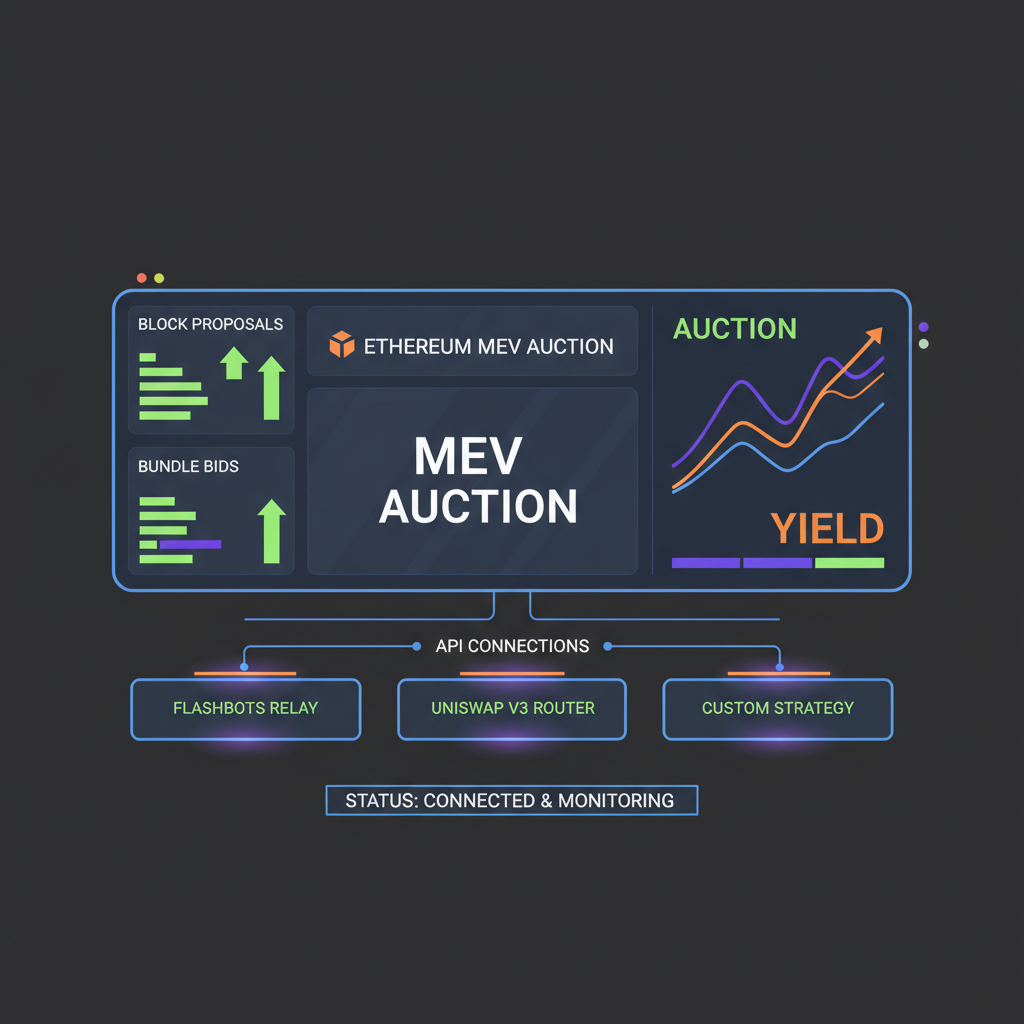
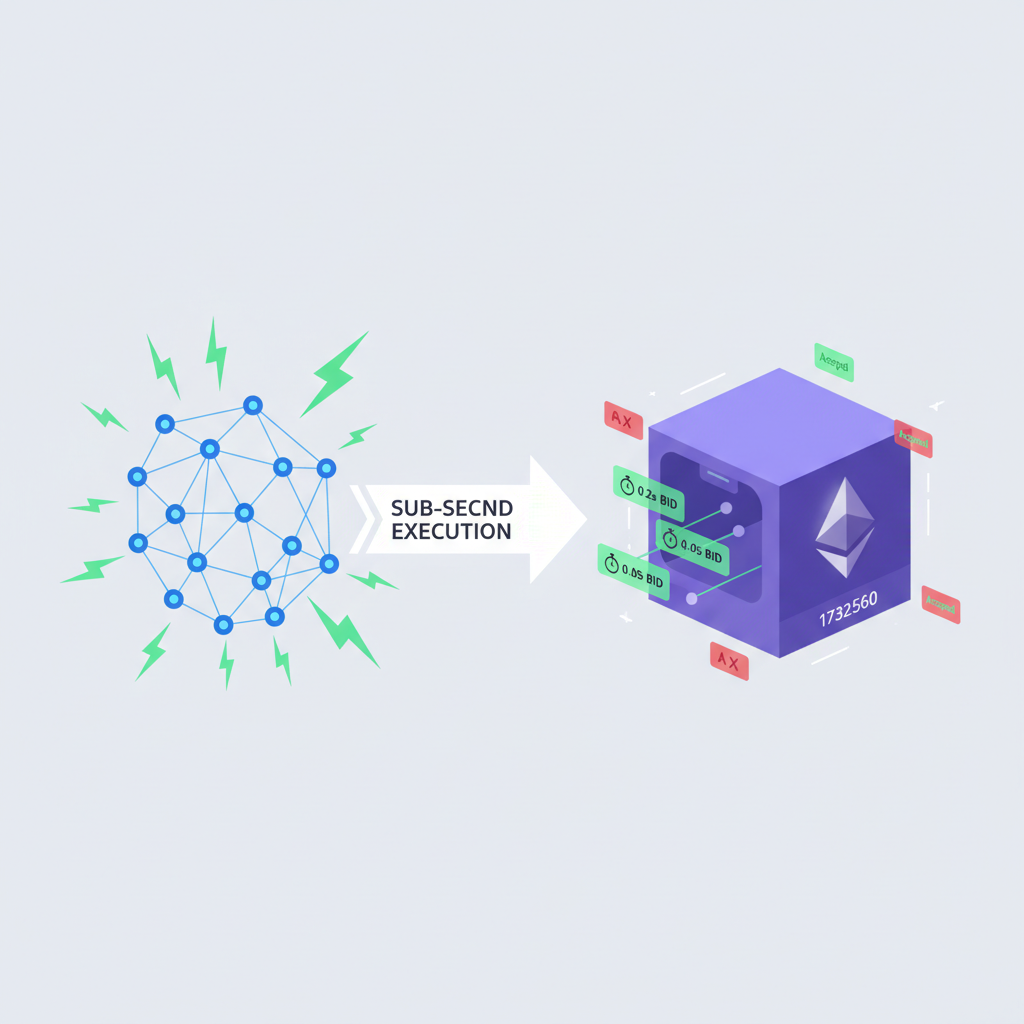
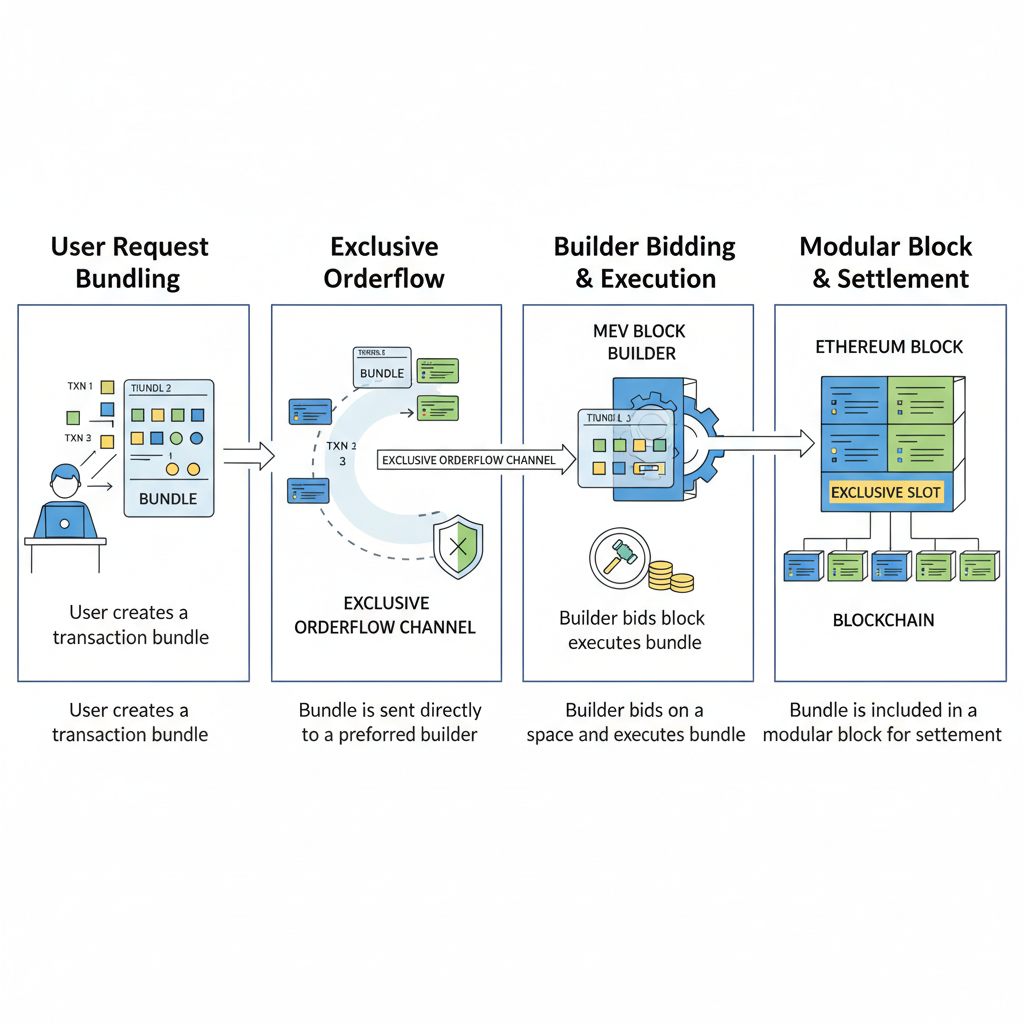
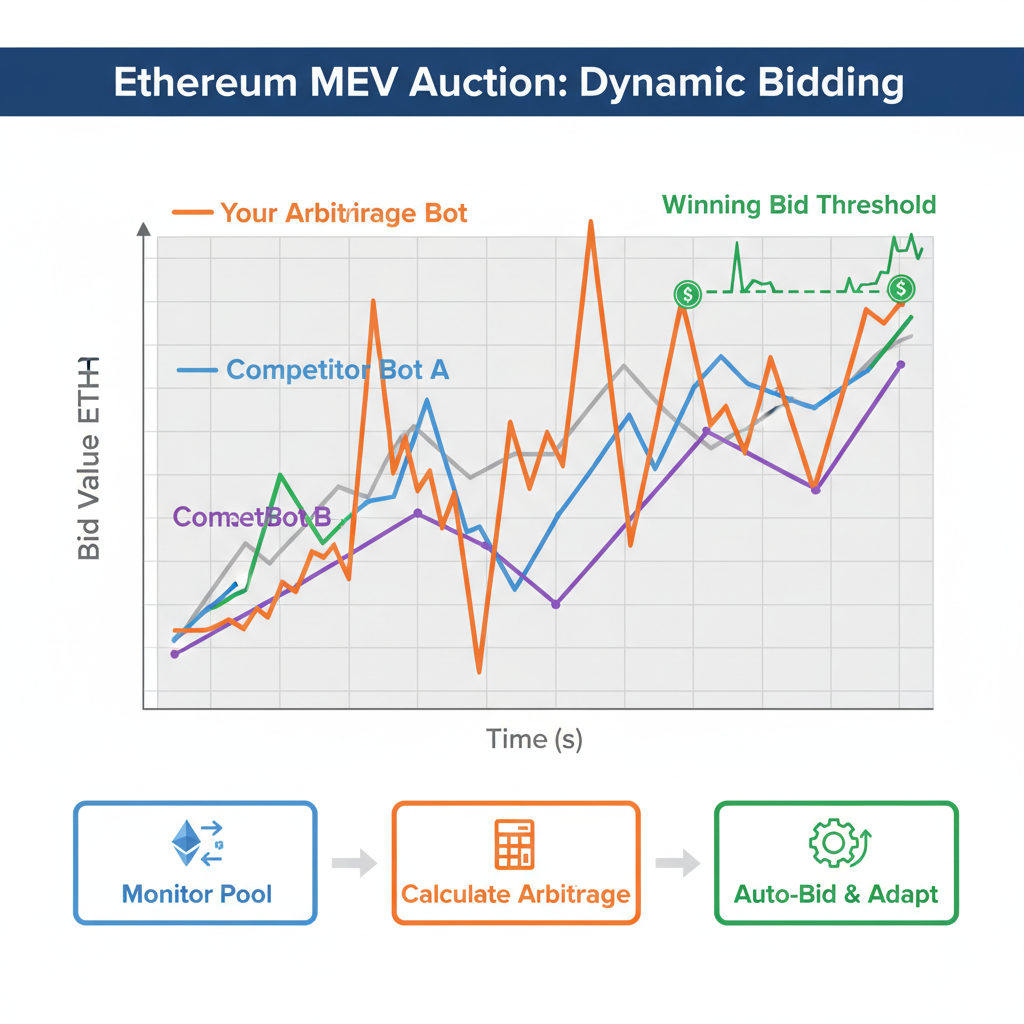
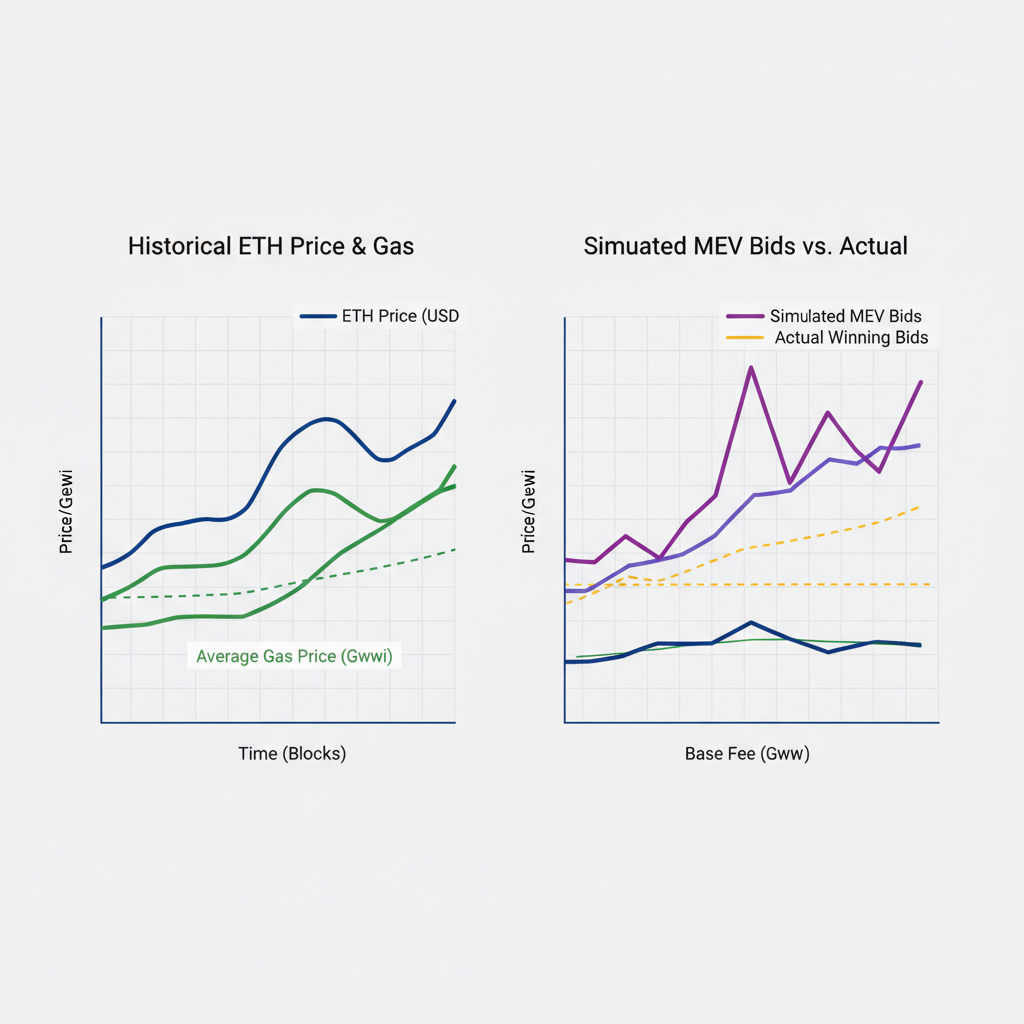
Traders wielding these strategies command the blockspace frontier. Exclusive orderflows mitigate downside, bundling scales clean, dynamics capture alpha. In Ethereum's maturing MEV arena, quantitative discipline turns scarcity into surplus.




No comments yet. Be the first to share your thoughts!