
Modular MEV 2026 Budget
Building a modular MEV stack in 2026 is less about buying the fastest hardware and more about balancing decoupled search, builder, and relay components. Profitability now hinges on managing the latency and data costs between these distinct roles. A single bottleneck in the relay or a slow search bot can erase margins that once relied on raw block space.
Your budget must account for three distinct layers: infrastructure, software, and operational overhead. Infrastructure costs vary wildly based on whether you run local nodes or rely on third-party RPCs. Software costs include licensing for proprietary search algorithms or open-source maintenance. Operational overhead covers the engineers who monitor the pipeline and the capital required for bid shading.
Searcher Infrastructure
The searcher is the engine of your stack. You need low-latency connections to mempool endpoints and fast execution environments. Budget for dedicated bare-metal servers in regions close to validator blocks. Cloud instances often introduce jitter that kills front-running opportunities. Consider using specialized FPGA accelerators if you are targeting high-frequency arbitrage.
Builder and Relay Costs
The builder constructs the blocks, and the relay broadcasts them. This layer requires robust validation logic and high-throughput networking. Costs here are driven by the complexity of your inclusion list and the redundancy of your relay nodes. If you are running a private relay, you must factor in the security audits and legal compliance costs. Public relay fees are lower but offer less control over block construction.
Operational and Maintenance
The most overlooked budget item is maintenance. MEV strategies decay quickly as market conditions change. You need a team dedicated to updating search algorithms and monitoring for new censorship patterns. This includes costs for data feeds, oracle services, and continuous integration/deployment pipelines. Underestimating this layer is the fastest way to see your stack become obsolete.
Top modular MEV stacks for 2026
The modular MEV landscape in 2026 has shifted from monolithic bots to decoupled architectures. Builders, searchers, and relays now operate as distinct services, allowing teams to swap components based on specific chain requirements. This section compares the strongest open-source and commercial stacks available, focusing on cross-rollup compatibility, latency, and censorship resistance.
Flashbots MEV-Boost
Flashbots MEV-Boost remains the industry standard for Ethereum L1 builders. It uses a private transaction pool to protect searchers from front-running while maximizing block value. The stack is mature, with extensive documentation and a large network of validators. It is the safest choice for teams prioritizing stability over experimental features. However, it is less optimized for L2 rollups compared to newer alternatives.
Succinct MEV-Share
Succinct MEV-Share offers a decentralized relay network that competes directly with Flashbots. It uses zero-knowledge proofs to verify block validity, reducing the trust required in builders. This stack is ideal for teams concerned about censorship or centralization risks. The architecture is more complex to set up but offers superior transparency. It is particularly effective for cross-chain MEV extraction where proof verification is critical.
Jito MEV
Jito MEV is the dominant stack for Solana, but its modular components are increasingly used for multi-chain strategies. It bundles transactions with priority fees, ensuring high inclusion rates even during network congestion. The stack is highly optimized for speed, with low-latency RPC integrations. While primarily Solana-focused, its relay architecture serves as a model for high-throughput L2s. Teams building for Solana or Solana-like chains should prioritize this option.
Blocknative MEV-Protect
Blocknative MEV-Protect focuses on protecting user transactions from malicious MEV rather than extracting it. It integrates with major wallets and RPC providers to block sandwich attacks in real time. This stack is essential for consumer-facing applications where user trust is paramount. It does not maximize builder revenue but reduces user loss from MEV. It is a complementary tool rather than a replacement for extraction stacks.
Comparison Table
| Stack | Primary Chain | Key Feature | Setup Complexity | Best For |
|---|---|---|---|---|
| Flashbots MEV-Boost | Ethereum L1 | Private Mempool | Low | Stability & Ecosystem |
| Succinct MEV-Share | Multi-chain | ZK Verification | High | Censorship Resistance |
| Jito MEV | Solana | Priority Bundles | Medium | High Throughput |
| Blocknative MEV-Protect | Multi-chain | User Protection | Low | Consumer Apps |
Choosing the Right Stack
Selecting a modular MEV stack depends on your target chain and risk tolerance. For Ethereum L1, Flashbots is the default due to its network effects. For cross-chain or L2 strategies, consider Succinct for its transparency. If you are building on Solana, Jito is unmatched. Finally, if your goal is user protection rather than extraction, Blocknative is the clear choice.
Inspect the expensive parts
Before committing capital to a modular MEV stack, audit where the biggest leaks occur. In a decoupled search-builder-relay architecture, failure rarely comes from a single broken component. Instead, it stems from latency mismatches and auction inefficiencies between layers. Use this checklist to identify the high-cost failure points that erode profitability.
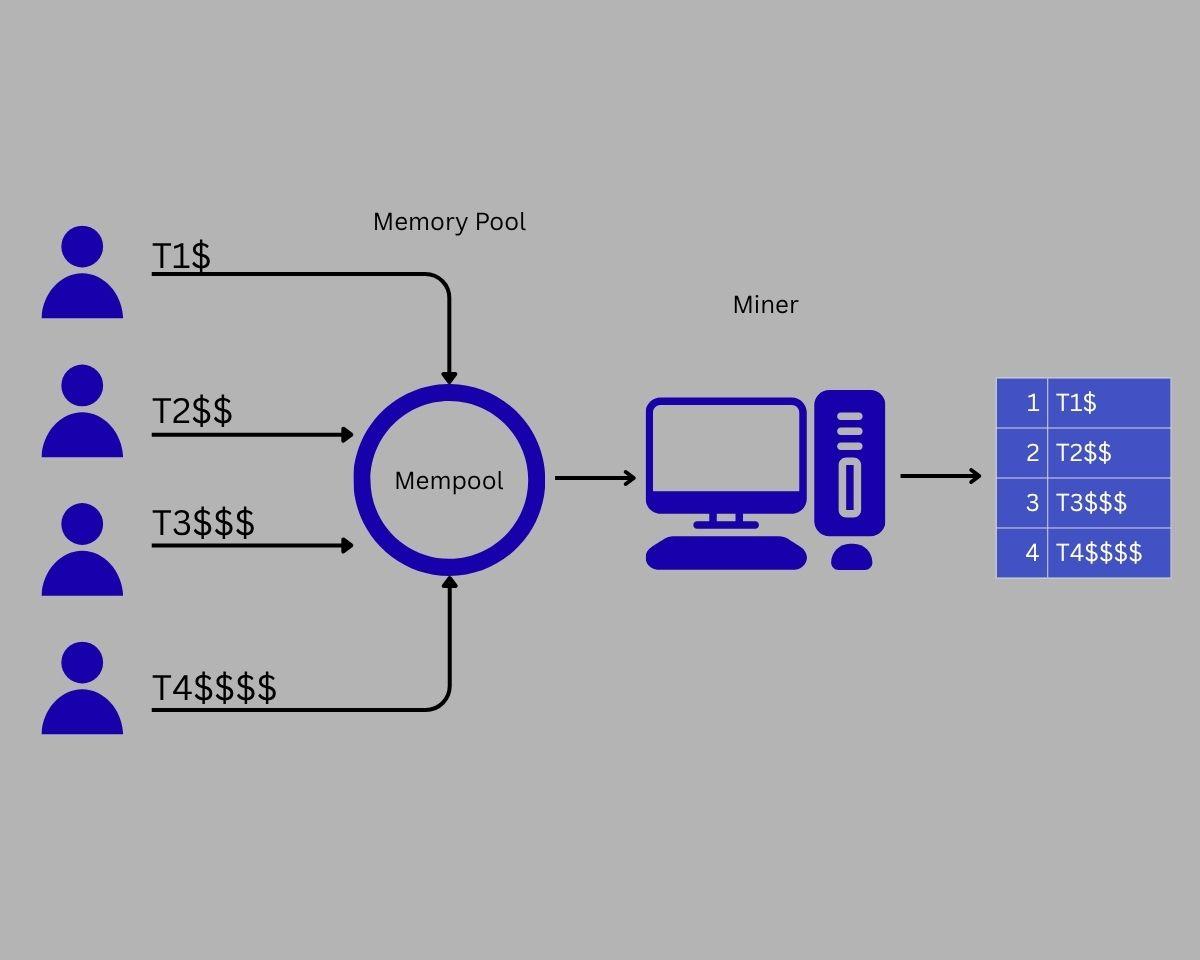
Measure the exact millisecond delay between block proposal and relay inclusion. Even 50ms of extra latency can cause your transaction to be front-run by faster competitors or dropped entirely during network congestion. If your relay cannot consistently submit within the block window, your search strategy is useless.

Ensure your builder selects the highest-value bundle, not just the first one. Many default builders use naive sorting that ignores gas price fluctuations or validator preferences. If your builder doesn't optimize for the specific block space you're targeting, you're leaving significant profit on the table.
For multi-chain strategies, verify that your atomicity guarantees hold across rollups. Shared sequencing is becoming the standard, but if your atomicity protocol fails during high load, you risk partial execution and capital loss. Test your fallback mechanisms when cross-rollup latency spikes.
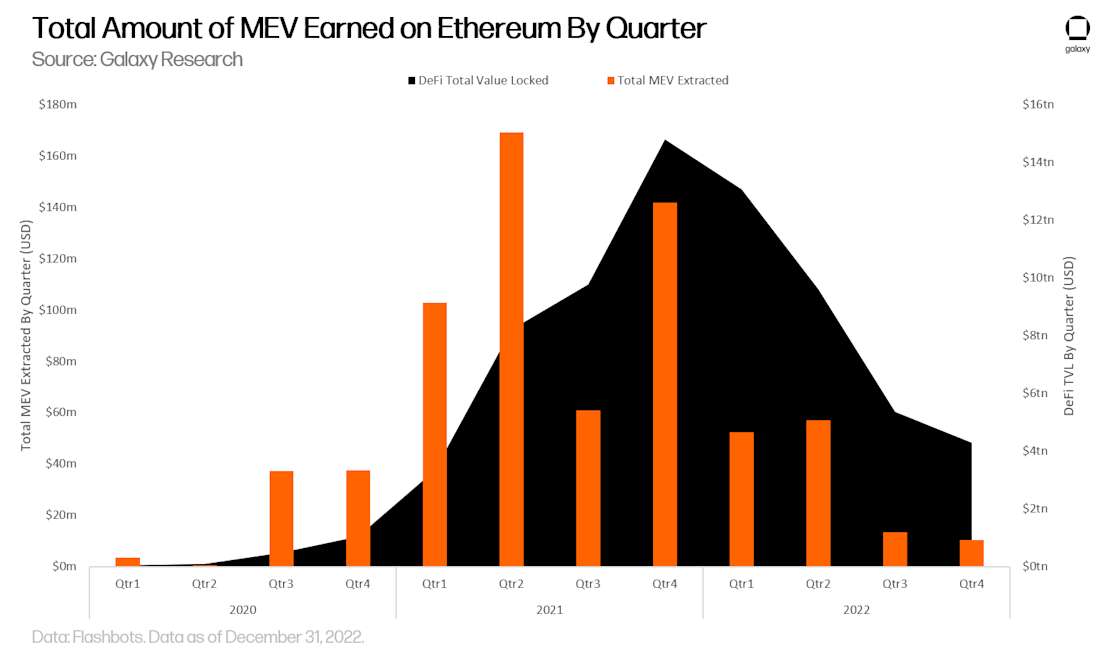
Track how many other searchers are bidding on the same transaction sets. High competition density drives up the cost of inclusion, often turning profitable trades into break-even or negative outcomes. If auction density is too high, pivot to less contested block spaces or adjust your bid strategy.
Ownership costs
A low upfront price for a modular MEV stack rarely tells the full story. The real expense comes after deployment, when the cost of keeping search, builder, and relay components synchronized adds up faster than expected. What looks like a cheap buy on day one often becomes a drain on resources by month three.
The first hidden cost is infrastructure. Decoupled architectures require more moving parts than monolithic setups. You need separate nodes for block building, relays for transaction distribution, and robust networking to ensure low latency between components. If any single link fails, the entire chain stalls, forcing you to over-provision resources as a safety buffer.
Maintenance is the second surprise. Cross-rollup MEV introduces shared sequencing and interop latency challenges that don't exist in simpler stacks. Teams face constant pressure to patch atomicity issues and filter spam across multiple rollups. This isn't a "set it and forget it" system. It requires active monitoring and frequent tuning to stay profitable.
Finally, there's the opportunity cost of complexity. Every hour spent debugging relay failures or optimizing block propagation is an hour not spent on strategy or new opportunities. As cross-rollup MEV becomes more common in 2026, the technical debt of a poorly chosen stack compounds quickly.
The key is to look beyond the purchase price. A slightly more expensive solution with better documentation, community support, and modular flexibility often pays for itself in reduced maintenance time and fewer operational headaches. Don't let a low sticker price blind you to the long-term cost of ownership.


As an Amazon Associate, we may earn from qualifying purchases.
Modular mev 2026: what to check next
Is modular MEV actually profitable in 2026?
Decoupling search, building, and relaying shifts the profit pool from integrated players to specialized ones. Searchers no longer need to run full validator nodes, lowering the barrier to entry. However, profit margins are tightening as relay auctions become more competitive. Success now depends on finding niche blocks or cross-chain opportunities that generalist builders miss.
What are the biggest risks in a decoupled architecture?
The main risk is latency between the relay and the builder. If a builder takes too long to assemble a block, the searcher’s transaction might get front-run or included in a lower-value block. Additionally, censorship resistance can suffer if a dominant builder refuses to include certain transactions. Always check a builder’s historical inclusion rates before committing capital.
How does cross-rollup MEV change the game?
Cross-rollup MEV introduces atomicity challenges. You cannot simply bundle transactions across different rollups without a shared sequencing layer. This creates "interop latency," where delays in one chain break the atomicity of the entire bundle. New protocols are emerging to solve this, but they add complexity and potential failure points to your strategy.
Do I need a custom relay for 2026?
Not necessarily. Public relays like Flashbots are still viable for most searchers. However, if you are dealing with high-value, time-sensitive blocks, a private relay reduces the risk of front-running by other searchers. The trade-off is lower competition for block space, which can sometimes mean lower profits. Start public, then move private as your volume grows.
No comments yet. Be the first to share your thoughts!