
What modular MEV looks like in 2026
The shift from monolithic to modular MEV marks a fundamental change in how value is extracted from blockchain networks. In the monolithic model, block production, execution, and consensus were bundled together, creating a single point of contention where searchers competed for block space within a specific chain. Modular MEV decouples these layers: execution happens on separate execution layers, while sequencing and consensus are handled by distinct modules. This separation creates new extraction vectors that did not exist in the monolithic era.
Chain abstraction plays a central role in this shift. It allows decentralized searchers to operate across multiple execution layers without managing the underlying infrastructure of each chain. Instead of building separate bots for Ethereum, Arbitrum, or Base, searchers can use a unified interface to identify profitable opportunities across the entire modular stack. This reduces friction and increases the speed at which arbitrage and liquidation opportunities are captured. The abstraction layer effectively pools liquidity and attention, making cross-chain coordination the primary competitive advantage.
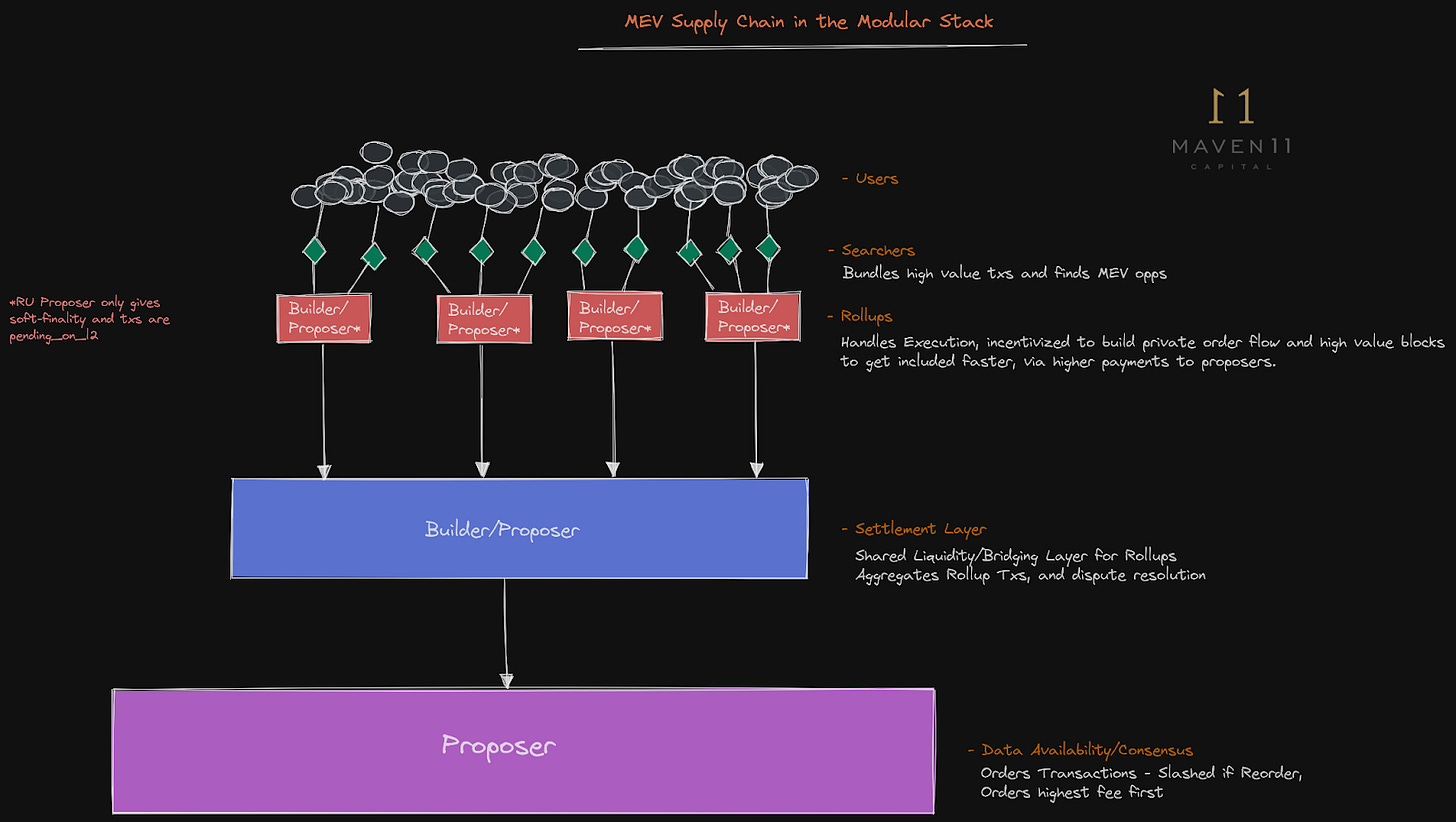
A critical component of this new architecture is the shared sequencer. In a modular setup, transactions from different execution layers can be sequenced together before being settled on a shared data availability layer. This allows for atomic execution across chains. A searcher can bundle a trade on one chain with a corresponding liquidity adjustment on another, ensuring both legs execute in the same atomic step. This reduces the risk of front-running and reorgs that plagued earlier cross-chain strategies. The ability to guarantee atomicity across fragmented liquidity pools is what makes modular MEV significantly more profitable.
It is important to distinguish modular MEV from the unrelated concept of modular construction in other industries. While modular buildings in Las Vegas or other markets focus on prefabricated structures, modular blockchain architecture focuses on the separation of computational tasks. The "modular" in MEV refers to the architectural decoupling of consensus, data availability, and execution. This technical distinction is vital for understanding why value extraction has moved from block-building to cross-chain coordination. The profit center is no longer just about building the best block; it is about orchestrating transactions across a fragmented, abstracted landscape.
Cross-rollup execution as the new battleground
Atomic cross-rollup execution has emerged as the primary profit driver in modular MEV. As rollups fragment liquidity, searchers can no longer rely on single-chain arbitrage. The opportunity lies in executing trades that span multiple rollups simultaneously, capturing value that would otherwise be lost to latency or failed state transitions. This requires a fundamental shift from isolated chain logic to coordinated, cross-domain state management.
The technical challenges of interoperability are significant. Shared sequencers offer a path to atomicity by processing transactions from multiple rollups in a single order stream, eliminating the need for complex bridge proofs. However, this centralization introduces censorship risks and single points of failure. Conversely, trustless interop layers rely on optimistic or zero-knowledge verification, which introduces latency and higher computational costs. Searchers must weigh the speed of shared sequencing against the security guarantees of trustless verification.
| Feature | Shared Sequencing | Trustless Interop |
|---|---|---|
| Atomicity | Native | Proof-based |
| Latency | Low | High |
| Censorship Resistance | Low | High |
| Complexity | Low | High |
The choice between these models defines the competitive landscape. Shared sequencing allows for faster, more efficient MEV extraction but requires trust in the sequencer operator. Trustless interop preserves decentralization but demands complex proof verification, which can slow down execution and reduce profitability. As the modular stack matures, hybrid models may emerge, but for now, the tradeoff between speed and security remains the core tension in cross-rollup MEV.
Sequencing tensions and incentive wars
The shift from monolithic to modular blockchain architecture introduces a fundamental conflict in how transaction order is determined. In a monolithic stack, the same nodes that execute transactions also sequence them, aligning economic incentives. However, modular designs separate these functions, creating a disconnect between the sequencer, who orders transactions, and the executor, who processes them. This separation is the primary driver of new MEV extraction vectors and censorship risks in 2026.
The based sequencing model
Based sequencing relies on a single, trusted sequencer to order transactions before they are posted to the data availability layer. This model prioritizes low latency and predictable gas fees, which is essential for high-frequency trading and atomic execution across multiple chains. However, it concentrates power. The sequencer can reorder, delay, or censor transactions at will, effectively becoming a central point of failure. Users must trust that the sequencer will not extract maximum extractable value (MEV) at their expense or comply with external censorship pressures.
Shared sequencers and fragmentation
Shared sequencers attempt to mitigate censorship by pooling sequencing power across multiple chains or rollups. While this reduces the risk of single-point censorship, it introduces new incentive wars. Sequencers may prioritize transactions that offer higher bribes or better alignment with their own MEV strategies, leading to fragmented user experiences. Shared sequencing can also increase latency as transactions wait for cross-chain coordination, reducing the efficiency of atomic operations that depend on immediate finality.
The economic impact
The tension between based and shared sequencing affects MEV distribution significantly. In based models, MEV is captured by the sequencer, who may share a portion with validators or burn it. In shared models, MEV is often fragmented among multiple parties, reducing the incentive for any single entity to maintain high-quality service. This fragmentation can lead to a "race to the bottom" in sequencing quality, where users face higher costs and lower reliability.
Navigating the choices that change the plan
For applications requiring high throughput and low latency, based sequencing remains the preferred choice despite its centralization risks. For applications prioritizing censorship resistance and decentralization, shared sequencing offers a viable alternative, albeit with higher latency and complexity. The choice between these models depends on the specific requirements of the application and the tolerance for centralization. As the modular stack evolves, we expect to see hybrid models that attempt to balance these competing interests.
Gaming cross-rollup preconfirmations
By 2026, the promise of chain abstraction meets a harsh reality: cross-rollup preconfirmations are not atomic. When a searcher submits a transaction intended to bridge assets and execute a trade simultaneously, the system relies on shared sequencers or optimistic interop proofs to guarantee that state changes happen in a single, indivisible step. In practice, this atomicity is fragile. The preconfirmation acts as a promise of future inclusion, but it lacks the cryptographic finality of on-chain execution. This gap creates a window where the state is neither fully committed nor fully rejected, allowing malicious actors to exploit the uncertainty.
The primary failure mode is latency arbitrage. Shared sequencers attempt to order transactions across different rollup environments, but network propagation delays mean that a preconfirmation received by one sequencer may arrive at another with a significant time lag. Searchers monitor these preconfirmation pools for high-value intents. If they detect a profitable arbitrage opportunity hidden within a pending cross-rollup bundle, they can submit a competing transaction with a higher gas tip. Because the preconfirmation is not yet final, the competing transaction can displace the original intent, effectively front-running the bridge operation. The original searcher loses the opportunity cost, while the attacker captures the spread.
This dynamic incentivizes a spam war. Since preconfirmations are often free or low-cost to submit as a speculative bet, attackers can flood the shared sequencer with thousands of dummy cross-rollup transactions. This congestion increases latency for legitimate users, further widening the window for extraction. The economic incentive structure rewards this behavior: the cost of submitting a spam preconfirmation is near zero, while the potential reward from extracting MEV from displaced legitimate trades is substantial. Without a robust, low-latency consensus mechanism for cross-rollup state, the preconfirmation layer becomes a vector for extraction rather than a tool for efficiency.
Frequently Asked Questions on Modular MEV Infrastructure
How does shared sequencing affect atomic execution? Shared sequencers order transactions from multiple rollups into a single stream, enabling cross-chain atomic execution. This allows searchers to bundle actions across chains without relying on slower, probabilistic finality. The trade-off is that searchers must now compete for block space within a shared ordering layer rather than isolated rollup blocks.
What is interop latency in modular MEV? Interop latency refers to the delay between a transaction being sequenced and its state proof being verified on the settlement layer. In modular architectures, this gap creates a window where information asymmetry exists. Searchers exploit this by front-running or sandwiching transactions before the cross-chain state is fully synchronized.
Why is spam a major concern in 2026? As modular infrastructure lowers the barrier to entry for launching rollups, spam attacks become more frequent and costly. Attackers can flood shared sequencers with low-value transactions, increasing gas fees for legitimate MEV searchers. This noise reduces the profitability of complex, multi-chain strategies that rely on precise timing.
How does censorship resistance differ in modular setups? In modular systems, censorship can occur at the sequencer level or the settlement layer. Searchers must account for the risk that a shared sequencer might exclude certain transactions to prioritize high-fee orders. This requires more sophisticated transaction ordering algorithms to ensure execution reliability.
Is modular MEV infrastructure ready for production? While the technology is maturing, production readiness depends on the stability of cross-chain messaging protocols. Early adopters face higher risks due to immature tooling and unpredictable latency. However, the potential for higher yields through cross-rollup arbitrage drives continued investment in this space.
No comments yet. Be the first to share your thoughts!