
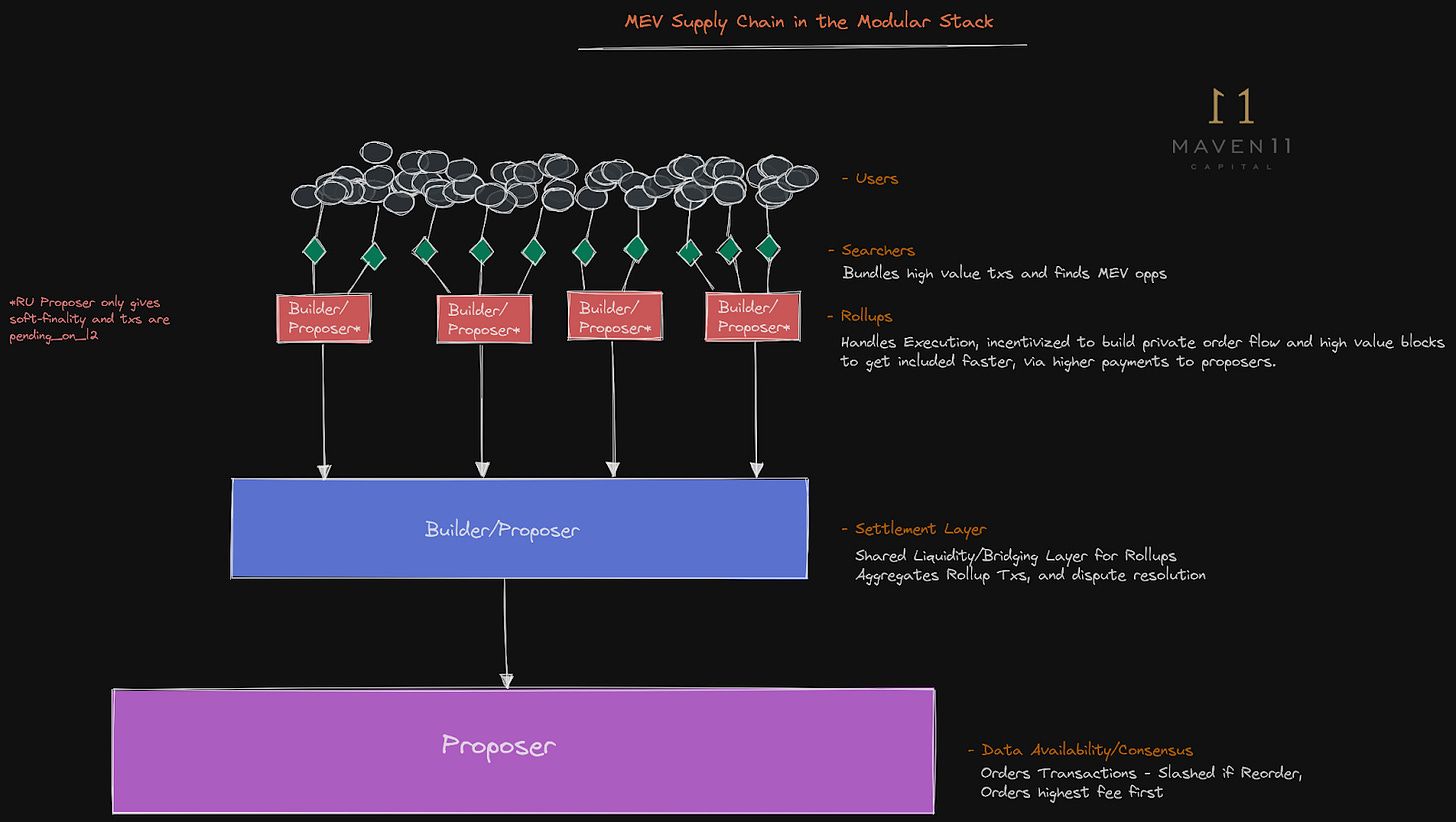
Why modular MEV matters in 2026
The race to extract maximum value on-chain has shifted from brute-force computation to precise architectural design. In 2026, latency is the primary bottleneck for MEV extraction. Monolithic bots that handle search, build, and delivery in a single process struggle to keep pace with the increasing complexity of Layer 2 rollups and the fragmentation of liquidity across multiple chains.
Modular MEV separates these functions into specialized, independent components. This separation allows teams to optimize each stage for speed without compromising the others. For example, a dedicated search module can scan mempool data in real-time, while a separate build module focuses on constructing complex transaction bundles. This architecture reduces the time between detection and execution, which is critical when competing against other high-frequency traders.
This approach is particularly effective for Layer 2 compatibility. Different L2s have varying transaction finality times and gas market dynamics. A modular system can swap out the build and delivery engines to adapt to specific L2 requirements without rewriting the entire search logic. This flexibility ensures that MEV strategies remain effective as the multi-chain ecosystem continues to evolve.
Top modular MEV frameworks to consider
Building a latency-optimized MEV stack requires selecting frameworks that decouple execution, ordering, and finality. By separating these layers, you can swap out components—like switching from a standard sequencer to a private builder—without rewriting the entire bot. This modularity is the only way to maintain competitive edge as blockspace competition intensifies in 2026.
The following frameworks represent the current state of the art for high-performance, modular MEV extraction. They are selected based on their ability to minimize time-to-block and support cross-L2 strategies.
Flashbots MEV-Boost and PBS
Flashbots remains the foundational layer for Ethereum block production. MEV-Boost facilitates the separation of the block builder from the proposer, allowing you to submit bundles to a global relay network. For latency optimization, this is critical because it lets you compete in a unified auction across all major builders. You can plug your bot directly into the relay network, ensuring your transactions are included in the next block without waiting for local mempool propagation delays.
MEV-Share
MEV-Share offers a different approach by focusing on user-centric MEV. Instead of just competing for blockspace, it creates a marketplace where searchers can offer value to users in exchange for exclusive access to their transactions. This is particularly useful for L2s and emerging chains where standard arbitrage opportunities are thin. By participating in MEV-Share, you can access a stream of transactions that bypasses the public mempool entirely, reducing front-running risk and improving your fill rate on niche assets.
SUAVE (Shared Universal Atomic Virtual Environment)
SUAVE takes modularity further by providing a shared execution environment. It allows you to write search logic once and run it across multiple chains simultaneously. This is a game-changer for latency because it eliminates the need to maintain separate bot instances for Ethereum, Arbitrum, and Base. SUAVE handles the atomic ordering and cross-chain settlement, ensuring that your strategy executes as a single, cohesive unit. This reduces the complexity of your infrastructure and lowers the overhead associated with multi-chain coordination.
Chainlink CCIP for Cross-L2 MEV
While not a MEV framework in the traditional sense, Chainlink CCIP is essential for any serious cross-L2 strategy. It enables secure, verifiable messaging between different blockchains. When combined with a modular MEV bot, CCIP allows you to trigger actions on L2s based on events on L1, or vice versa, with near-instant finality. This connectivity is what turns a single-chain bot into a multi-chain arbitrage engine, capturing value that is fragmented across different ecosystems.
Comparison of Top Modular MEV Frameworks
The table below summarizes the key technical differentiators for each framework, focusing on latency, L2 support, and integration complexity.
| Framework | Latency Profile | L2 Support | Integration |
|---|---|---|---|
| MEV-Boost | Low (Relay-based) | Limited (Ethereum-centric) | Standard (JSON-RPC) |
| MEV-Share | Medium (Marketplace) | High (Multi-chain) | API-based |
| SUAVE | Very Low (Shared Execution) | Native (Cross-chain) | Complex (Custom Runtime) |
| Chainlink CCIP | Low (Verifiable Messaging) | High (Interoperability) | SDK-based |
Optimizing latency for L2 strategies
Layer 2 networks like Arbitrum, Optimism, and Base introduce unique latency challenges. While they reduce gas costs, they often add block confirmation delays and rely on sequencers that can become bottlenecks. To capture MEV effectively, you must treat the L2 environment differently than Ethereum L1. The goal is to minimize the time between transaction inclusion and finality.
1. Run a dedicated L2 node
Running your own node eliminates reliance on public RPC endpoints, which are often rate-limited or slow. For Arbitrum, this means running a Nitro node; for Optimism, an OP Stack node. Local execution allows you to see the mempool state immediately, without network transmission delays. This is the single most impactful step for reducing latency in L2 strategies.
2. Use high-frequency WebSocket connections
HTTP polling is too slow for L2 MEV. Establish persistent WebSocket connections to your node to receive real-time block and transaction notifications. This allows your bot to react to new blocks the moment they are produced by the sequencer. Avoid REST APIs for mempool monitoring; the overhead of establishing a new connection for each request adds unnecessary milliseconds.
3. Optimize your RPC configuration
Even with a dedicated node, RPC configuration matters. Enable batch requests for historical data lookups to reduce round-trip times. For real-time data, ensure your node is configured to broadcast mempool transactions immediately. Some L2s allow you to bypass the sequencer for certain types of transactions; check your chain’s documentation for direct proposer access options.
4. Co-locate your infrastructure
Latency is physical. If your bot is in New York and the L2 sequencer is in Frankfurt, you are fighting physics. Host your trading bot and node in the same cloud region as the L2 sequencer’s primary infrastructure. For many L2s, this means AWS us-east-1 or eu-west-1. The difference between 5ms and 50ms can mean the difference between a profitable trade and a failed one.
5. Implement custom mempool filtering
L2 mempools can be noisy. Instead of processing every transaction, implement pre-execution filtering based on known MEV patterns. Use lightweight heuristics to identify potential arbitrage or liquidation opportunities before they hit the chain. This reduces the computational load on your bot, allowing it to focus on high-value targets and respond faster.


As an Amazon Associate, we may earn from qualifying purchases.
Measuring profit margins in 2026
Calculating the true profitability of modular MEV strategies requires stripping away the noise of gross revenue to focus on net execution value. In 2026, the margin is no longer just about the arbitrage spread; it is a function of latency efficiency, gas optimization, and competition density. You must treat your MEV infrastructure like a high-frequency trading desk where every millisecond and every wei of gas directly impacts the bottom line.
The Net Profit Formula
Your profit margin is determined by subtracting the total cost of execution from the gross value extracted. This involves tracking three specific variables for every successful block:
- Gross Extracted Value: The total value captured by your solver, including arbitrage, liquidations, or sandwich attacks.
- Gas Costs: The total ETH spent on transaction fees. This includes the base fee, priority tip, and any failed transaction costs.
- Infrastructure Overhead: The amortized cost of your dedicated RPC nodes, private mempool access, and hardware latency.
A common mistake is ignoring failed transactions. In competitive environments, your solver may spend significant gas on reverts. These "dead gas" costs must be factored into your average cost per attempt, not just successful ones.
Optimizing for Margins, Not Just Revenue
High gross revenue does not equal high profit. A strategy that extracts $500 in value but costs $400 in gas and infrastructure yields a 20% margin, which is often less sustainable than a $200 extraction with $50 in costs (75% margin). Focus on reducing the cost side of the equation by:
- Using Private RPCs: Avoiding public mempool congestion reduces the risk of front-running and lowers the priority tip required to get included.
- Optimizing Gas Limits: Precise gas estimation prevents overpayment on complex multi-step transactions.
- Modular Solver Architecture: Decoupling your searcher, builder, and relayer components allows you to swap out inefficient modules without rewriting the entire stack.
Tracking Performance Metrics
To maintain healthy margins, you need real-time visibility into your performance. Track the following metrics daily:
- Success Rate: The percentage of submitted transactions that result in a profit.
- Average Gas Price: The mean gas price paid per successful extraction.
- Latency to Inclusion: The time delta between detecting an opportunity and block inclusion.
By monitoring these metrics, you can identify which modules are bleeding margin and which are driving profit. Adjust your strategy accordingly, cutting losses on inefficient components and doubling down on those that consistently deliver high net returns.
Frequently asked questions about modular MEV tools
What makes modular MEV tools different from monolithic bots? Modular architectures separate transaction construction, ordering, and execution. This separation lets you swap out specific components—like a faster ordering engine or a specialized execution backend—without rebuilding the entire bot. Monolithic bots often struggle with this flexibility, leading to higher latency when market conditions change.
How does latency optimization work in 2026? Latency is no longer just about network speed; it’s about minimizing computational overhead. Modern modular tools use optimized data structures and direct memory access to reduce processing time between block proposal and inclusion. Tools like Flashbots Protect and specialized RPC providers help bypass public mempool delays, ensuring your transactions land closer to the block boundary.
Are Layer 2 solutions viable for modular MEV? Yes, but with caveats. While L2s offer lower fees, their centralized sequencers can introduce bottlenecks. Modular MEV strategies on L2s often rely on direct peer-to-peer connections to sequencers or private order flow auctions to maintain competitive advantage. The latency savings from lower gas fees often outweigh the risks, provided you use tools designed for L2-specific constraints.
What is the most critical component for a modular MEV stack? The ordering layer is typically the most critical. Even with the fastest execution backend, if your transaction ordering is inefficient, you will miss profitable opportunities. Look for tools that offer customizable ordering algorithms and real-time priority fee adjustments to stay ahead of competitors.
No comments yet. Be the first to share your thoughts!