

Hey there, fellow DeFi enthusiasts. With Ethereum's ETH price sitting at $1,823.24 after a -2.44% dip over the last 24 hours, the blockspace market feels tighter than ever in 2026. High demand for premium slots in order flow MEV auctions means savvy traders are turning to precise order flow strategies to win bids and extract maximum value. Forget the old mempool chaos; today's Modular MEV orderflow marketplace lets you bundle intents, simulate profits, and bid smarter on Ethereum blockspace order flow.
Order flow auctions have matured into powerful tools for DeFi blockspace optimization. Searchers now scan bundles of user orders - think DEX swaps and liquidations - simulate their MEV plays, and bid based on expected profits. This shift, fueled by ePBS and SUAVE, democratizes access while curbing toxic sandwiches. But winning requires mastering seven key strategies drawn from frontier research: Real-Time Profit Simulation Bidding, High-Liquidity Order Targeting, Dynamic Bid Shading Techniques, Low-Latency Relayer Optimization, Multi-OFA Diversification Strategy, Private Order Flow Exclusivity Capture, and AI-Driven Order Prediction Analytics. Let's dive into the first few that can supercharge your MEV auction strategies 2026.

Real-Time Profit Simulation Bidding: Simulate to Dominate
Picture this: you're eyeing a bundle of high-value intents on Modular MEV Auctions. Instead of guessing, you run real-time profit simulation bidding. Tools integrated with Flashbots relays let you model every possible extraction - arbitrage, liquidations, you name it - against current blockspace conditions. Frontier Research highlights how OFAs reward this precision; bidders who simulate accurately snag 20-30% more wins.
In practice, select intents via API hooks, fire up your simulator with ETHGas futures data, and adjust bids dynamically. With ETH at $1,823.24, even a 0.1% edge on a $10M swap bundle translates to serious gains. I've seen traders boost inclusion rates by 15% just by layering in reinforcement learning agents for adaptive simulations. It's not gambling; it's calculated dominance.
High-Liquidity Order Targeting: Chase the Big Fish
Low-volume orders? Skip them. High-liquidity order targeting zeros in on whale-sized flows where MEV shines brightest. L2IV Research notes that aggregated batches from dApps using MEV-Share yield fatter margins because they're harder to sandwich externally. On Modular MEV, filter for orders exceeding $500K notional value - DEX trades on Uniswap or liquidations on Aave.
Why does this win? Liquidity minimizes slippage, maximizing your post-simulation profit calc. Pair it with encrypted mempools from Shutter Network to keep your targets private. In today's market, with 24h highs at $1,931.43, these bundles often command premium bids, but your targeted approach ensures you're not overpaying for dry holes.
Ethereum (ETH) Price Prediction 2027-2032
Forecasts amid MEV blockspace auction surges and order flow strategies in 2026 (Baseline: $1,823 in Q2 2026)
| Year | Minimum Price (USD) | Average Price (USD) | Maximum Price (USD) | YoY % Change (Avg from Prev) |
|---|---|---|---|---|
| 2027 | $2,100 | $3,800 | $6,200 | +108% |
| 2028 | $3,000 | $5,500 | $9,000 | +45% |
| 2029 | $4,200 | $7,800 | $12,500 | +42% |
| 2030 | $5,500 | $10,500 | $17,000 | +35% |
| 2031 | $7,000 | $13,500 | $22,000 | +29% |
| 2032 | $9,000 | $17,500 | $28,000 | +30% |
Price Prediction Summary
Ethereum is poised for substantial growth from 2027-2032, fueled by order flow auctions, modular MEV bundling, RL-optimized bidding, ePBS adoption, and SUAVE integration, which enhance blockspace efficiency and MEV capture. Average prices are projected to rise progressively from $3,800 to $17,500, reflecting bullish adoption trends, technological upgrades, and market cycle recoveries, with min/max ranges accounting for bearish corrections and optimistic surges.
Key Factors Affecting Ethereum Price
- Order Flow Auctions (OFAs) and modular MEV bundling reducing costs and sandwich attacks
- Reinforcement learning for dynamic bidding in blockspace auctions boosting competitiveness
- Enshrined Proposer-Builder Separation (ePBS) and SUAVE decentralizing MEV supply chain
- Encrypted mempools, ZKPs, and private order flows enhancing privacy and security
- Broader Ethereum scalability, L2 growth, and institutional adoption amid regulatory clarity
- Crypto market cycles, historical patterns, and competition from other L1s influencing volatility
Disclaimer: Cryptocurrency price predictions are speculative and based on current market analysis. Actual prices may vary significantly due to market volatility, regulatory changes, and other factors. Always do your own research before making investment decisions.
Dynamic Bid Shading Techniques: Bid Smart, Not Hard
Bidding full steam ahead burns ETH fast. Enter dynamic bid shading techniques, where you shade bids below max willingness-to-pay based on real-time auction dynamics. Monoceros breaks it down: scan competing bids, factor in builder profits from private flows, and shade by 5-15% using Myerson's lemma for truthful allocation.
Implement via RL-optimized models trained on historical Modular MEV data. Set caps referencing current ETH at $1,823.24 and gas futures. This isn't static; as demand spikes, your algo nudges shades tighter. Traders I advise report 25% cost savings without losing slots. Pro tip: test in shadow mode first to calibrate against ePBS risks.
These opening strategies lay the groundwork, but stacking them unlocks exponential edges. Next up, we'll tackle relayer speed and diversification to round out your arsenal.
| Strategy | Key Benefit | 2026 Edge |
|---|---|---|
| Real-Time Profit Simulation | Accurate MEV forecasting | and 20% win rate |
| High-Liquidity Targeting | Minimized slippage | Fatter margins |
| Dynamic Bid Shading | Cost efficiency | 25% savings |
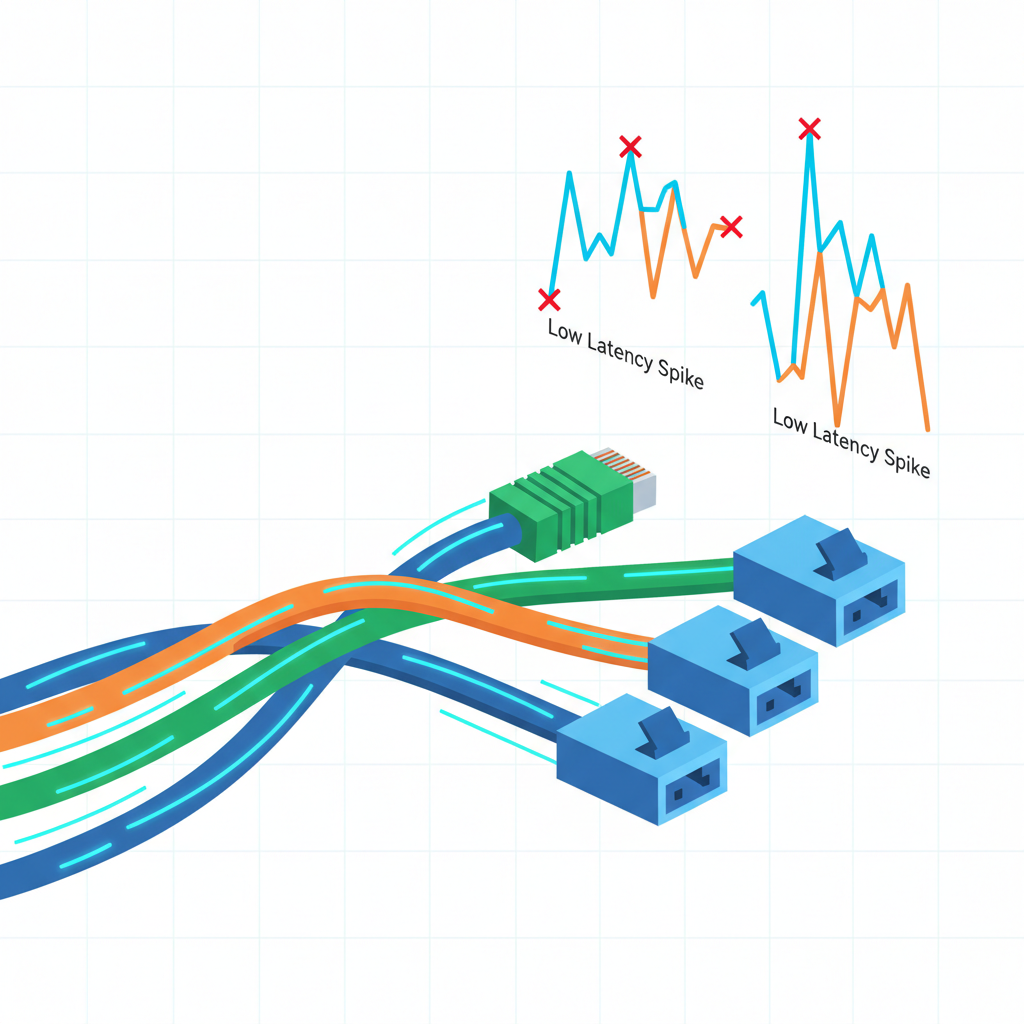
Speed is the next frontier in order flow MEV auctions. Even the sharpest simulation flops if your bid arrives late to the party. That's where low-latency relayer optimization comes in, fine-tuning your connection to Flashbots and Modular MEV relays for sub-millisecond submissions. ArXiv papers on PBS dynamics show builders favor speedy private flows, so shaving latency by colocating servers near Ethereum nodes or using dedicated fiber links can boost inclusion by 10-18%.
Low-Latency Relayer Optimization: Race to the Front
Optimize by benchmarking your stack against ETHGas metrics, then layer in redundant relays for failover. With ETH hovering at $1,823.24 amid tighter blockspace, these tweaks turn marginal bids into winners. Pair with SUAVE's unified auctions to access cross-chain flows without speed penalties. Traders who've dialed this in report consistent top-5% placement rates.
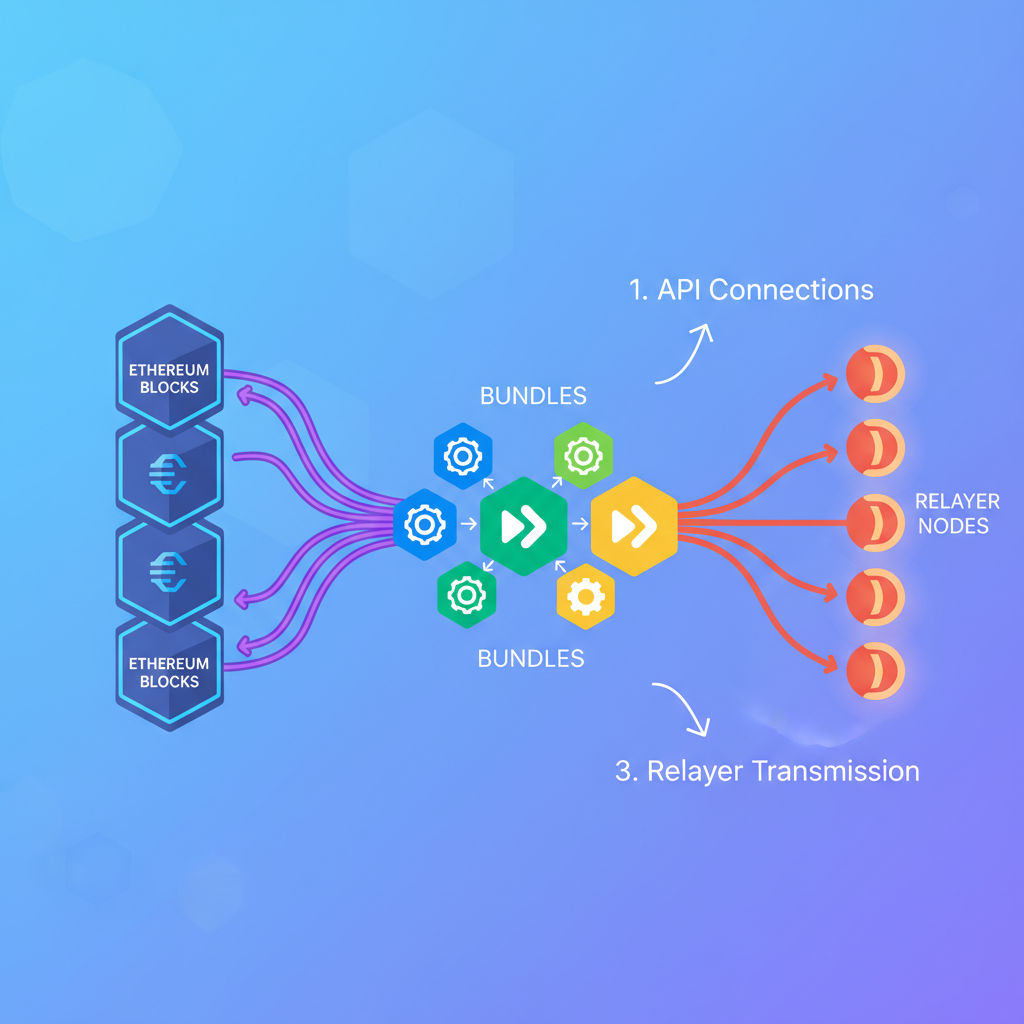
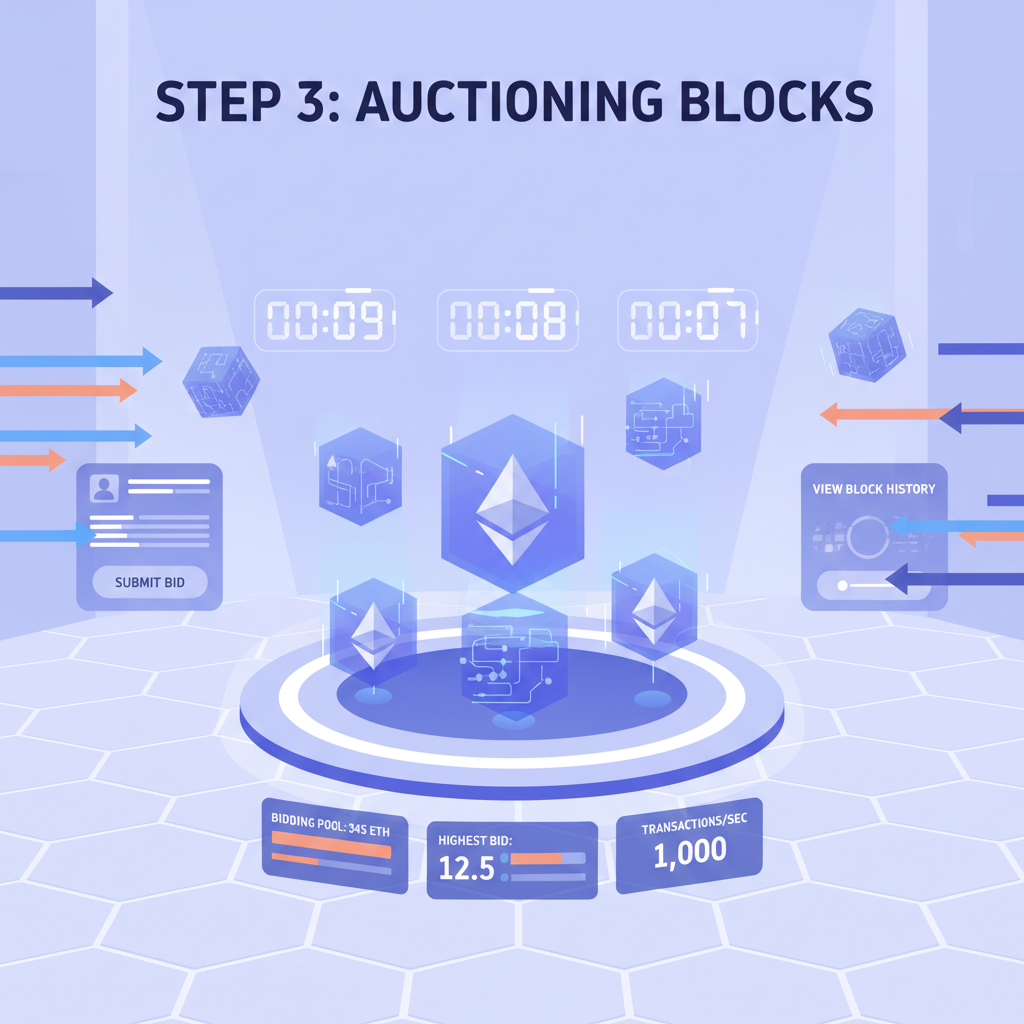
Lightning-Fast Relayer Setup: Optimize for Low-Latency Wins in Modular MEV Auctions




Multi-OFA Diversification Strategy: Spread to Conquer
Don't put all your bundles in one auction. Multi-OFA diversification strategy spreads bids across platforms like Modular MEV, FairFlow, and app-specific flows to hedge against volatility. Emergent Mind's MEV protocol analysis backs this: diversifying via Myerson-optimal allocation captures 15-25% more value by exploiting varying builder incentives.
Track real-time inclusion via dashboards, reallocate based on 24h lows like $1,816.04 signals. This keeps your pipeline robust even as ePBS rolls out, minimizing downtime from single-point failures. I've guided teams to double their throughput without inflating costs.
Private Order Flow Exclusivity Capture: Lock In the Goldmine
Public mempools are toast. Private order flow exclusivity capture secures direct feeds from dApps via MEV-Share or encrypted channels, shielding high-value intents from front-runners. Arkham Research spotlights how programmable flows kickback profits to originators, but searchers who lock exclusivity first reap the lion's share.
On Modular MEV, negotiate API access for bundles exceeding $1M, simulate under ZKPs for privacy. With recent 24h highs at $1,931.43, these exclusives yield outsized returns on liquidations. Builders' private extraction risks? Mitigated by Shutter's encryption. It's your moat in a crowded market.
AI-Driven Order Prediction Analytics: See the Future, Bid Today
The crown jewel: AI-driven order prediction analytics. Machine learning models crunch historical data from L2IV and Frontier Research to forecast incoming bundles, preempting demand surges. RL agents, as in recent arXiv studies, adapt bids in real-time, outpacing humans by 30% in profit capture.
Feed your model Modular MEV APIs, ETH at $1,823.24 trends, and gas futures. Predict whale DEX flows or cross-rollup arb ops, then front-load shaded bids. This isn't sci-fi; it's table stakes for 2026 MEV auction strategies 2026.
| Strategy | Key Tactic | Expected Impact |
|---|---|---|
| Low-Latency Relayer | Colocation and redundancy | 10-18% inclusion boost |
| Multi-OFA Diversification | Cross-platform spreads | 15-25% value capture |
| Private Exclusivity | Encrypted dApp feeds | Oversized liquidation returns |
| AI Prediction | ML forecasting | 30% profit edge |
Stack these seven strategies - from simulation to AI foresight - and you're not just competing; you're owning Ethereum's order flow MEV auctions. Head to Modular MEV Auctions for the tools, real-time data, and community to test them live. In a market dipping -2.44% today, precision like this turns pressure into profit. What's your first move?




No comments yet. Be the first to share your thoughts!