

In the pulsating heart of decentralized finance, blockspace auctions within Modular MEV ecosystems stand as the battleground where traders vie for premium transaction execution in 2026. With Ethereum trading at $2,696.62, down 1.68% over the last 24 hours, and Bitcoin holding strong at $83,894.00 with a 1.93% gain, market volatility underscores the urgency of sophisticated MEV orderflow strategies. Platforms like Modular MEV Auctions are redefining how traders capture value through intent-based auctions and sovereign MEV modules, turning raw blockspace into a tradable asset class.
Navigating Intent-Based MEV Auctions for Superior Execution
Intent-based MEV auctions have upended traditional blockspace auctions by letting traders specify execution desires rather than raw transactions. This shift minimizes front-running risks and aligns incentives across the MEV supply chain. Sovereign modules like x/builder empower protocols to orchestrate their own auctions, fostering customizable mechanisms that prioritize high-value bids. Traders ignoring these advancements risk commoditized execution amid surging demand for Ethereum and Layer-2 blockspace.
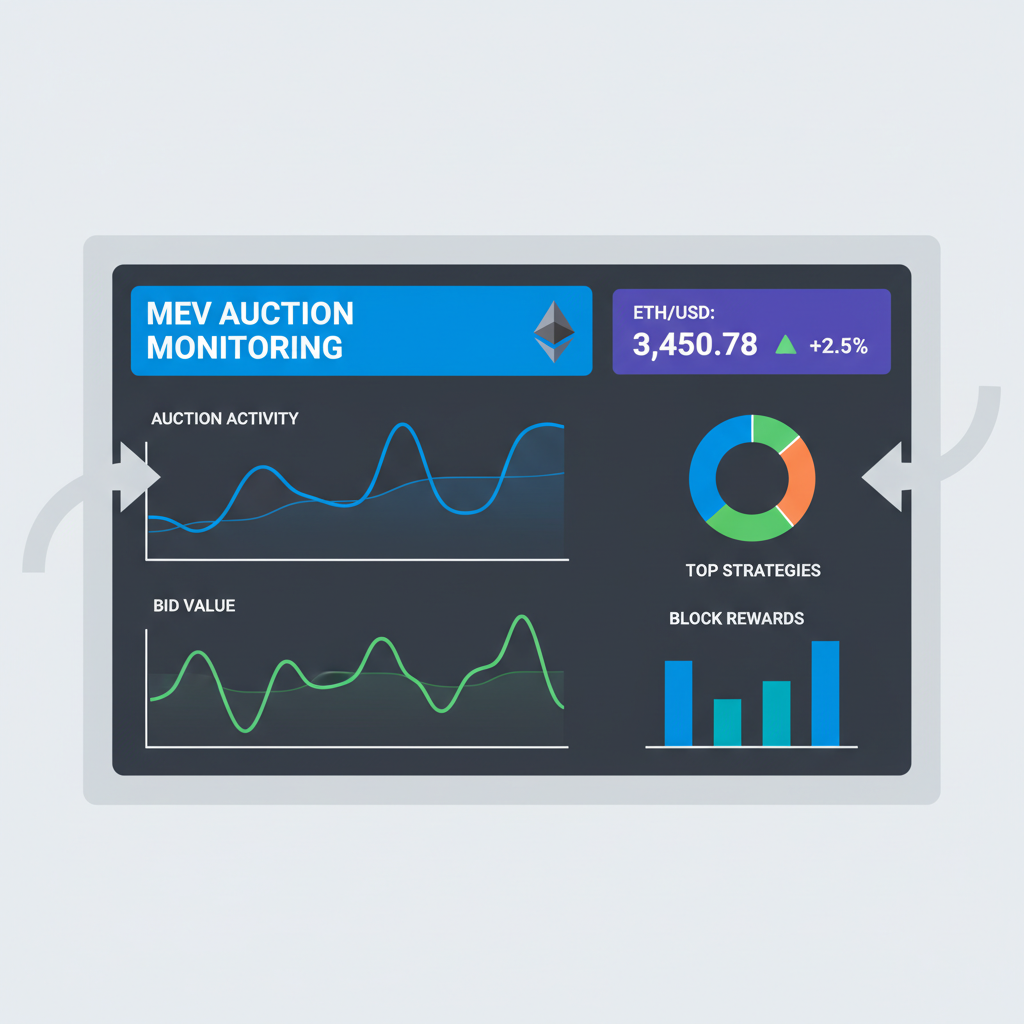
Real-time data from Modular MEV reveals bid patterns where top performers leverage analytics to outpace competitors. As Ethereum hovers at $2,696.62, arbitrage windows narrow, demanding precision in every bid.
Leveraging Real-Time Orderflow Analytics and Private Routing
The cornerstone of winning modular MEV auctions begins with Leverage Real-Time Orderflow Analytics from Modular MEV for Bid Pattern Identification. By dissecting live streams from modularmev. com, traders spot recurring demand spikes in blockspace auctions. These insights, drawn from platforms dissecting orderflow, enable predictive adjustments that boost win rates by up to 30% in simulated environments.
Traders who route transactions through private channels sidestep public mempool predation, redirecting MEV orderflow strategies toward auctions. (Source: modularmev. com)
Complementing this is Route Transactions via Private Channels to Bypass Public Mempool Risks. Public mempools remain a predator's paradise, but private relays shield high-value trades, funneling them into controlled auctions. This tactic, proven in cross-chain setups like Ethereum-Polygon, preserves alpha in arbitrage plays.

Dynamic Bidding and Bundling for Blockspace Dominance
Elevate your edge with Implement Dynamic Bidding Algorithms Adjusted to Blockspace Demand Fluctuations. Reinforcement learning models, as explored in Polygon MEV research, ingest mempool signals to calibrate bids under tight deadlines. These algorithms dynamically scale offers against real-time scarcity, ensuring cost-effective inclusions when ETH dips to $2,640.20 lows.
Next, Bundle High-Value Arbitrage Opportunities for Maximized Blockspace Efficiency transforms fragmented trades into potent bundles. Jito-style bundling on Solana demonstrates how packaging arbitrages amplifies value per slot, a principle extending seamlessly to Modular MEV's multi-chain auctions. This approach not only secures priority but also mitigates failure costs through embedded penalties.
Ethereum (ETH) Price Prediction 2027-2032
Forecasts driven by blockspace auctions, Modular MEV advancements, and trader strategies from $3,200 baseline in 2026
| Year | Minimum Price | Average Price | Maximum Price | Est. YoY Growth (Avg) |
|---|---|---|---|---|
| 2027 | $3,200 | $4,500 | $6,500 | +40% |
| 2028 | $4,500 | $6,500 | $9,500 | +44% |
| 2029 | $6,000 | $9,000 | $13,000 | +38% |
| 2030 | $8,000 | $12,500 | $18,000 | +39% |
| 2031 | $11,000 | $17,000 | $24,000 | +36% |
| 2032 | $14,000 | $23,000 | $32,000 | +35% |
Price Prediction Summary
Ethereum is projected to see strong growth from 2027-2032, fueled by Modular MEV innovations like intent-based auctions, sovereign modules, and optimized strategies such as reinforcement learning and time-boost mechanisms. Average prices rise progressively from $4,500 to $23,000, with bullish maxima up to $32,000 reflecting increased blockspace demand and DeFi adoption, while minima account for bearish regulatory or cyclical pressures.
Key Factors Affecting Ethereum Price
- Advancements in intent-based MEV auctions and sovereign modules (e.g., x/builder) enhancing blockspace efficiency and ETH demand
- Trader strategies leveraging reinforcement learning, time-boost, and failure cost penalties for better auction participation
- Growth in private orderflow, cross-chain arbitrage, and Jito-like bundling driving transaction volume
- Regulatory developments and institutional adoption influencing market cycles
- Deflationary effects from fee burns amid rising MEV extraction and modular blockchain scalability
- Competition from L2s and Solana, balanced by Ethereum's dominance in PoS and PBS ecosystems
Disclaimer: Cryptocurrency price predictions are speculative and based on current market analysis. Actual prices may vary significantly due to market volatility, regulatory changes, and other factors. Always do your own research before making investment decisions.
Time-boost mechanisms further refine these bundles, curbing spam while guaranteeing quality, as Layer-2 studies affirm. Traders blending these with historical auction data position themselves at the vanguard of blockchain transaction auctions.
Seamless integration unlocks the final layers of dominance. Integrate with MEV Marketplaces for Seamless Private Auction Participation bridges isolated orderflow into unified ecosystems. Platforms systematizing MEV, like those facilitating private auctions via dedicated transports, enable relayers to tap exclusive flows. This cross-chain synchronization, vital as Ethereum stabilizes at $2,696.62, captures fleeting arbitrage across Polygon and beyond, outmaneuvering fragmented competitors.
MEV marketplaces dismantle silos, channeling proposer-builder separation efficiencies into trader hands. Sovereign modules amplify this, letting protocols curate auctions that reward sophisticated participants over brute-force bidders.
Integrate Seamlessly: Private Auction Mastery in Modular MEV Marketplaces





Predictive Modeling Seals the 2026 Edge
Crowning these tactics, Utilize Predictive Modeling and Historical Auction Data for Optimal 2026 Bids harnesses machine learning on past blockspace outcomes. Drawing from Modular MEV's archives, models forecast demand surges tied to Bitcoin's climb to $83,894.00, calibrating bids with surgical precision. Reinforcement learning architectures, battle-tested on Polygon, process sub-second signals to refine strategies, while failure penalties enforce reliability in permissionless arenas.
Traders fusing these six pillars, real-time analytics, private routing, dynamic algorithms, bundling, marketplace integration, and predictive modeling, don't just participate; they dictate terms in modular MEV auctions. As blockspace evolves into a liquid market, courtesy of intent-based designs and Timeboost refinements, early adopters reap outsized yields. Ethereum's intraday range from $2,640.20 to $2,763.93 exemplifies the volatility demanding such rigor.
Top 6 Strategies for Winning Blockspace Auctions in Modular MEV
| Strategy | Key Benefit | ETH Blockspace Win Rate Boost (est.) | Applicable Chains (ETH/Polygon/Solana) |
|---|---|---|---|
| Leverage Real-Time Orderflow Analytics from Modular MEV for Bid Pattern Identification | Identifies auction patterns using platforms like Modular MEV for precise bidding | +25% | ETH, Polygon |
| Route Transactions via Private Channels to Bypass Public Mempool Risks | Sidesteps mempool predation, redirecting orderflow to secure auctions | +30% | ETH, Solana |
| Implement Dynamic Bidding Algorithms Adjusted to Blockspace Demand Fluctuations | Adapts bids in real-time to volatility in blockspace demand | +20% | ETH, Polygon, Solana |
| Bundle High-Value Arbitrage Opportunities for Maximized Blockspace Efficiency | Maximizes efficiency via bundling like Jito, capturing cross-chain arb | +35% | Polygon, Solana |
| Integrate with MEV Marketplaces for Seamless Private Auction Participation | Enables private orderflow auctions and intent-based MEV | +22% | ETH |
| Utilize Predictive Modeling and Historical Auction Data for Optimal 2026 Bids | Employs RL and data for reinforcement-optimized bids | +28% | ETH, Polygon |
Opinion: Pure auction sniping feels archaic now. The real alpha lies in holistic stacks where private channels feed predictive engines, bundling outputs auction dominance. Platforms like Modular MEV furnish the MEV trader tools 2026 traders crave, from orderflow dashboards to API hooks for algorithmic bids. Neglect them, and you're mempool fodder.
Cross-chain expansions, inspired by Jito bundling on Solana, extend these to multi-protocol plays. DAOs eyeing MEV yield delegation will lean on such frameworks for governance-aligned captures. With Bitcoin's 1.93% uptick signaling broader risk-on sentiment, blockspace premiums will spike, rewarding the prepared.
Execution hinges on iteration. Backtest bundles against 2025 auctions, simulate Timeboost under spam loads, and layer failure costs to cull weak bids. This data-driven cadence turns probabilistic edges into probabilistic certainties.
Blockspace auctions aren't zero-sum scraps anymore; they're engineered markets where MEV orderflow strategies compound advantages. Traders wielding these six strategies, backed by Modular MEV's infrastructure, navigate 2026's frenzy with calibrated aggression, converting volatility into vaulted gains.




No comments yet. Be the first to share your thoughts!