

In the high-stakes arena of DEX token launches, retail traders often find themselves outmaneuvered by sophisticated MEV bots. These automated predators exploit transaction ordering to front-run buys, sandwich trades, and snipe allocations, leaving everyday users with slippage and regret. Batch auctions emerge as a strategic countermeasure, aggregating orders into a single, simultaneous execution that strips away the frontrunning edge.
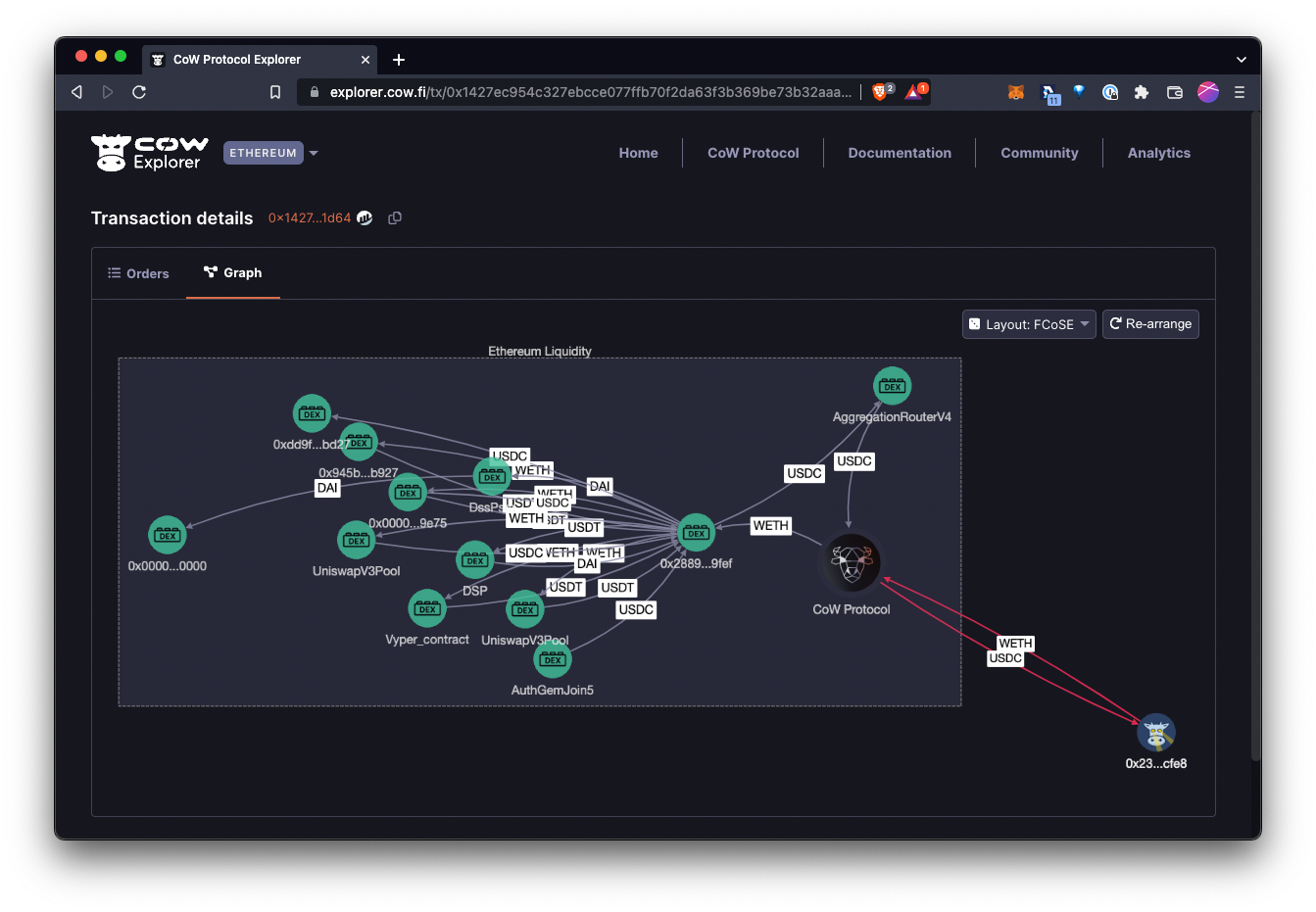
This mechanism, rooted in sealed-bid principles, ensures no participant gains an advantage from seeing others' orders. As DEXs evolve, protocols like CoW Swap and Uniswap's Angstrom integrate batch auctions MEV defenses, reshaping fair access to new tokens.
Understanding MEV Frontrunning's Grip on DEX Launches
Maximal Extractable Value, or MEV, captures the profits validators extract by manipulating block contents. In token launches, this manifests as brutal front-running: bots detect large buy orders via the mempool, insert their transactions ahead, and profit from the ensuing price spike. Sandwich attacks amplify the pain, wrapping victim trades between two predatory ones to extract value.
Consider a hyped token drop. A trader submits a substantial buy, but before it lands, MEV searchers reorder the block, buying first at lower prices and selling back post-pump. Retail participants pay the premium, while bots feast. Data from recent launches underscores this imbalance; without safeguards, up to 90% of value can flow to extractors, eroding trust in DeFi's promise of permissionless access.
Such dynamics not only inflate costs but distort price discovery, deterring genuine liquidity providers. The result? Launches marred by inefficiency, where organic demand struggles against algorithmic predation.
Batch Auctions: Sealed Execution for Fair Play
Batch auctions address this by collecting orders over a discrete time window, say 30 seconds to minutes, then clearing them uniformly at a single price. No peeking at the mempool; all bids settle together, determined by supply-demand intersection. This MEV frontrunning DEX killer enforces equality, as transaction order becomes irrelevant.
The uniform clearing price, often the highest price where demand meets supply, prevents overbidding races. Bidders pay the same rate regardless of submission timing, neutralizing priority fees' power. Solvers or keepers then execute the batch off-chain where possible, batching on-chain only the net settlement to minimize gas wars.
Core Benefits of Batch Auctions
- Eliminates front-running: Simultaneous execution aggregates orders over a time window at a uniform price, neutralizing reordering advantages, as in Uniswap's Angstrom DEX.
- Reduces sandwich attacks: Sealed orders hide trade details until batch settlement, preventing predatory insertions, a key feature of CoW Protocol's FCBA.

- Improves price discovery: Aggregated liquidity enables organic clearing prices, like Metaplex's Uniform Price Auctions on Solana for fair token launches.
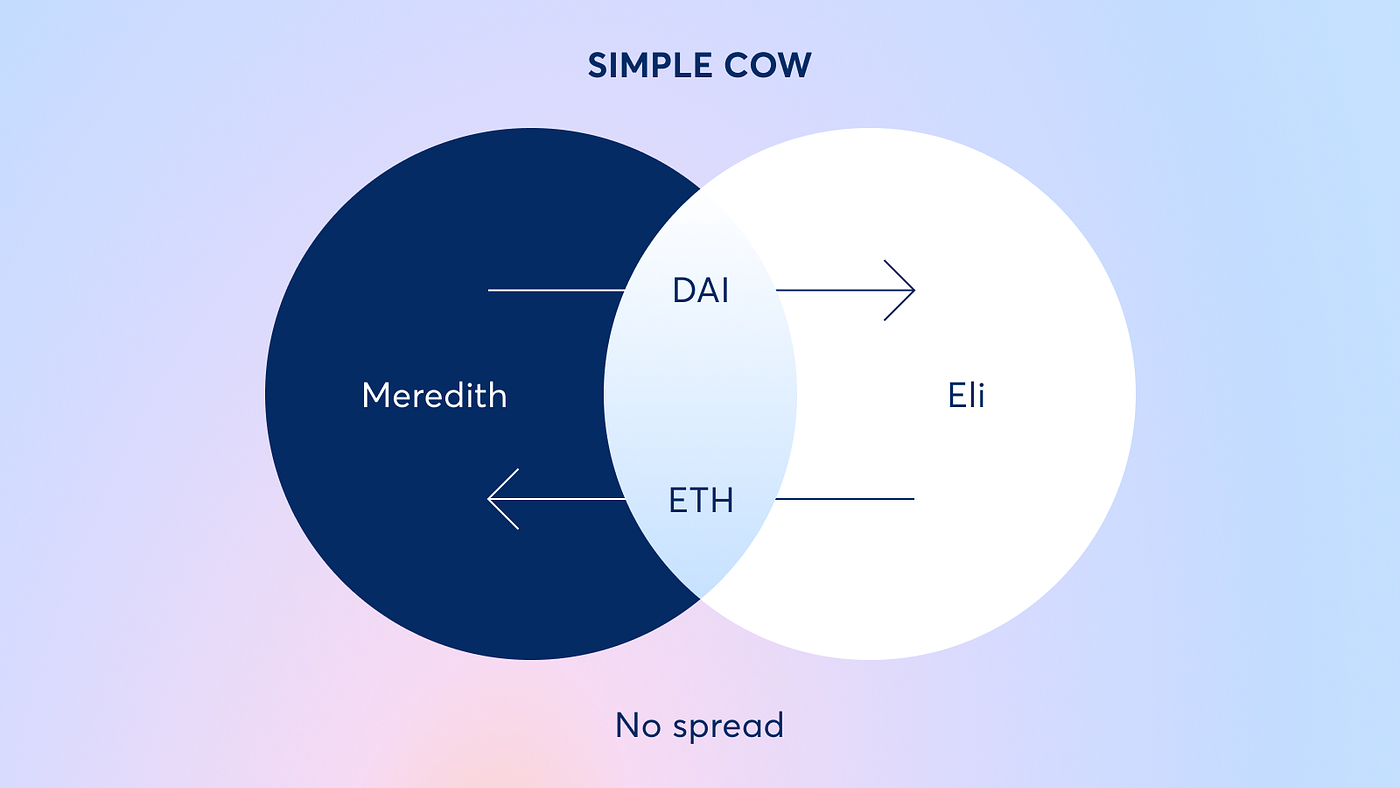
- Lowers fees: Efficient matching and gas optimization in batch auctions reduce costs, as seen in CoW Swap's internal matches and solver rewards up 25%.
- Boosts user confidence: MEV protection ensures fairness in token launches, fostering trust via transparent, anti-frontrunning mechanisms across DEXes like CoW and Gnosis.

From a strategic lens, this shifts power from extractors to protocols. Solvers compete on settlement efficiency, posting bonds to deter malice, fostering a competitive yet secure ecosystem. Check deeper into batch auctions vs. MEV frontrunning for sealed-bid nuances.
CoW Protocol's Battle-Tested Implementation
CoW Protocol, evolved from Gnosis Protocol V1 launched in 2020, pioneered ring trades via batch auctions, becoming the first DEX to prioritize sandwich attack prevention. Deployed on Ethereum and Gnosis Chain, it bypasses traditional on-chain liquidity by matching peer-to-peer intents internally before routing surpluses externally.
Coincidence of Wants (CoWs) matching pairs opposing trades directly, slashing fees and MEV exposure. Recent upgrades like Fair Combinatorial Batch Auctions (FCBA) boost solver rewards by 25%, enhancing matching sophistication without compromising protection. CoW Swap's gasless trading and solver DAO selection exemplify balanced incentives.
This approach delivers tangible wins: lower trading fees from aggregated execution, total peace of mind against MEV, and superior execution versus AMMs. As CoW celebrates milestones like its second birthday, it solidifies as the MEV-resistant DEX benchmark.
Beyond Ethereum, Uniswap's Angstrom DEX layers private order flow, batch auctions, and threshold encryption to obscure trades entirely. On Solana, Metaplex's Genesis platform deploys uniform price auctions for ICOs, where all winners pay the clearing price - the lowest bid exhausting supply - curbing snipers reliant on fee bribes.
Solana's speed, often a double-edged sword, finds balance here. High-throughput chains amplify MEV risks through rapid block times, but uniform price auctions recalibrate incentives. Bidders focus on value assessment over fee escalation, fostering genuine demand signals during token launch auctions DeFi.
Comparative Edge: Batch Auctions Across Chains
Protocols vary in nuance, yet converge on core tenets. CoW emphasizes combinatorial solving for optimal matches, Angstrom prioritizes privacy via encryption, and Metaplex streamlines ICOs with supply-exhausting clears. This diversity underscores batch auctions' adaptability, from Ethereum's solver competitions to Solana's sniper-proof launches.
Comparison of Batch Auction Protocols
| Protocol | Chain | Key Feature | MEV Defense |
|---|---|---|---|
| CoW Swap | Ethereum/Gnosis | FCBA solvers | 25% reward boost |
| Uniswap Angstrom | Ethereum | Threshold encryption | Private order flow |
| Metaplex Genesis | Solana | Uniform price ICOs | Sniper deterrence via clearing price |
Strategically, these implementations reveal a maturing playbook. CoW's solver bonds and DAO governance mitigate centralization risks, while Angstrom's off-chain intents dodge mempool visibility altogether. Metaplex proves the model scales to high-velocity environments, where traditional DEXs falter under bot swarms.
Yet balance tempers enthusiasm. Batch windows introduce latency, potentially clashing with traders craving instant execution. Solvers, while incentivized, demand robust auditing to prevent collusion. Still, net gains in fairness outweigh these frictions, especially for high-value token drops where MEV extraction routinely claims double-digit percentages.
Evolution Timeline: From Gnosis V1 to 2025 Horizons
Gnosis laid foundational stones in 2020 with the first DEX ring trades, evolving into CoW Swap's peer-to-peer fortress. By 2022, it claimed the MEV-resistant mantle, aggregating intents to sidestep AMM pitfalls. Fast-forward to FCBA's 2024 rollout, marrying combinatorial bids with faster settlements. Looking to 2025, blockspace auctions 2025 loom large, extending batch logic to validator-level bidding for prioritized execution.
This trajectory signals DeFi's pivot toward intentional design over raw permissionlessness. Where once mempool transparency invited predation, sealed batches restore equilibrium. Retail traders reclaim agency, institutions eye compliant entry, and protocols harvest sustained volume through trust.
Empirical evidence bolsters the case. CoW reports consistent fee savings via internal matches, while Solana launches post-Metaplex show reduced sniper dominance. Across metrics, CowSwap batch auctions and kin deliver tighter spreads, higher fill rates, and eroded MEV premiums. Gnosis Protocol's MEV protection, battle-tested across chains, exemplifies how early innovation compounds into ecosystem standards.

Forward-thinking traders should integrate these tools strategically. Pair batch auctions with intent-based wallets for seamless protection, monitor solver performance via dashboards, and time entries around window cycles. In token launches, opt for platforms enforcing uniform clears to sidestep the bot lottery.
As DeFi scales, batch auctions stand as the linchpin for equitable growth. They don't merely patch vulnerabilities; they redefine competition on merit, not manipulation. Modular MEV Auctions, with its orderflow marketplace and blockspace solutions, amplifies this shift, empowering users to navigate auctions with precision and foresight. The era of predatory frontrunning fades, yielding to a marketplace where strategy, not speed, crowns winners.



No comments yet. Be the first to share your thoughts!