
The shift to modular MEV
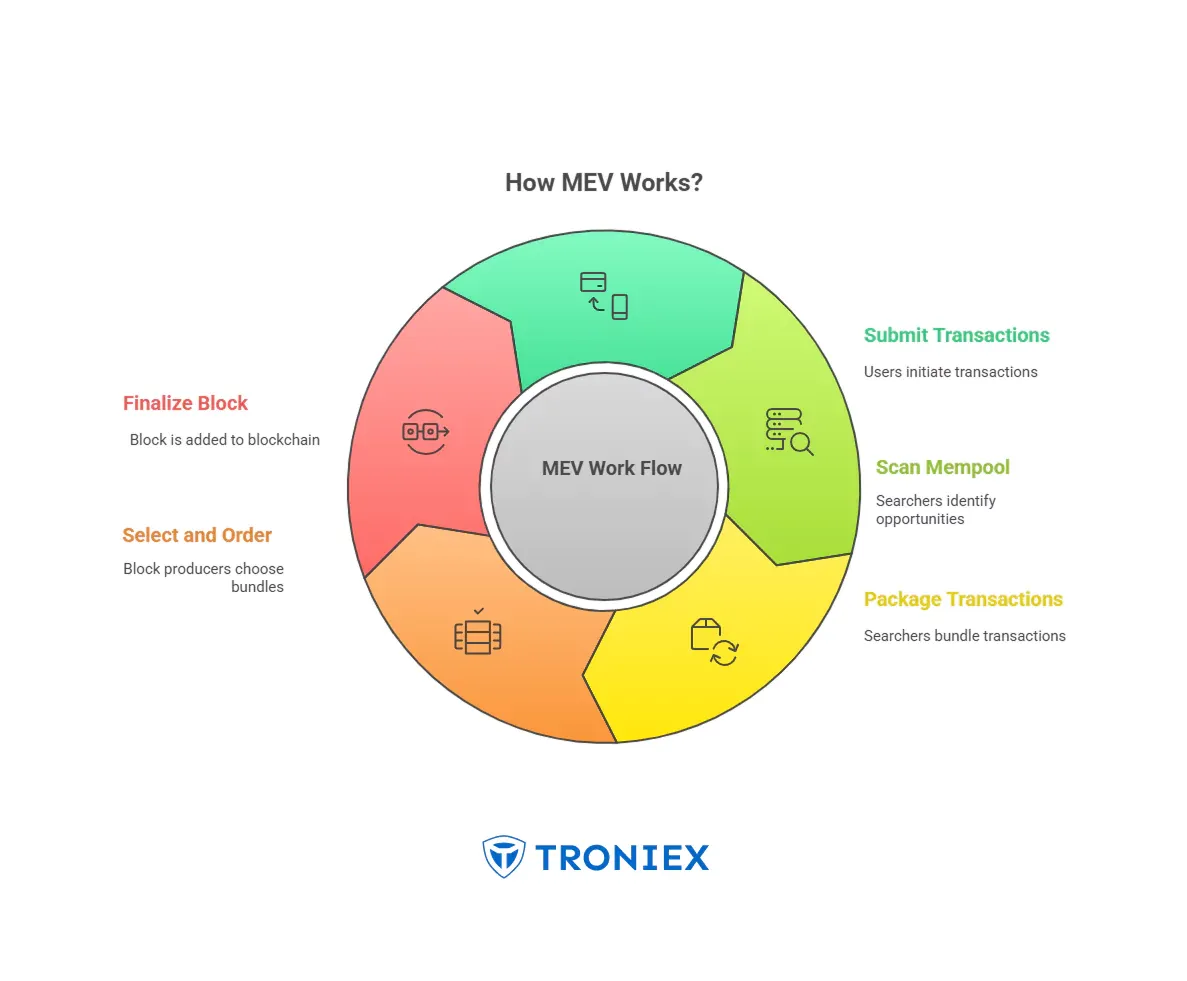
Modular MEV represents a fundamental architectural break in blockchain design, separating the execution layer from consensus. In traditional monolithic chains, block producers must simultaneously handle transaction execution, state updates, and network propagation. This bundling creates a bottleneck where computational limits restrict how much value can be extracted in a single block. By decoupling execution, modular architectures allow specialized nodes to focus solely on optimizing transaction ordering and yield without being constrained by the consensus layer's throughput limits.
This separation is the primary enabler for AI-driven extraction strategies in 2026. When execution is modular, AI agents can operate as independent services that interface with the consensus layer through standardized interfaces. These agents can process vast datasets to identify arbitrage opportunities, bundle transactions, or simulate market outcomes in real-time without competing for the same computational resources as block validation. The result is a more efficient market where value extraction is driven by algorithmic sophistication rather than raw block space scarcity.
The implications for cross-chain yield are significant. Modular MEV allows for seamless interoperability between different blockchain environments. AI agents can monitor yield opportunities across multiple chains and execute complex, multi-step transactions that would be impossible in a monolithic environment. This flexibility reduces the friction of cross-chain transfers and allows for more sophisticated yield farming strategies that adapt to market conditions in milliseconds.
As the ecosystem matures, the distinction between execution and consensus will likely become even more pronounced. New protocols are emerging that leverage this modularity to create dedicated execution layers for specific use cases, such as high-frequency trading or private transactions. This trend points toward a future where AI-driven MEV is not just an add-on, but a core component of how value flows through decentralized networks.
AI bots vs traditional MEV searchers
The modular MEV landscape is shifting from static, rule-based bots to adaptive AI agents. Traditional searchers rely on hardcoded strategies that struggle to keep pace with the dynamic liquidity flows across fragmented chains. AI-driven agents, by contrast, use machine learning models to predict cross-chain movements and optimize gas bidding in real time, turning volatility into a calculable edge rather than a risk.
Latency and Execution Speed
Traditional bots often suffer from latency when interacting with multiple chains, as they must poll each network sequentially. AI agents leverage predictive modeling to anticipate liquidity shifts before they fully materialize, allowing for pre-emptive action. This reduces the time between signal detection and transaction submission, a critical factor in high-stakes MEV extraction where milliseconds determine profit.
Gas Efficiency and Bidding
Gas optimization is where the divergence is most stark. Standard bots typically use static gas price multipliers, which can lead to overpaying during low competition or underbidding during spikes. AI models analyze historical gas patterns and current mempool congestion to calculate the optimal bid. This dynamic pricing ensures that capital is deployed efficiently, preserving margins even during periods of network congestion.
Cross-Chain Liquidity Awareness
Cross-chain arbitrage requires a holistic view of liquidity across disparate ecosystems. Traditional searchers often operate in silos, missing opportunities that span multiple chains. AI agents are designed to monitor and integrate data from various blockchains simultaneously, identifying arbitrage opportunities that are invisible to single-chain bots. This comprehensive awareness allows for more complex, multi-leg trades that maximize yield while minimizing exposure to slippage.
| Feature | Traditional Bot | AI Agent |
|---|---|---|
| Latency | Sequential polling | |
| Latency | Predictive pre-emption | |
| Gas Bidding | Static multipliers | |
| Gas Bidding | Dynamic optimization | |
| Cross-Chain | Siloed operations | |
| Cross-Chain | Integrated monitoring |
Decision Framework
Choosing between traditional bots and AI agents depends on your operational capacity. Traditional bots are easier to audit and debug, making them suitable for simple, single-chain strategies. AI agents require more computational resources and sophisticated infrastructure but offer superior performance in complex, multi-chain environments. As the modular MEV space evolves, the ability to adapt and predict will likely become the primary differentiator for successful searchers.
Cross-chain extraction methods
Cross-chain yield relies on extracting value from fragmented liquidity. The primary mechanism is atomic swaps, which allow immediate settlement across different blockchains without counterparty risk. These transactions bundle multiple steps into a single execution, ensuring that if one part fails, the entire operation reverts. This atomicity is the foundation of safe cross-chain arbitrage, preventing the loss of funds during complex multi-step trades.
Bridge arbitrage exploits price discrepancies between centralized exchanges and decentralized liquidity pools. Traders monitor spreads across chains, moving capital to where yields are highest. This process requires low-latency infrastructure to capture fleeting opportunities before the market adjusts. The speed of execution often determines profitability, making direct node access critical for sustained returns.
Technical analysis of cross-chain volume reveals strong correlations with ETH price action. Monitoring these metrics helps identify periods of high volatility where extraction opportunities are most abundant. The following chart illustrates recent ETH/USDC price movements alongside cross-chain volume spikes, highlighting the interplay between market sentiment and MEV activity.
Yield Optimization in 2026
AI models now act as real-time air traffic controllers for cross-chain yield, constantly recalibrating strategies to maximize returns while mitigating complex risks. Unlike static arbitrage bots that chase fixed spreads, these adaptive systems monitor liquidity depth, gas volatility, and bridge latency across multiple networks simultaneously. They treat yield not as a static percentage, but as a dynamic variable influenced by network congestion and security events.
The primary threat to yield in 2026 is not just market volatility, but execution risk. Sandwich attacks and bridge exploits can drain positions in seconds. AI models mitigate these threats by analyzing on-chain patterns to detect malicious intent before a transaction is finalized. For instance, if a model identifies a high probability of a sandwich attack on a specific DEX pair, it can automatically reroute the transaction through a less liquid but safer route or adjust the slippage tolerance to protect principal capital.
This proactive risk management is essential for sustaining yield in a fragmented landscape. By continuously evaluating the security posture of bridges and the health of liquidity pools, AI ensures that yield farming remains profitable rather than becoming a race to the bottom. The result is a more resilient yield strategy that can withstand the inherent volatility of cross-chain DeFi.
Risks and regulatory outlook
Modular MEV extraction is not merely a technical exercise; it operates in a high-stakes environment where regulatory scrutiny and smart contract vulnerabilities intersect. As AI strategies for cross-chain yield become more sophisticated, the attack surface expands, demanding rigorous risk management protocols from operators.
Regulatory scrutiny
Regulators are increasingly viewing MEV extraction through the lens of market manipulation and unfair trading practices. The decentralized nature of modular architectures does not insulate operators from compliance requirements. In the United States, the Commodity Futures Trading Commission (CFTC) and the Securities and Exchange Commission (SEC) have signaled that certain MEV activities may fall under existing securities and commodities laws. Operators must navigate this evolving landscape by ensuring their extraction strategies do not violate anti-manipulation statutes. Failure to align with regulatory expectations can result in significant legal penalties and loss of operational licenses. For detailed guidance on compliance, refer to official CFTC enforcement actions.
Smart contract risks
The modular nature of MEV architectures introduces unique smart contract risks. Each component—whether a sequencer, a relayer, or a yield aggregator—acts as a potential point of failure. A vulnerability in one module can cascade through the entire system, leading to total capital loss. The complexity of cross-chain interactions further amplifies this risk, as bridging protocols often lack the same level of security auditing as established L1 networks. Operators must prioritize formal verification and continuous monitoring of all smart contracts involved in their yield strategies.
Mitigation strategies
To mitigate these risks, operators should adopt a defense-in-depth approach. This includes multi-signature controls for treasury management, regular third-party audits of smart contracts, and real-time monitoring of on-chain activity. Additionally, diversifying across multiple chains and protocols can reduce exposure to any single point of failure. By treating risk management as a core component of their AI strategies, operators can sustain long-term profitability in the modular MEV landscape.
No comments yet. Be the first to share your thoughts!