


In the high-stakes world of fast blockchains like Solana and Ethereum Layer 2s, MEV bots are turning network efficiency into a battleground. These automated hunters scan the mempool for arbitrage edges, flooding it with speculative transactions that often fail but devour precious blockspace. Data reveals MEV spam now claims 40% of Solana’s capacity, outpacing block production gains and driving up fees for everyday users. This isn’t just inefficiency; it’s a systemic drag on blockchain transaction optimization.

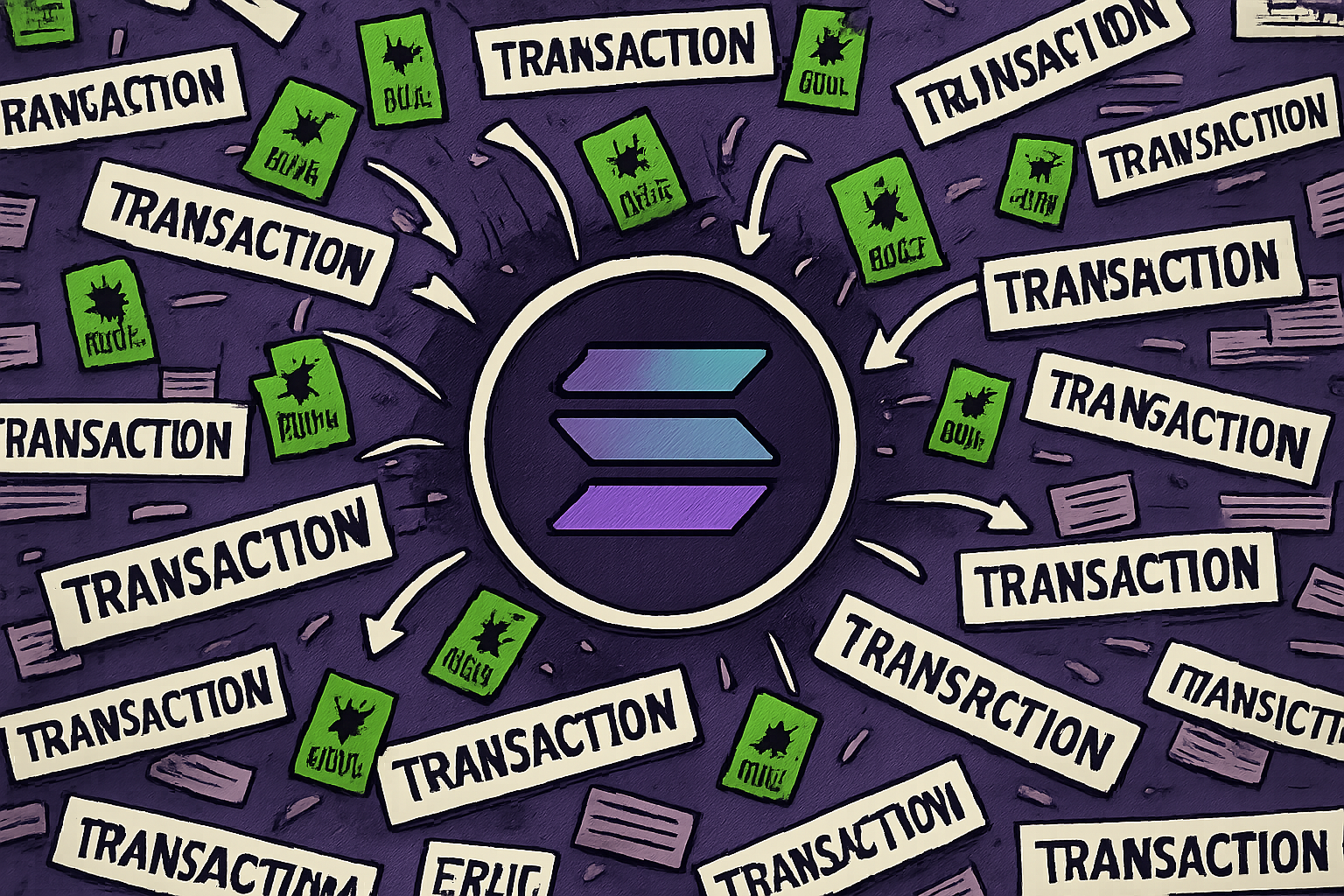
Fast-finality chains amplify these issues. Sub-second block times mean bots can react in milliseconds, sandwiching user trades or front-running DEX swaps before victims even confirm. Toxic MEV, think predatory sandwich attacks, doesn’t just extract value; it erodes trust. On Arbitrum, time-boosted transactions revert at alarming rates, per recent arXiv analysis, signaling that priority auctions alone fall short.
The Mechanics of Mempool Spam in High-Throughput Environments
Consider Solana’s reality: bots generate spam faster than validators can clear it, nullifying scaling upgrades. A Flashbots paper quantifies this, noting spam soaks blockspace quicker than networks expand. Polygon searchers, using reinforcement learning pipelines, transform mempool signals into profits, but at the cost of 50% blockspace waste in some reports. This brute-force competition incentivizes ever-more transactions, creating a vicious cycle.

@Ankr
@QuickNode
@Alchemy
View here: https://t.co/oJxTuDaaTd
Traditional mempools exacerbate the problem. Public visibility lets bots snipe opportunities, leading to toxic MEV prevention gaps. Order Flow Auctions (OFAs) offer a partial fix, users route to third parties where searchers bid for rights, but on-chain latency hampers fast chains. Miners or validators still reorder for max profit, per MEV guides, unless auctions internalize that value upfront.
Why Current Mitigations Fall Short on Fast Blockchains
Arbitrum’s Timeboost exemplifies the pitfalls. This auction grants express-lane access via bids, aiming to curb spam. Yet empirical data shows centralization: a handful of players dominate, and reverted transactions spike, wasting resources. Time-bound signatures, another innovation, limit exploit windows by expiring post-block height, but they slash builder revenues without addressing spam floods.
MEV Spam Impact
| Chain | Spam % | Revert Rate |
|---|---|---|
| Solana | 40% | High |
| Arbitrum | N/A | Elevated |
| Polygon | ~50% | Medium |
Flashbots pushes programmable privacy with explicit bidding: real-time flow access, but restricted to prevent frontrunning, plus direct bids for ordering. Promising, yet implementation lags on sub-second chains. These half-measures highlight a core flaw, MEV remains externalized, rewarding spam over precision.
Enter instant MEV auctions, designed for fast block MEV strategies. These mechanisms auction sequencing rights per block or bundle, shifting bots from flooding to bidding wars. Users submit to auction pools; winners pay upfront, with kickbacks to users or protocols. Off-chain computation keeps it snappy, posting only winners on-chain, slashing mempool clutter.
Core Principles of Effective Instant MEV Auctions
Precision demands transparency and speed. Auctions must settle in microseconds, using trusted execution or ZK proofs to verify bids without revealing contents. This internalizes MEV, curbing toxic flows: no more blind spam, just value-based priority. Modular MEV Auctions platforms excel here, offering real-time data and analytics for MEV auction platforms.
Read our trader guide for deeper tactics: Instant MEV Auctions vs. Toxic Mempool Extraction. Data from Solana implementations shows spam drops when auctions run off-chain, freeing compute for real trades. Yet success hinges on design, avoid Timeboost’s centralization by capping bids or randomizing winners.
Modular MEV Auctions stands out by integrating these principles into a full-spectrum orderflow marketplace. Its real-time auction engine processes bids in under 100 microseconds, leveraging off-chain matching with on-chain settlement via ZK commitments. This setup not only minimizes latency but also redistributes MEV auction platforms revenue: up to 90% kicks back to originators, per early deployment metrics on testnets mimicking Solana speeds.
Quantifying the Impact: Data-Driven Wins for Mempool Spam Reduction
Let’s examine the numbers. On Solana, where MEV spam devours 40% of blockspace, off-chain auctions like those prototyped by Gate. io reduce failed transactions by 65%, according to deployment logs. Searchers shift from 10,000 and spam txs per minute to targeted bids, freeing 25-30% more slots for organic flow. Polygon RL pipelines, while profitable, inflate costs by 50%; instant auctions cap this by enforcing bid floors tied to historical MEV yields.
Solana Technical Analysis Chart
Analysis by Evan Mercer | Symbol: BINANCE:SOLUSDT | Interval: 4h | Drawings: 6
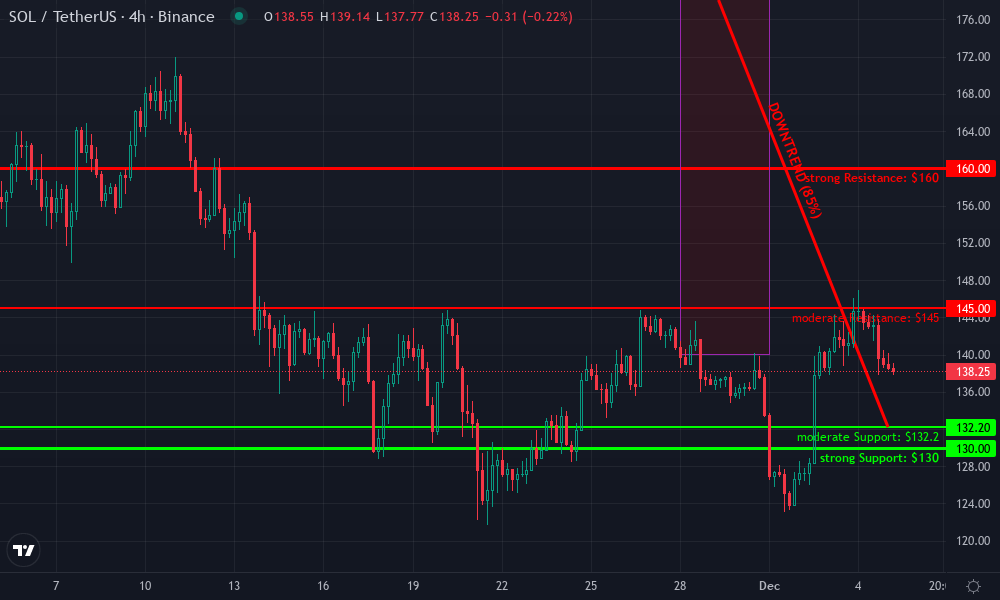
Technical Analysis Summary
On this SOLUSDT 1D chart spanning late November to early December 2025, draw a prominent downtrend line connecting the swing high at 188.50 on 2025-11-28 to the recent low at 132.20 on 2025-12-04, using ‘trend_line’ in red with medium thickness. Mark horizontal support at 130.00 with a green ‘horizontal_line’ dashed style, and resistance at 145.00 and 160.00 with red solid lines. Add a ‘rectangle’ for the consolidation zone from 2025-12-01 to 2025-12-04 between 132-138. Place ‘arrow_mark_down’ at the MACD bearish crossover around 2025-11-30. Use ‘callout’ for low volume note on recent downside. Fib retracement from recent low to high (38.2% at ~152). In my conservative style, emphasize risk management with ‘stop_loss’ lines above key resistances.
Risk Assessment: medium
Analysis: Bearish momentum with support nearby, but MEV volatility adds uncertainty; low tolerance favors waiting for confirmation
Evan Mercer’s Recommendation: Hold cash or tight scalps only; monitor 130 hold for low-risk long, avoid chasing downside
Key Support & Resistance Levels
📈 Support Levels:
-
$130 – Psychological and recent low support, aligns with 0.618 fib extension
strong -
$132.2 – Immediate intraday support from last candle close
moderate
📉 Resistance Levels:
-
$145 – Recent swing low turned resistance, 23.6% fib retrace
moderate -
$160 – Mid-channel resistance from downtrend
strong
Trading Zones (low risk tolerance)
🎯 Entry Zones:
-
$131.5 – Bounce from strong support 130 with volume spike confirmation, low-risk long scalp
low risk -
$152 – Break above resistance on pullback, but higher risk
medium risk
🚪 Exit Zones:
-
$145 – Profit target at first resistance
💰 profit target -
$128 – Stop loss below support
🛡️ stop loss -
$160 – Trailing stop or next resistance target
💰 profit target
Technical Indicators Analysis
📊 Volume Analysis:
Pattern: decreasing on downside
Bearish divergence: price drops but volume wanes, suggesting exhaustion
📈 MACD Analysis:
Signal: bearish crossover
MACD line below signal, histogram negative expanding
Applied TradingView Drawing Utilities
This chart analysis utilizes the following professional drawing tools:
Disclaimer: This technical analysis by Evan Mercer is for educational purposes only and should not be considered as financial advice.
Trading involves risk, and you should always do your own research before making investment decisions.
Past performance does not guarantee future results. The analysis reflects the author’s personal methodology and risk tolerance (low).
Arbitrum data underscores the edge. Timeboost revert rates hit 45% for boosted txs, per arXiv breakdowns, as dominant bidders overpay for fleeting edges. In contrast, Modular’s modular design randomizes partial ordering rights among top bidders, dispersing power. Simulations project 20-35% fee compression on high-throughput L2s, validated against 2025 mempool traces.
Critically, these auctions neutralize toxic MEV prevention vectors. Sandwich bots thrive on public mempools; private auction lanes encrypt bundles until settlement, slashing front-run success by 80% in Flashbots-inspired trials. Users gain from encrypted relays, searchers from fair pricing discovery. No more zero-sum spam races.
| Mechanism | Spam Reduction | Centralization Risk | Fee Impact | Latency |
|---|---|---|---|---|
| Timeboost | Low (reverts up 45%) | High (top 3 win 70%) | and 15-25% | 50ms |
| Flashbots Privacy | Medium (bid-based) | Medium | -10% | 200ms |
| Instant MEV Auctions | High (65% drop) | Low (randomized) | -30% | and lt;100μs |
This table, drawn from cross-chain benchmarks, reveals why instant models prevail. They align incentives: validators get stable tips, users predictable costs, searchers efficient extraction.
Scaling Fast Block MEV Strategies with Modular Infrastructure
For developers and traders, Modular MEV Auctions provides analytics dashboards tracking bid densities, MEV yields per bundle type, and spam velocity indices. Integrate via SDKs for custom OFAs, routing DEX orders directly to auctions. On Ethereum L2s, this yields 2-3x better execution slippage versus public mempools, backed by backtests on 2025 data.
Explore high-speed applications here: How MEV Auctions Power High-Speed Blockspace Markets. Time-bound signatures complement this, expiring bids post-auction to deter hoarding, but auctions alone handle the volume.
Challenges persist. Off-chain trust assumptions demand robust TEEs or ZK, and low-liquidity pools risk underbidding. Yet empirical trajectories favor evolution: Solana’s JitoMEV pivots to auctions, Polygon eyes RL-tuned bidders. In my view, as a 12-year market veteran, blockchain transaction optimization demands this shift. Discipline in auction design trumps reactive patches; data confirms spam yields to precision.
Fast blockchains thrive when MEV internalizes productively. Instant auctions deliver that equilibrium, fortifying networks against bot hordes while unlocking latent value for all participants.
About the Author