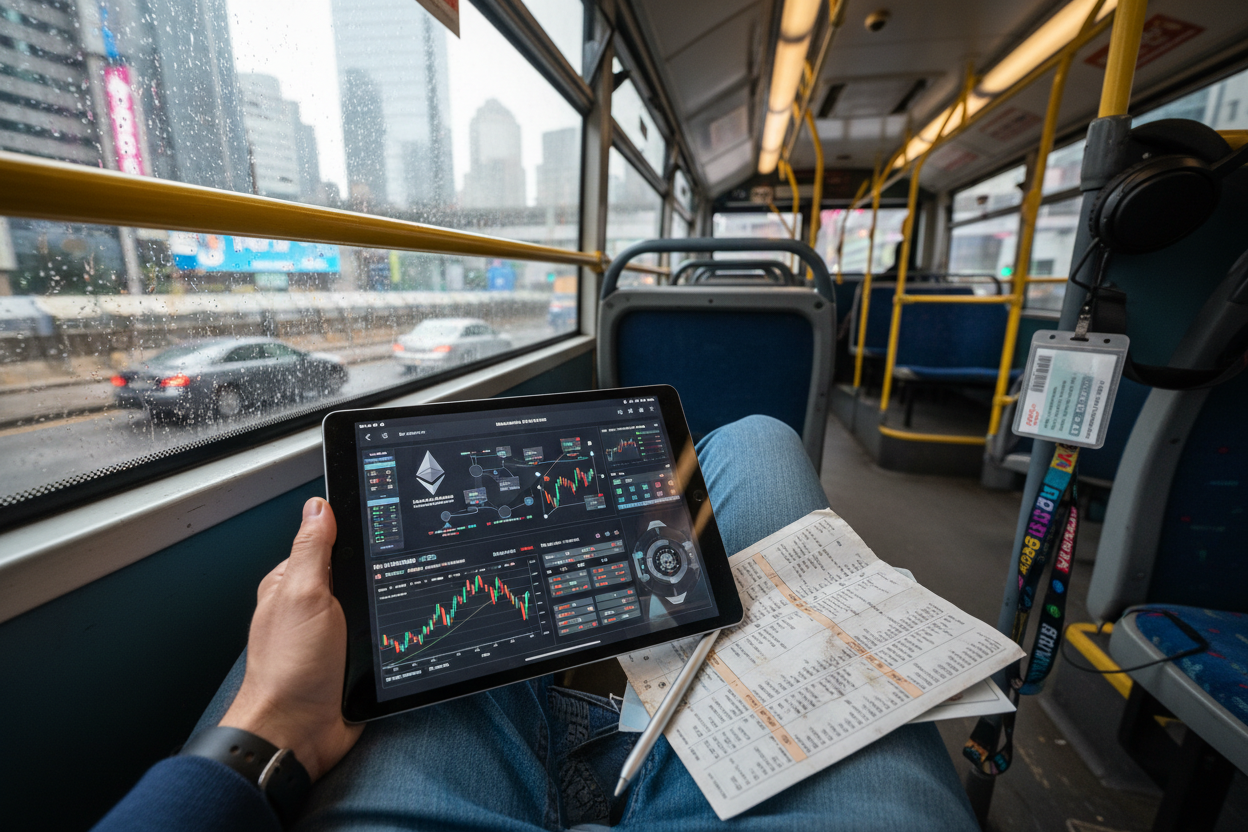


In the pulsating world of Ethereum, where MEV auction mechanisms dictate the flow of billions in value, the debate between first-price and second-price formats is more than academic- it’s a battle for MEV revenue optimization. With Ethereum’s native token trading at $2,152.07, up $29.59 over the last 24 hours, searchers and builders are eyeing every basis point of efficiency. Recent simulations project that shifting to second-price MEV auctions could unlock 14-28% higher revenues for Ethereum orderflow auctions, especially as we approach 2026 and protocols scale under proposer-builder separation (PBS).
Orderflow auctions have evolved from the toxic mempool wars into structured marketplaces, but the core tension remains: how do we extract maximum value without stifling participation? First-price auctions, akin to a high-stakes poker game, reward aggressive bidding but breed inefficiency. Bidders shade their offers, guessing others’ limits, which depresses overall revenue. In contrast, second-price designs- think Vickrey auctions- flip the script by charging winners only the second-highest bid, fostering truthful reveals and crisper price discovery.
First-Price Pitfalls in Today’s MEV Landscape
Picture this: a searcher spots a lucrative arbitrage in a DeFi pool. Under a first-price MEV auction mechanism, they must bid their true valuation minus a safety margin, lest a rival outbids by a wei. This bid shading cascades, as evidenced by MEV-Boost data where neutral builders routinely underbid to avoid overpaying. A GitHub analysis of sealed-bid impacts in Ethereum PBS highlights how first-price sealed-bid (FPSB) auctions exacerbate this, leading to fragmented blockspace and lost revenue. The top 1% of transactions, which generate 68% of all MEV per Ethereum Research findings, suffer most- high-value bundles get undervalued in the frenzy.
Real-world friction amplifies the issue. Latency arbitrage bots dominate, simulating orders and pummeling bids into oblivion. Monoceros’s breakdown of orderflow auctions notes searchers scan, simulate, and shade relentlessly, turning auctions into a loser’s game for all but the fastest. No wonder gas wars persist, even post-Dencun, eroding network health.
Second-Price Superiority Backed by Rigorous Simulations
Enter the arXiv powerhouse: “Auction Format Choice for Maximal Extractable Value. ” Analyzing 2.2 million transactions, researchers confirm the Milgrom-Weber linkage principle- English and second-price sealed-bid auctions strictly dominate Dutch and first-price kin. Under moderate bidder affiliation, revenues surge 14-28%, with English formats pulling ahead in high-competition scenarios. This isn’t theory; simulations mirror Ethereum’s skewed distribution, where whale-sized opportunities dwarf the rest.
Our simulations confirm the Milgrom-Weber linkage principle: English and second-price sealed-bid auctions strictly dominate Dutch and first-price.
Ciamac Moallemi’s framework on quantifying price improvement in orderflow auctions (OFAs) dovetails here, stressing metrics beyond raw bids. Second-price setups deliver superior price improvement for users, as searchers bid boldly without fear of overpayment. In MEV-Boost block auctions, favored builders near second-price outcomes, while neutrals shade in first-price hell- a recipe for inefficiency the paper quantifies starkly.
Strategic Shifts Toward 2026 Orderflow Dominance
Fast-forward to 2026: Ethereum’s orderflow matures with modular MEV auctions and batch mechanisms. Adopting second-price MEV auctions isn’t just additive- it’s multiplicative for revenue. The updated context underscores Vickrey’s edge in truthful bidding, curbing gas wars and boosting participation. Imagine repeated sealed-bid auctions evolving to second-price, as PBS cements builder power.
Builders win bigger bundles; searchers extract without paranoia. A 20% revenue bump on $2,152.07 ETH ecosystem scale? That’s hundreds of millions recirculated to stakers and users. Yet implementation hurdles loom- oracle reliance, as in Euler’s Dutch auctions, demands precision. OEV proxies could bridge, but only if auctions incentivize honesty.
Ethereum (ETH) Price Prediction 2027-2032
Forecasts based on MEV auction revenue gains (14-28% from second-price formats), market cycles, and adoption trends from 2026 baseline of $2,152
| Year | Minimum Price | Average Price | Maximum Price | YoY % Change (Avg) |
|---|---|---|---|---|
| 2027 | $1,800 | $3,200 | $5,500 | +49% |
| 2028 | $2,200 | $4,800 | $8,500 | +50% |
| 2029 | $3,000 | $7,200 | $12,000 | +50% |
| 2030 | $4,200 | $10,500 | $17,000 | +46% |
| 2031 | $5,500 | $14,000 | $22,000 | +33% |
| 2032 | $7,000 | $18,500 | $28,000 | +32% |
Price Prediction Summary
ETH prices are forecasted to grow significantly through 2032, fueled by 14-28% MEV revenue uplift from second-price auctions, deflationary burns, scalability enhancements, and institutional adoption. Averages climb from $3,200 to $18,500, with bullish peaks up to $28,000 amid market cycles.
Key Factors Affecting Ethereum Price
- 14-28% revenue increase from second-price MEV auctions promoting efficient bidding
- Higher orderflow revenues boosting ETH burns via EIP-1559
- Ethereum L2 scaling and Danksharding upgrades
- DeFi growth and institutional inflows (ETFs, custody)
- Regulatory clarity in US/EU for crypto assets
- Bull/bear market cycles post-Bitcoin halvings
- Competition from L1s like Solana and L2 proliferation
Disclaimer: Cryptocurrency price predictions are speculative and based on current market analysis.
Actual prices may vary significantly due to market volatility, regulatory changes, and other factors.
Always do your own research before making investment decisions.
Modular MEV Auctions stands at the vanguard, pioneering tools that layer second-price logic atop orderflow marketplaces. Their real-time analytics already spotlight bundles ripe for MEV revenue optimization, projecting how first-price vs second-price auctions reshape builder profits. As Ethereum’s ETH holds steady at $2,152.07 amid a modest 24-hour gain of $29.59, the stakes clarify: protocols ignoring auction upgrades risk commoditization in a PBS-dominated future.

Batch Auctions as the Bridge to Second-Price Efficiency
Batch auctions emerge as a pragmatic pivot, compressing mempool chaos into discrete rounds that mimic second-price dynamics. By aggregating orders, they slash latency arbitrage edges, letting value accrue to truthful bidders rather than speed demons. Research from Euler’s Dutch experiments reveals oracle pitfalls, yet pairing TWAP with OEV auctions yields cleaner signals. Transitioning Ethereum orderflow auctions here could reclaim 68% of revenue locked in that top 1% transaction cohort, per Ethereum Research TL;DRs.
Consider the economics: in first-price scrums, expected profits evaporate under shading; second-price restores them by design. Moallemi’s price improvement metric quantifies this- users see tighter spreads, searchers bolder plays. For 2026, as blockspace fragments into modular silos, hybrid formats blending sealed-bid second-price with batching promise the sweet spot. Stakers, poised for PBS windfalls, should lobby for this shift; it recirculates MEV to the network core.
First-Price vs Second-Price MEV Auctions: Pros and Cons
| Auction Type | Revenue Impact | Bidding Strategy | Efficiency Gains |
|---|---|---|---|
| First-Price Auction 📉 | Lower overall revenue due to bid shading; top 1% txs dominate but suboptimal | Strategic shading: Bidders bid below true value to maximize profit 🧠 | Prone to inefficiencies like gas wars; less optimal for Ethereum orderflow ⚠️ |
| Second-Price Auction 💰 | 14-28% revenue uplift (arXiv study); outperforms first-price by 14-28% 📈 | Truthful bidding encouraged (Vickrey-style); more competitive and transparent ✅ | Higher efficiency gains; reduces MEV issues, dominates per Milgrom-Weber principle 🚀 |
Quantifying the 2026 Revenue Horizon
Projections paint a vivid picture. At current ETH levels of $2,152.07, baseline MEV hovers in the hundreds of millions daily; a 20% second-price lift compounds to billions annually. Simulations from the arXiv paper, grounded in 2.2 million real transactions, stress-test this under affiliation- where bidder values correlate, as in correlated DeFi arb ops. English auctions edge out sealed variants in fluidity, but sealed-bid second-price (SPSB) suits onchain constraints best, dodging front-running in bid reveals.
Neutral builders, hamstrung in today’s MEV-Boost first-price auctions, would thrive. Emergent Mind notes they shade bids conservatively, ceding alpha to insiders; second-price levels the field. Traders, integrate this into your edge: route via platforms offering modular MEV auctions dashboards, simulating second-price outcomes pre-submission. The 24-hour low of $2,117.87 tested resilience; now, with highs at $2,164.86 fresh, momentum favors innovators.

Challenges persist- collusion risks in small bidder pools, oracle manipulations. Yet Ethereum’s antifragility shines: proposer commitments in PBS enforce verifiability. Developers, prototype with instant MEV auctions; they counter toxic extraction while scaling second-price bids. The Milgrom-Weber principle isn’t optional; it’s the physics of efficient markets.
Vision 2026 crystallizes around this axis. Searchers bid valuations unmasked; builders assemble pristine blocks; users pocket price improvements. Ethereum’s orderflow, fueled by $2,152.07 ETH buoyancy, evolves from zero-sum scraps to value-creating engines. Platforms like Modular MEV Auctions equip you with the analytics to navigate- because in auction design, as in macro trades, context is king. Position accordingly, and capture the uplift.
About the Author