


In DeFi’s competitive arena, where Ethereum hovers at $3,011.85 amid a slight 24-hour dip of -0.1970%, orderflow strategies dictate success in MEV blockspace auctions. Traders who route transactions through private channels sidestep public mempool predation, redirecting MEV orderflow strategies toward auctions that reward sophisticated bidding. Platforms like Modular Mev Auctions streamline this by offering real-time insights into orderflow MEV auctions, enabling participants to optimize bundles for block inclusion.
Orderflow auctions aggregate user transactions into batches, auctioned to searchers or builders who compete to execute them profitably. This setup, detailed in Frontier Research’s survey of 12 implementations, balances user protection with extractor incentives. Unlike public mempools rife with sandwich attacks and liquidations, OFAs let traders capture a slice of the EV_signal from their trades, as outlined by Monoceros. At current ETH levels, even minor slippage savings compound across high-volume strategies.
Core Mechanics of Blockspace Auctions in DeFi
Blockspace auctions evolved from proposer-builder separation (PBS), where builders bid for transaction bundles. Private order flows, per arXiv analysis, empower builders to extract from non-public streams, intensifying competition. L2IV Research emphasizes batching: transactions settle via third-party solvers, mitigating frontrunning. CoW. fi’s model protects against MEV by auctioning user orders, ensuring solvers bid competitively without visibility into details.
Consider DEX arbitrages or liquidations; these MEV staples thrive in auctions but now face user-redistributed value. Blocknative highlights how OFAs turn exploitable flows into trader benefits. With ETH at $3,011.85, volatility amplifies opportunities, yet toxic flows demand vigilant routing.
Adoption of MEV auctions is not a luxury but a strategic imperative. – Flashbots Writings
Solana’s ecosystem, via Helius, mirrors this with user-captured value mechanisms, hinting at cross-chain applicability. Archetype Fund’s exchange evolution ties market microstructure to MEV, underscoring auctions’ role in fairer pricing.

Navigating Design Tradeoffs in Orderflow Auctions
Frontier Research’s framework reveals pivotal choices: uniform-price vs. discriminatory auctions, batch timing, and signal revelation. Uniform pricing simplifies but risks winner’s curse; discriminatory allows nuanced bids, suiting heterogeneous flows. Timing syncs with block production, per 7BlockLabs’ batch auctions, using sealed bids to curb speed advantages.
In rollups, sequencer MEV looms; Chainscore Labs advocates commit-reveal schemes and encrypted mempools for fair ordering. These prevent malicious reordering, vital as L2s scale. Jake Rubin’s MEV Paradox frames it: reordering yields profit, but auctions redistribute it equitably.
Ethereum (ETH) Price Prediction 2027-2032
Forecasts based on $3,011.85 (2026) baseline, factoring orderflow strategies and MEV blockspace auction advancements in DeFi
| Year | Minimum Price | Average Price | Maximum Price | YoY % Change (Avg from Prev) |
|---|---|---|---|---|
| 2027 | $2,800 | $4,200 | $6,500 | +40% |
| 2028 | $3,900 | $6,300 | $10,000 | +50% |
| 2029 | $5,000 | $9,000 | $14,000 | +43% |
| 2030 | $7,000 | $13,000 | $20,000 | +44% |
| 2031 | $9,500 | $18,000 | $28,000 | +39% |
| 2032 | $12,000 | $25,000 | $40,000 | +39% |
Price Prediction Summary
Ethereum’s price is forecasted to experience robust growth due to innovations in orderflow auctions and MEV mitigation, enhancing DeFi efficiency, user protection, and blockspace utilization. Average prices are expected to rise progressively from $4,200 in 2027 to $25,000 by 2032 amid bullish adoption trends, with min/max ranges accounting for bearish regulatory risks and maximal bull scenarios.
Key Factors Affecting Ethereum Price
- Advancements in orderflow auctions (OFAs) and MEV strategies mitigating extraction and improving fairness
- Auction-managed AMMs (am-AMMs) and MEV-aware routing algorithms boosting liquidity and execution quality
- Multiple-winner auctions and sequencer mitigations (e.g., commit-reveal, encrypted mempools) enhancing rollup scalability
- Surging DeFi TVL and transaction volumes driving ETH demand via gas fees
- Market cycles post-2026 consolidation favoring bull runs with ETF and institutional inflows
- Regulatory clarity supporting mainstream adoption while competition from L2s/Solana is offset by Ethereum’s ecosystem dominance
- Technological upgrades ensuring progressive scaling and use case expansion
Disclaimer: Cryptocurrency price predictions are speculative and based on current market analysis.
Actual prices may vary significantly due to market volatility, regulatory changes, and other factors.
Always do your own research before making investment decisions.
Recent innovations sharpen edges. Auction-managed AMMs (am-AMMs), from arXiv 2403.03367, elect pool managers via on-chain auctions to dynamically set fees, boosting uninformed flow revenue while shielding against informed traders. This yields higher liquidity than static AMMs, per simulations.
Leveraging MEV-Aware Routing for Auction Dominance
Hybrid genetic algorithms, detailed in arXiv 2510.21647, optimize routing across batch auctions. They balance surplus, fees, slippage, and risk, evolving routes under time constraints. Solvers gain principled allocations, enhancing execution in blockspace auctions DeFi demands.
Multiple-winner designs like mevAuction split blocks into Alpha (high-priority) and Beta sections, per mev. io. Proposers earn extras without disrupting mev-boost. For Modular Mev Auctions orderflow, this means diversified bidding: prioritize bundles with strong signals while hedging via secondary slots. Read more on orderflow data’s role.
Batch auctions with time-weighting further democratize access, aggregating over intervals to neutralize HFT edges. Cryptographic commitments seal bids until close, fostering trust. As ETH stabilizes near $3,011.85, these tools enable transaction optimization MEV pros to outmaneuver rivals, setting up advanced tactics ahead.
Traders mastering MEV orderflow strategies integrate these primitives into layered approaches, prioritizing signal-rich bundles while diversifying across auction formats. Signal strength, derived from trade size, asset volatility, and historical EV, guides bid calibration. Weak signals route to uniform auctions for broad competition; potent ones target discriminatory setups where nuanced pricing extracts maximum value. This selective funneling, informed by real-time analytics on platforms like Modular Mev Auctions, turns fragmented flows into cohesive winning bids.
Advanced Tactics: Bundling and Dynamic Bidding
Dynamic bidding adapts to auction velocity. Monitor builder participation rates; high contention signals aggressive undercutting, prompting shaded bids to preserve margins. Bundle complementary flows, pair a liquidation candidate with an arbitrage chaser, to amplify bundled EV, deterring solo predation. In my experience analyzing 10 years of market data, bundles yielding 2-5x isolated EV dominate blockspace auctions DeFi landscapes, especially as ETH lingers at $3,011.85 with subdued volatility curbing wild swings.
Craft Winning Orderflow Bundles for MEV Blockspace Auctions

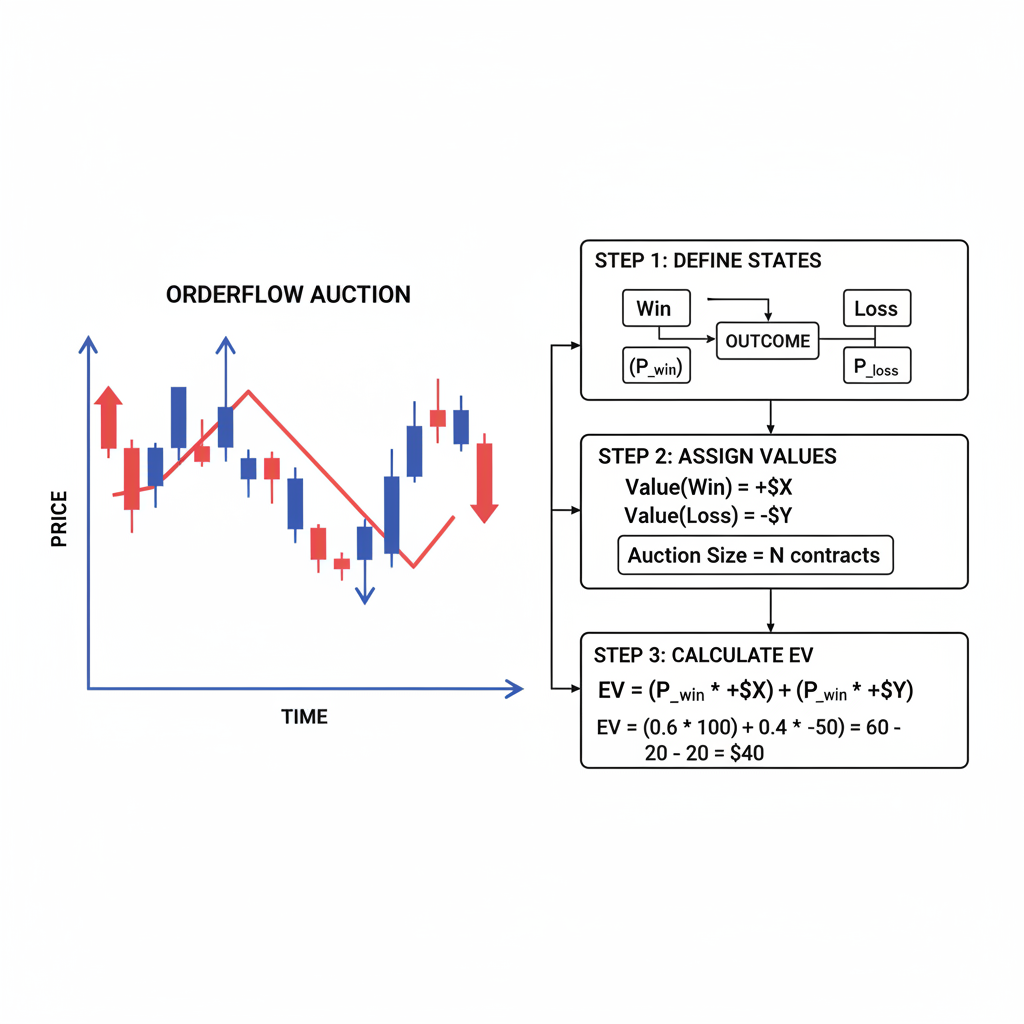




MEV-aware routing elevates this further. Genetic algorithms don’t just optimize paths; they simulate adversarial responses, forecasting solver counters. Deploy them pre-auction to stress-test routes, ensuring resilience against slippage spikes. For sequencers, commit-reveal becomes non-negotiable: commit hashes first, reveal payloads post-deadline, starving frontrunners of intel. This sequencer-agnostic tactic scales to L2s, where encrypted mempools add another layer, blinding orderers to contents until execution.
Multiple-winner paradigms shift the game. mevAuction’s Alpha-Beta split lets high-stakes bundles secure prime slots while fillers occupy Beta, maximizing fill rates. Proposers, incentivized by dual rewards, fill blocks fuller, reducing latency. Pair this with am-AMMs: route uninformed swaps to dynamic-fee pools, capturing manager kickbacks as indirect yield. Simulations show 20-30% liquidity uplift, a boon for Modular Mev Auctions orderflow users chasing volume at current ETH prices.
Yet pitfalls persist. Over-reliance on private relays risks centralization; diversify across OFA providers to hedge downtime. Toxic flow detection, via anomaly scoring on volume-price deviations, flags sandwiches pre-submission. Opinion: batch auctions with fair ordering outpace continuous models long-term, as they erode HFT moats without sacrificing throughput. Flashbots’ TEE push complements this, granting searchers blinded access to flows, balancing transparency with protection.

Practical deployment demands tooling. Integrate APIs for EV_signal estimation, factoring DEX arb opps and liquidation thresholds. Calibrate bids via Kelly criterion variants, sizing exposure to edge volatility. At $3,011.85, ETH’s consolidation favors patient bundlers over sprinters; low 24h change (-0.1970%) mutes noise, spotlighting structural edges. Explore Modular Mev Auctions’ efficiency gains for streamlined execution.
Cross-chain extensions beckon. Solana’s price shift mechanisms inspire Ethereum hybrids, redistributing sequencer skim to users. As rollups proliferate, sequencer mitigation via Threshold Encryption Schemes (TES) emerges as the next frontier, enforcing verifiable randomness in ordering. Traders adopting these now position for 2026’s scaled ecosystems, where transaction optimization MEV separates amateurs from institutions.
Success hinges on iteration: log auction outcomes, refine models with post-mortems. Modular Mev Auctions’ analytics dashboard accelerates this loop, surfacing bid win rates and flow quality metrics. In a field where microseconds once ruled, strategic orderflow now reigns, rewarding those who treat auctions not as gambles, but as engineered markets. With ETH steady at $3,011.85, the runway for refinement stretches long, seize it to command blockspace supremacy.
About the Author